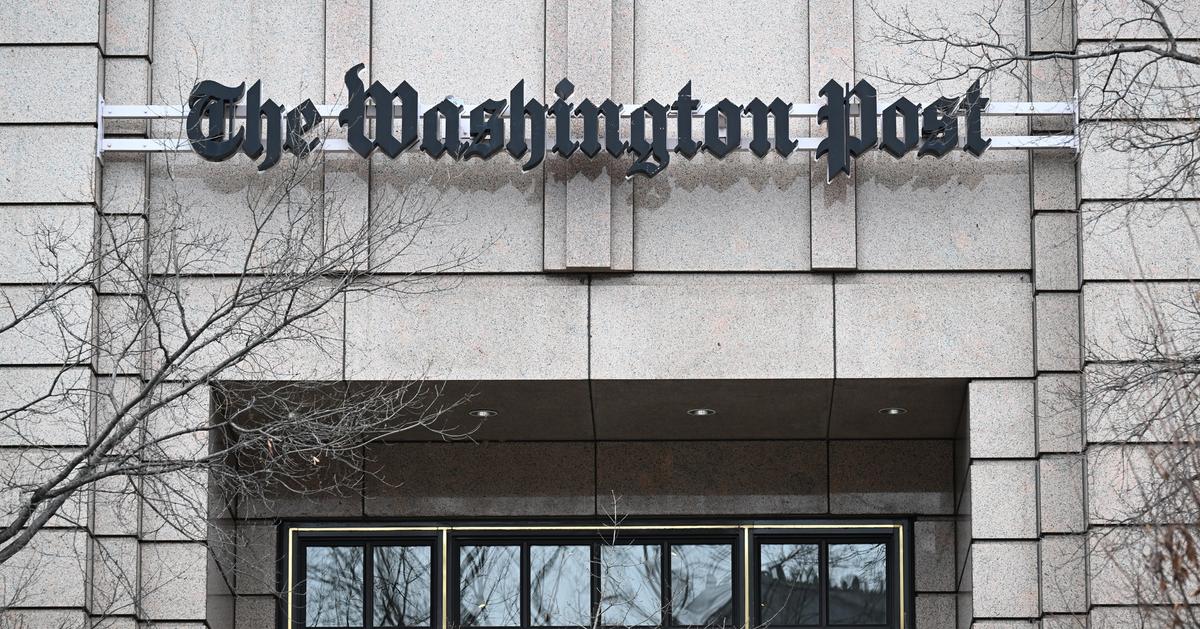
The Washington Post is preparing significant newsroom cuts as it shifts to a leaner national-focused model, cancelling plans to send sports staff to the Winter Olympics after already incurring travel expenses and prompting internal alarm about section eliminations. The paper cites multi-year declines in subscription revenue—attributed in part to political coverage choices—and is targeting break-even by the end of 2026; employees, including foreign correspondents, have petitioned owner Jeff Bezos as uncertainty about job security and section continuity spreads across the newsroom.
Market structure: Bezos’ Post trimming beats to save margin increases relative pricing power for national subscription publishers (NYT) and niche digital outlets; expect a ~0.5–2% share shift of high-engagement national readers to competitors over 6–12 months, and increased supply of experienced journalists on the open market that lowers marginal hiring costs for rivals. Advertising inventory from reduced coverage will modestly depress local/national news CPMs (estimated -3% to -7% regionally) pushing further revenue concentration to platforms (META, GOOGL) that monetize aggregated attention.
Risk assessment: Tail risks include Bezos reversing cuts with fresh capital (fast rebound risk) or union/legal actions that prolong costs; both would compress expected savings and reverse share shifts within 3–6 months. Immediate (days) risk is sentiment-driven volatility; short-term (weeks–months) is subscriber churn tracking and traffic migration; long-term (quarters–years) is brand erosion vs. cost-savings tradeoff. Hidden dependencies: SEO/referral algorithms mean narrower coverage can drive platform traffic away, non-linear to revenue; watch CPM and referral traffic moves >5% as triggers.
Trade implications: Primary asymmetric play is long NYT (NYT) vs short ad-heavy local publishers (GCI, LEE) sized 1–3% portfolio each, horizon 6–12 months; use NYT 6–9 month call spreads to cap downside. Options: buy NYT 6-month call spread (delta ~0.35–0.5) or sell 5% OTM puts to lower basis if conviction in subscriber reallocation; establish stop-loss at 12% adverse move. Sector rotation: reduce exposure to pure ad-dependent media and shift 3–5% into subscription/SaaS and platform ad duopolies (GOOGL, META) over next 2 months.
Contrarian view: Market may overestimate NYT lift; talent dilution and reduced breadth could erode aggregate engagement and SEO, creating a 6–18 month risk of flat-to-negative top-line despite cost saves. Historical parallels (previous major metro cuts) show short-term margin wins but medium-term audience declines; a smart contrarian is to tranche entry on NYT and only add if quarterly net subscription gain >50k or referral traffic stabilizes, otherwise trim positions within 9 months.
AI-powered research, real-time alerts, and portfolio analytics for institutional investors.
Request DemoOverall Sentiment
moderately negative
Sentiment Score
-0.50
Ticker Sentiment
