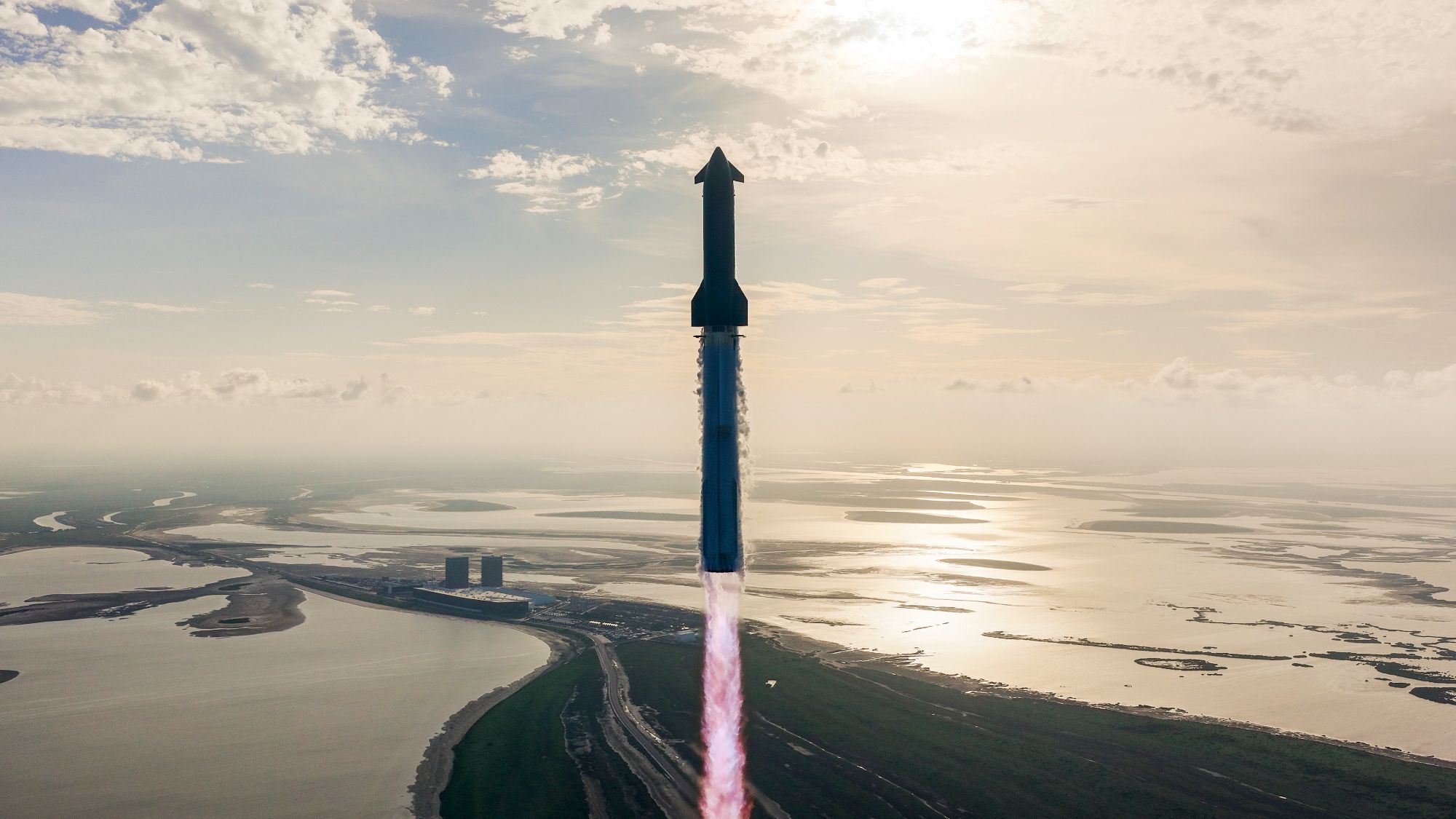
The year saw multiple commercial and national space milestones that accelerate the aerospace opportunity set: SpaceX set a single-year launch record with 170 flights (projected to reach 172) and delivered two fully successful Starship test flights after five attempts, while Blue Origin's New Glenn reached orbit and achieved a booster ocean landing on its second flight. Firefly Aerospace achieved the first fully successful private lunar landing with its Blue Ghost lander on March 2, operating for about two weeks, China launched the Tianwen-2 mission to quasi‑moon Kamo'oalewa (May 28) targeting a 2027 sample return, and China’s Landspace flew the reusable Zhuque-3 to orbit (Dec. 3) but lost the booster on descent. These developments validate commercial lunar services (CLPS) demand, intensify competition among private launch providers, and signal meaningful potential revenue and strategic opportunities for aerospace suppliers and investors—while technical risks and remaining milestones (Starship orbital/refueling, full reuse consistency) still warrant caution.
Market structure: Rapid reuse validation (Starship, New Glenn, Zhuque-3 near-miss) accelerates capacity growth and compresses launch pricing over 12–36 months; incumbents with legacy single-use cost bases (notably Boeing-related supply chains) face margin pressure. Firefly's Blue Ghost success validates CLPS commercial revenue streams and should rerate small-cap lunar/robotic specialists if follow-on contracts materialize (expect MXN sized awards within 6–18 months). Cross-asset: higher supply and capex intensity favors credit spreads tightening for majors but amplifies equity volatility in small launchers; jet/rocket propellant demand moves are immaterial for commodities but insurance and sovereign risk premia could rise after failures.
Risk assessment: Tail risks include a major Starship on-pad/orbit catastrophe triggering US/IFR regulatory curbs or insurance market repricing (6–12 months), and geopolitical moves around Chinese lunar/asteroid returns that could prompt export controls. Short-term (days–weeks) volatility will hinge on Starship orbital/refuel milestones and upcoming CLPS contract awards; long-term (2–5 years) outcomes depend on demonstrated reuse life (25+ flights) and state procurement patterns. Hidden dependencies: continued internal demand (Starlink) props Falcon cadence; removal of that anchor would expose overcapacity.
Trade implications: Tactical trades: establish a 2–3% long position in FLY with a 25% stop and 12–24 month target of 2x if CLPS follow-ons arrive; open a 1–2% short or buy 6–9 month BA puts (10–15% OTM) to hedge legacy aerospace exposure while Starliner/Boeing reputational risks linger. Pair trade: long FLY, short LUNR sized equally (1–2% net) — expect relative outperformance if FLY captures CLPS wins; consider buying 3–6 month call spreads on FLY ahead of contract announcements to cap premium.
Contrarian angles: Consensus overprices immediate cost collapse from reuse — technical ops (in-space refuel, rapid turnaround) remain 12–36 months away and regulatory/insurance frictions could slow price deflation. Conversely, market may underprice consolidation: overcapacity will likely force M&A among small launchers within 18 months, presenting event-driven acquisition opportunities. Watch for overhyped public sentiment around single lunar successes—repeatability (3+ successful missions) is the true value inflection.
AI-powered research, real-time alerts, and portfolio analytics for institutional investors.
Request DemoOverall Sentiment
moderately positive
Sentiment Score
0.42
Ticker Sentiment
