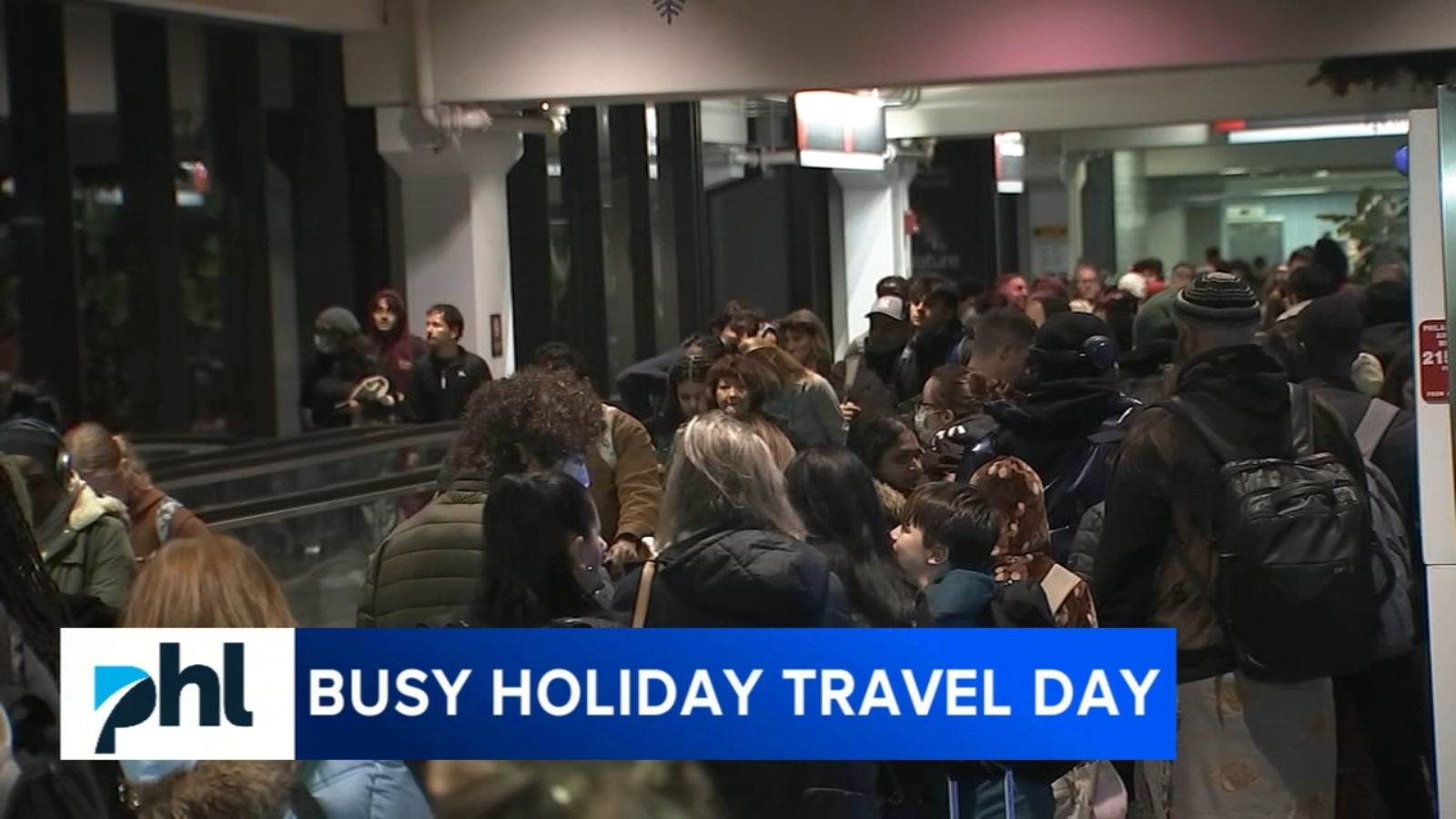
A winter storm is expected to disrupt travel at Philadelphia International Airport on Friday — projected to be the busiest day of the Christmas/New Year holiday period — generating long lines inside the terminal and heavy traffic outside; airport officials also flagged Saturday and Monday as peak travel days. Short-term operational disruptions could increase delays and cancellations for carriers serving PHL and temporarily affect ground-transport and airport retail activity; market participants should monitor weather-driven schedule changes and carrier operational updates for any localized revenue or cost impacts.
Market structure: A localized winter storm at PHL creates clear short-term winners (ground transportation: UBER, LYFT; nearby hotels: MAR, HLT) and losers (hub-focused carriers, especially American Airlines AAL which uses PHL as a major hub). Pricing power shifts transiently to local lodging and on-demand transit; network carriers absorb higher operating costs (crew, re-accommodations) and incremental cancellation-related liability that can shave 1-3% off near-term margins for affected flights over a 1–2 week window.
Risk assessment: Tail risks include a prolonged closure (2+ days) that cascades across the northeastern U.S. network, causing multi-week recovery costs and potential regulatory fines — a 1–3 day closure could amplify into a 5–10% quarterly EPS hit for a hub-centric carrier. Hidden dependencies: crew rostering, gate/slot availability and winter-weather-related maintenance create second-order disruption beyond passenger counts; catalysts include successive storms or FAA ground stops that would materially widen impacts.
Trade implications: Immediate trades favor short-duration airline downside (AAL, JETS ETF) via options and opportunistic long exposures to hotels and ride-hailing within a 1–3 week window. Pair trades: long MAR/HLT vs short AAL to capture relative gain from overnighted passengers and rebooking costs; use defined-risk option structures (put spreads, calendar spreads) to keep cost below 0.5–1.5% position size.
Contrarian view: The market commonly overreacts to one-off weather news on majors but underestimates concentrated hub risk — AAL can underperform peers by 3–7% if cancellations persist 48+ hours, while hotels may see a 5–10% transient ADR (average daily rate) lift in local markets. Beware that cancellations can also depress same-day bookings; if local booking cadence falls >20% vs prior week, reverse long-hotel stance within 7–14 days.
AI-powered research, real-time alerts, and portfolio analytics for institutional investors.
Request DemoOverall Sentiment
neutral
Sentiment Score
-0.10
