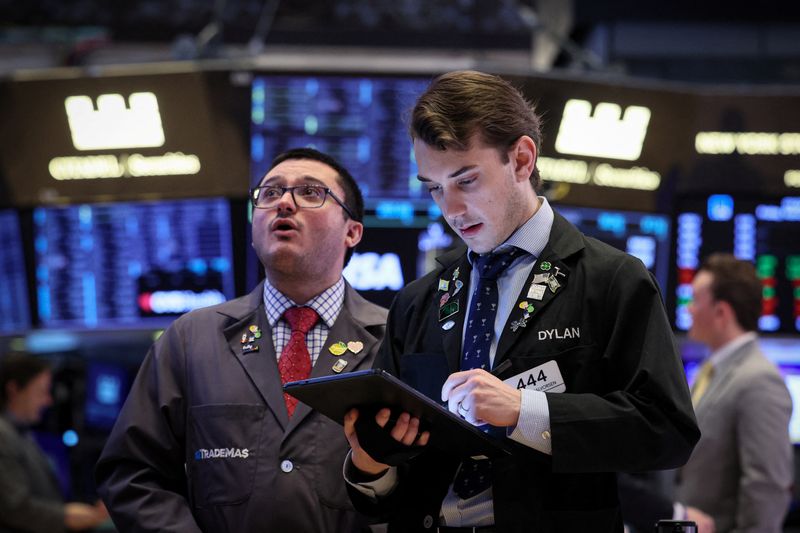
Traders placed $580M in oil bets minutes before President Trump’s post as markets reacted to a postponed strike and conflicting reports on U.S.-Iran talks. S&P 500 futures slid ~0.3% to 6,614.75, Nasdaq 100 futures fell 0.3% to 24,335.75 and Dow futures dropped 0.3% to 46,378. Oil rebounded after an intraday slump of over 10%, keeping energy-driven inflation risks elevated. The uncertainty raises the probability of more volatile risk-off moves and increases the chance of a hawkish response from major central banks if oil-driven inflation persists.
Late-session headline volatility repeatedly concentrates risk into short-dated derivatives and creates outsized basis and skew moves in energy futures. When liquidity thins, delta-hedging feedbacks amplify price gaps: a 1–2% futures move can cascade into 5–15% option-implied moves intraday, producing transient but tradable dislocations in front-month/back-month spreads and implied vol.
Macro transmission to policy is fast but not permanent—an oil-driven CPI impulse can force central banks to signal hawkishness within 4–12 weeks, yet spare global spare capacity, SPR coordination, and demand elasticity mean much of the price shock tends to mean-revert over a 2–6 month horizon. The critical asymmetry is that markets price policy risk immediately while the actual supply-side friction (logistics, insurance, temporary chokepoint closures) resolves more slowly, creating multi-week windows for convex trades.
On positioning, short-dated option sellers, leveraged commodity ETFs, and flow-dependent hedge funds are the immediate marginal sellers during shocks, while insurers, tanker and freight owners, and regional energy service providers capture first-order gains. Conversely, durable inflation fears create second-order winners among long-duration tech names only if volatility recedes; if headline risk remains elevated, these “risk-on” re-rates are vulnerable to fast unwind when hedge funds de-gross.
AI-powered research, real-time alerts, and portfolio analytics for institutional investors.
Overall Sentiment
mildly negative
Sentiment Score
-0.25
Ticker Sentiment
