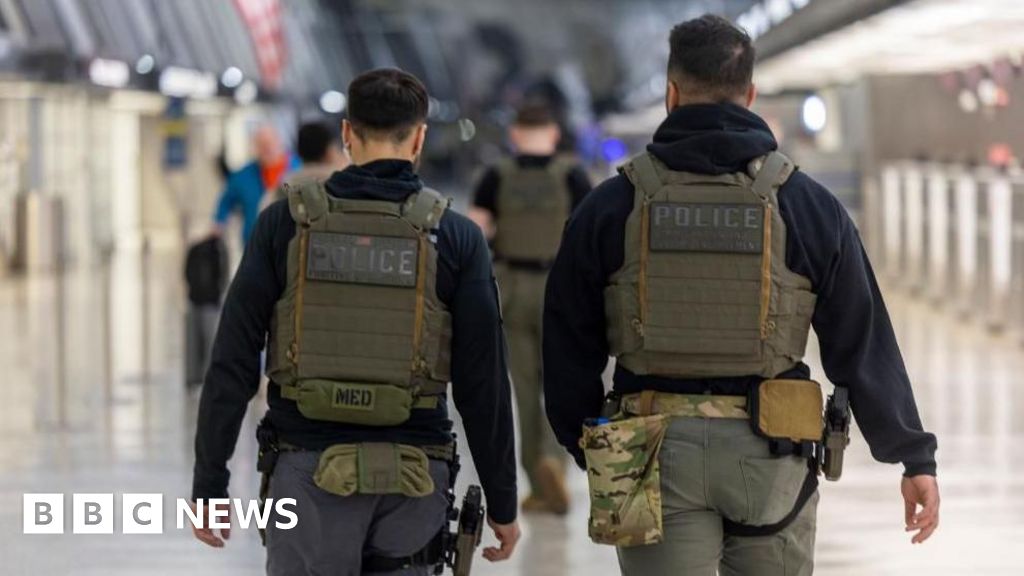
The US Senate approved funding for most of the Department of Homeland Security—excluding ICE and parts of border protection—aiming to end a partial ~40-day funding lapse, but the package now requires a House vote. Approximately 50,000 TSA agents have been working without pay since mid-February, prompting hundreds of resignations and leaving some airports operating at roughly 33–50% of TSA checkpoints with multi-hour queues. The measure funds TSA, the Coast Guard and FEMA while stripping ICE funding, creating policy uncertainty and execution risk until the House acts.
The Senate’s carve-out for immigration enforcement creates a binary near-term path: either a quick operational patch for checkpoint staffing (if the House passes) or continued service disruption and political brinksmanship. Expect the market to treat the next 72 hours as the primary catalyst window; if the House passes, TSA staffing metrics should show measurable improvement within 3–7 days, but morale-driven attrition and reopening costs (overtime, temp hires, training) will depress productivity and raise unit labor costs for months.
Second-order winners are vendors and systems integrators that can supply rapid screening, biometrics and managed-security services; procurement cycles that were previously multi-quarter could be accelerated into a one- to two-quarter window as airports seek automation to immunize throughput from political risk. Conversely, airline unit revenues face compression not only from canceled/shifted flights this month but also from higher per-flight operating costs and potential compensation claims — an earnings headwind that compounds already thin margins.
Legislative tail-risks dominate: a House rejection or legal challenge to any executive workaround would re-inject volatility and could trigger operational contingency spends (contract guards, increased subcontractor usage) that benefit certain contractors but hurt airline cash flow. The higher-probability path (House passage) implies a sharp, short-lived relief for travel equities followed by a multi-quarter re-rating of security vendors and airport capex beneficiaries.
Consensus is focused on immediate travel pain; it underestimates the multi-quarter shift in procurement and labor footprint at airports. Positioning that captures a quick relief rally in airlines while owning longer-dated exposure to security/defense contractors that win accelerated DHS/FEMA/Coast Guard spend offers asymmetric payoff if the House votes yes and capital expenditures shift forward as we expect.
AI-powered research, real-time alerts, and portfolio analytics for institutional investors.
Request DemoOverall Sentiment
mildly negative
Sentiment Score
-0.25
