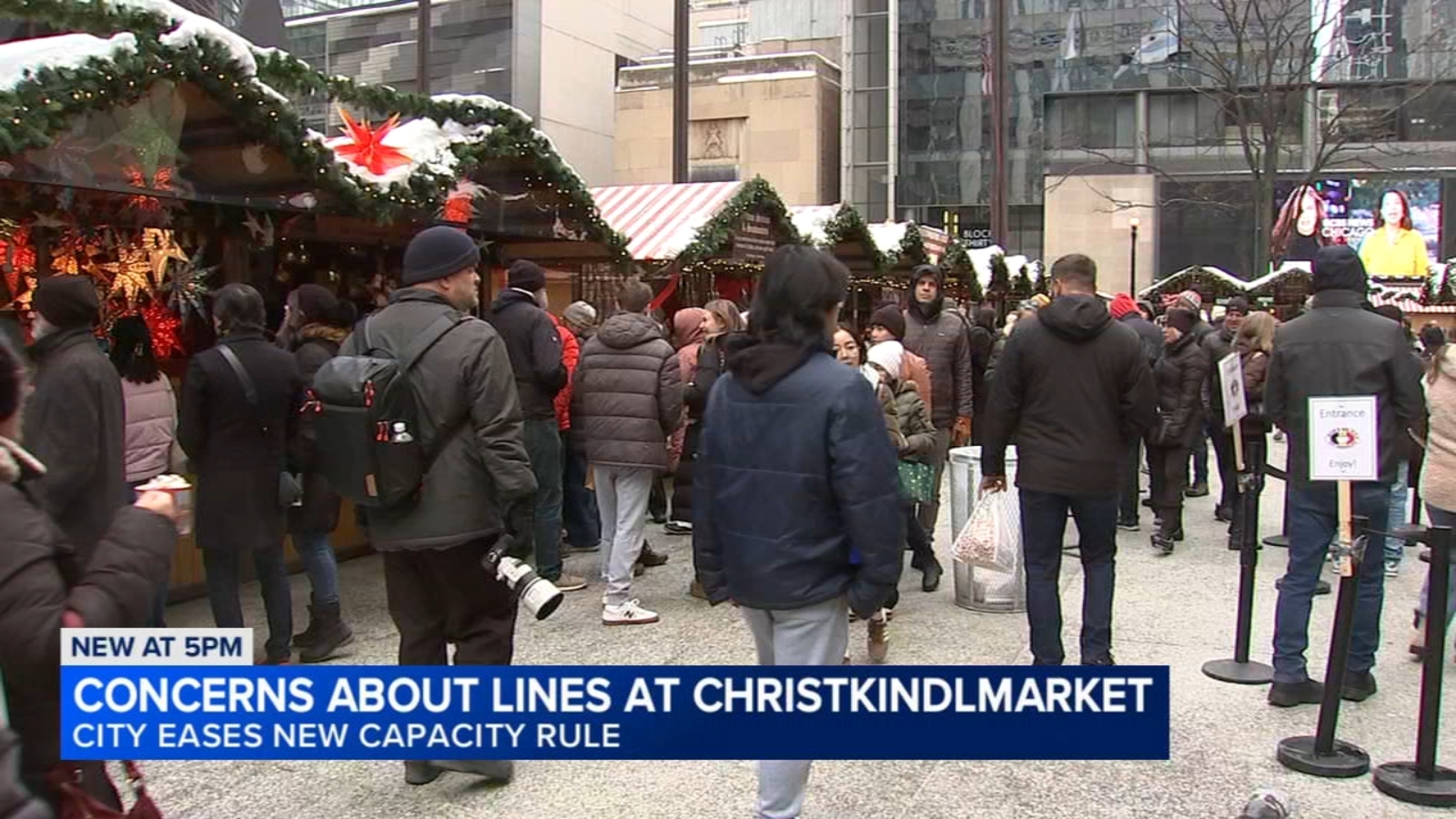
Chicago's Christkindlmarket organizers secured a temporary capacity increase from 1,500 to 2,500 people after appealing to the city, but vendors report sagging sales and warn they may not return next year if foot traffic remains constrained. The cap—about half of 2021 levels at one point—continues to limit peak-hour revenues for small vendors despite city efforts to balance safety and capacity, presenting downside risk to local retail receipts tied to the seasonal event.
Market structure: The city cap increase from 1,500 to 2,500 (still ~50% below 2019 peak crowding for similar events) reallocates ~20–40% of expected impulse foot traffic away from small vendors to less-crowded time slots and online channels. Winners: large omnichannel retailers (AMZN, WMT, COST) and payment processors (V, MA) capture incremental digital/low-ticket spend; losers: small experiential vendors, local food/beverage operators and boutique holiday goods sellers facing single-digit to double-digit percentage revenue declines over the holiday window. Cross-asset: modest widening in municipal/event-related credit spreads (+10–20bp possible if restrictions proliferate) and higher short-dated implied vols for live-event equities (LYV, AMC).
Risk assessment: Tail risks include a localized COVID surge or city-wide enforcement that keeps capacity <60% of 2019 across major metros for >30 days, driving vendor attrition of 20–30% and transient unemployment in hospitality micro-segments. Time horizons: immediate (days) — holiday weekend sales delta; short-term (weeks–months) — vendor P&L and holiday comps; long-term (quarters) — potential permanent shift of niche sellers to e‑commerce or exit. Hidden dependencies: weather, municipal political pressure, and ancillary tourism (hotel occupancy) which can amplify or mute effects. Catalysts: weekly foot-traffic reports, city announcements in next 7–30 days, and any major COVID variant headlines.
Trade implications: Rotate 2–3% portfolio exposure into large-cap e-commerce and defensive bulk retailers (AMZN 2–3%, COST 1–2%) and payments (V 1–1.5%) to capture diverted spend; hedge via short 1% exposure to live-event operators (LYV) using 3‑month 10–15% OTM puts to limit cost. Pair trade: long V (1%) / short XRT (1–1.5%) to express structural shift to digital payments vs small physical retailers. Exit/trigger rules: trim longs if weekly online retail sales surprise >+3% MoM or add to shorts if three major cities keep capacity <75% of 2019 levels for >30 days.
Contrarian angle: The market may over-price systemic risk from a single-market capacity adjustment — historical parallels (post‑2020 reopenings) show strong pent-up demand rebound once policy certainty arrives, creating a 10–30% bounce in experiential stocks; therefore keep short LYV position size-limited and time‑boxed. Unintended consequence: accelerated vendor migration to marketplaces may boost mid-cap e-commerce enablement platforms; consider monitoring SMB-focused e-commerce enablers for opportunistic long exposure if vendor attrition >15% citywide.
AI-powered research, real-time alerts, and portfolio analytics for institutional investors.
Request DemoOverall Sentiment
moderately negative
Sentiment Score
-0.40
