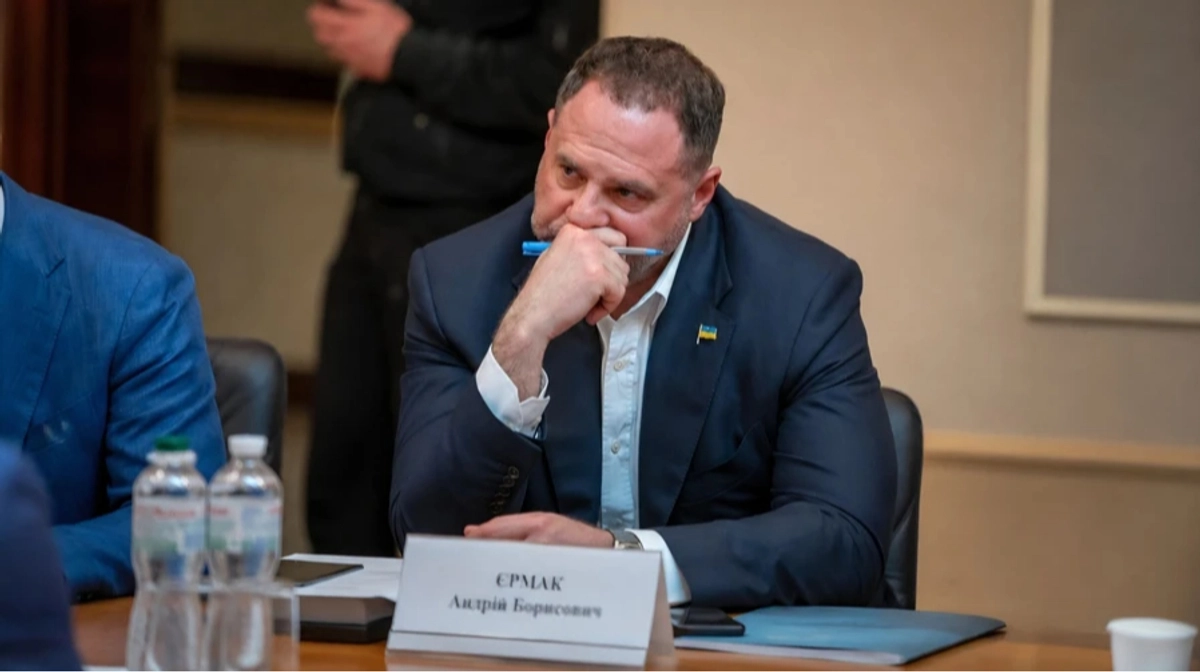
The full UAH 140 million bail requirement for former Ukrainian presidential office head Andrii Yermak was raised by the morning of 18 May, with total contributions exceeding UAH 154 million ($3.5 million). Around 200 payments were made, including very small donations, after the High Anti-Corruption Court set bail at UAH 140 million on 14 May. Yermak’s lawyer said they were on the way to collect the bail certificate.
The immediate market read is not the bail itself, but the speed and breadth of funding: when a politically exposed figure can mobilize seven-figure support in days, it signals an intact patronage network rather than isolated personal liquidity. That matters because the real asset under pressure is not the individual, but the perception that anti-corruption enforcement is able to pierce elite insulation; a rapid bailout blunts that signaling effect and can reduce deterrence at the margin.
For domestic politics, this is mildly negative for reform credibility over the next few weeks and more important into any election-cycle narrative. Investors should think in second-order terms: if the case is framed as elite self-protection, it may raise the probability of further institutional friction between reformist agencies and politically connected actors, which can slow appointments, procurement, and donor-disbursement processes by days to months. The countervailing effect is that the public fundraising itself creates a measurable paper trail, which could invite scrutiny of source-of-funds and secondary enforcement actions later.
The contrarian angle is that this may be less about immediate governance deterioration and more about regime resilience: the ability to marshal funds quickly can also reflect strong civic mobilization, not just oligarchic defense. If follow-on legal steps stay procedural and non-escalatory over the next 2-6 weeks, the event fades into noise; if prosecutors expand the case or public reaction turns into broader institutional conflict, the downside is a renewed discount on Ukraine risk assets through tighter financing conditions and slower reform optics.
There is no direct tradable equity catalyst here, so the best expression is macro-political optionality. The main risk is a surprise escalation in the case or spillover into donor confidence; the main reversal is rapid de-escalation and no new allegations. Watch for whether this becomes a one-off reputational hit or a template for broader elite prosecution resistance.
AI-powered research, real-time alerts, and portfolio analytics for institutional investors.
Request DemoOverall Sentiment
neutral
Sentiment Score
0.00
