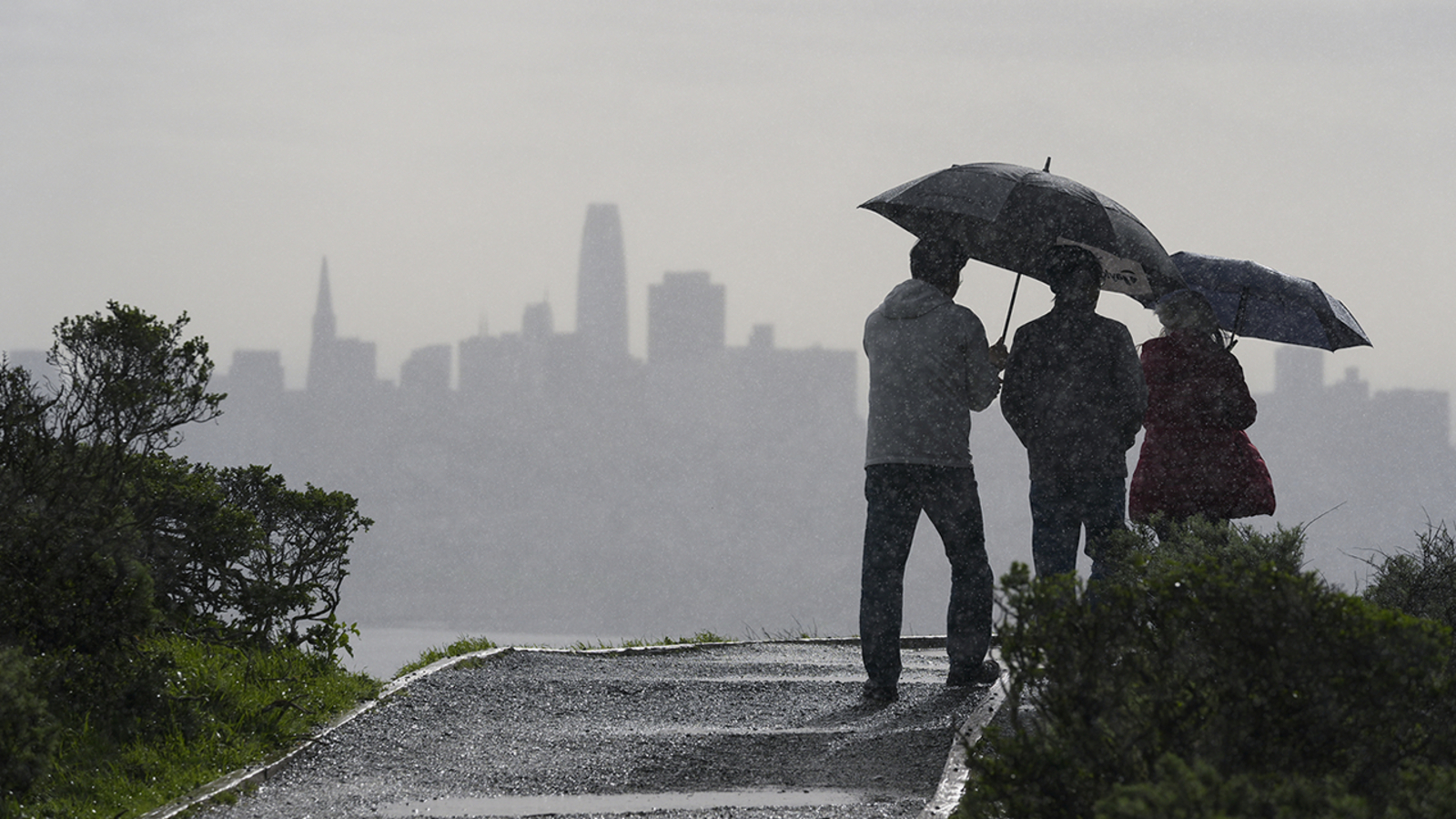
A strong Level 3 storm will hit the San Francisco Bay Area Tuesday night into early Wednesday with coastal gusts up to 75 mph, high risk of downed trees and power outages, and a Flood Watch and possible thunderstorms overnight. Additional rain is expected on Christmas Day and Friday (Level 2) with potential flooding, while the Sierra faces heavy snowfall beginning Christmas Eve through Christmas night — as much as eight feet at Tahoe resorts — prompting a Winter Storm Watch and major travel impacts. Hedge funds with regional exposure to utilities, insurers, transportation and travel/leisure sectors should monitor outage reports, travel disruptions and claims activity over the next several days.
Market structure: Short-term winners are regional service providers (roofing/contractors), winter-leisure operators (Vail Resorts MTN, Alterra ALTA), and spot power/gas suppliers as heating and backup-gen demand spikes; losers are SFO-centric carriers (UAL, LUV) and local logistics (CHRW exposure to Bay Area hubs). Pricing power shifts are transient — airlines lose yield on rebooked legs and last-mile shippers incur higher unit costs; municipal services and replumbing/roofing firms can raise short-term rates. Natural gas and CAISO day-ahead power forwards should show 5–15% convexity vs baseline over 1–4 weeks.
Risk assessment: Tail risks include multi-day blackout >72 hours (probability ~5–10%) that would trigger outage-related liability for PG&E (PCG) and materially raise insured losses (> $200–500m regionally) that could dent P&C reinsurers for a quarter. Immediate window: 0–7 days for travel/cancellations; short-term: 1–12 weeks for claims and repair revenues; long-term: quarters for regulatory scrutiny and premium repricing. Hidden dependencies: supply-chain for roofing/parts, diesel for snow removal, and local labor availability — delayed repairs amplify economic loss curves.
Trade implications: Direct tactics — short near-term exposure to SFO-centric airlines (buy 1–2 week 5% OTM puts on UAL/LUV expiring ~Jan 2–9) and go long MTN (1–2% portfolio weight) to capture material upside from an 8-ft Tahoe powder run through Q1 2026. Buy short-dated natural gas exposure (UNG or 1-month NG futures, 0.5–1% weight) to capture a 5–15% spike in western heating demand. Establish a tactical 1% short in PCG for 3 months to reflect outage/repair/regulatory risk; use a 6% stop.
Contrarian angles: Markets often over-react to localized storms; heavy Sierra snow historically (2010, 2017 analogs) lifted ski-operator EBITDA by >8% y/y despite transient access issues — so MTN upside may be underpriced. Conversely, insurers frequently model property claims conservatively; a post-event repricing rally in TRV/ALL is possible after initial headline losses subside. Watch SFO cancellations >5% of daily flights and CAISO peak load >95% of forecast as catalysts to widen/close these positions.
AI-powered research, real-time alerts, and portfolio analytics for institutional investors.
Request DemoOverall Sentiment
mildly negative
Sentiment Score
-0.30
