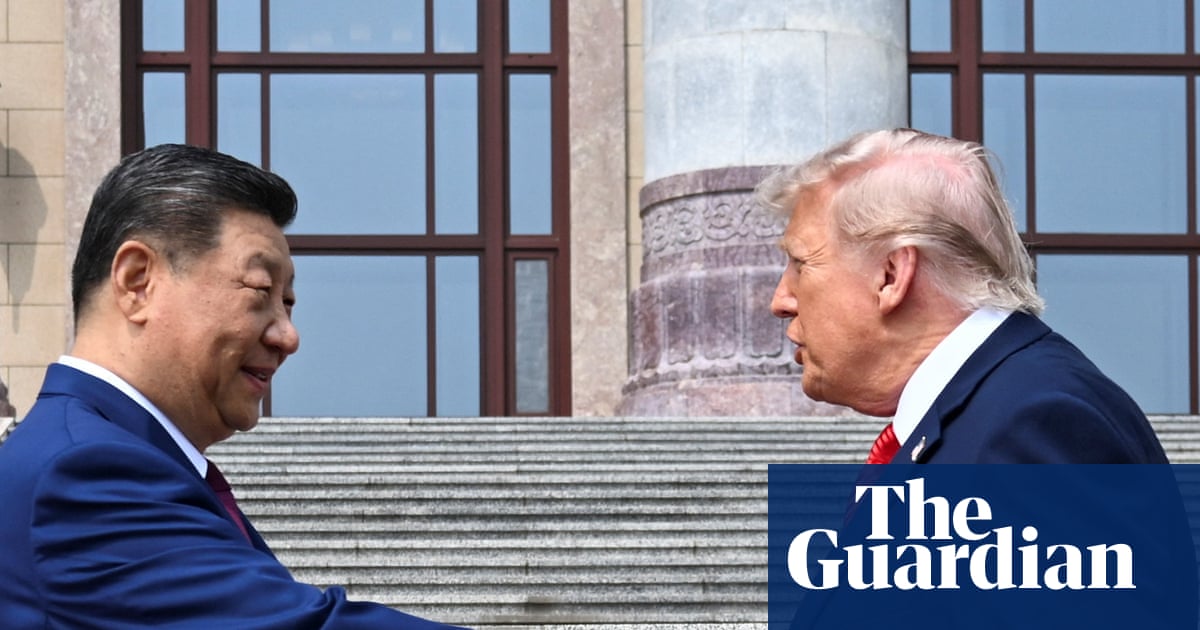
Trump and Xi met in Beijing for a high-stakes summit expected to cover Middle East conflict, US-China trade, Taiwan, and AI competition, with no concrete outcomes yet announced. The talks carry significant market relevance because they could affect global trade policy, geopolitical risk, and supply chains, while the US also sought Chinese help on the Iran crisis. Beijing is aiming to stabilize ties and potentially soften US support for Taiwan, but major disagreements remain.
The important signal is not whether this meeting produces a headline trade truce; it is whether it reduces the probability of abrupt policy shocks over the next 1-2 quarters. In a fragmented world, even a modest stabilization in U.S.-China tone lowers the volatility premium embedded in global cyclicals, shipping, semis, and industrials that depend on cross-border capex planning and inventory visibility. The market is likely underpricing how much management teams care about predictability versus tariff level alone. The second-order winner is not China exports broadly, but firms with concentrated, non-substitutable China exposure and high rerouting costs: advanced equipment, industrial automation, and select consumer hardware supply chains. If talks create even a partial framework for export controls or tariff pauses, it can compress input-cost hedging demand and reduce the urgency of duplicate supply-chain buildouts in Mexico, India, and Southeast Asia. That is bearish for the “re-shoring at any cost” trade and mildly positive for margin-sensitive multinationals that have been forced to overinvest in redundancy. AI is the real strategic overhang. Any sign of tacit de-escalation around AI competition would likely be read as a green light for accelerated capex by U.S. hyperscalers and semiconductor equipment names, while a harder line would keep China AI valuations suppressed but support domestic substitution themes. Because the catalyst horizon is short but the policy regime is long, the better setup is to trade implied volatility around the event rather than make a large directional bet on the outcome. Contrarian angle: the consensus likely assumes a narrow trade outcome matters most, but energy and Taiwan rhetoric are the bigger tail risks. If talks fail and rhetoric sharpens, the market could reprice a higher probability of supply-chain disruption and defense escalation within days, not months; if talks succeed, the upside in risk assets may be capped because structural mistrust remains. That asymmetry argues for asymmetric option structures rather than outright beta exposure.
AI-powered research, real-time alerts, and portfolio analytics for institutional investors.
Request DemoOverall Sentiment
neutral
Sentiment Score
0.00
