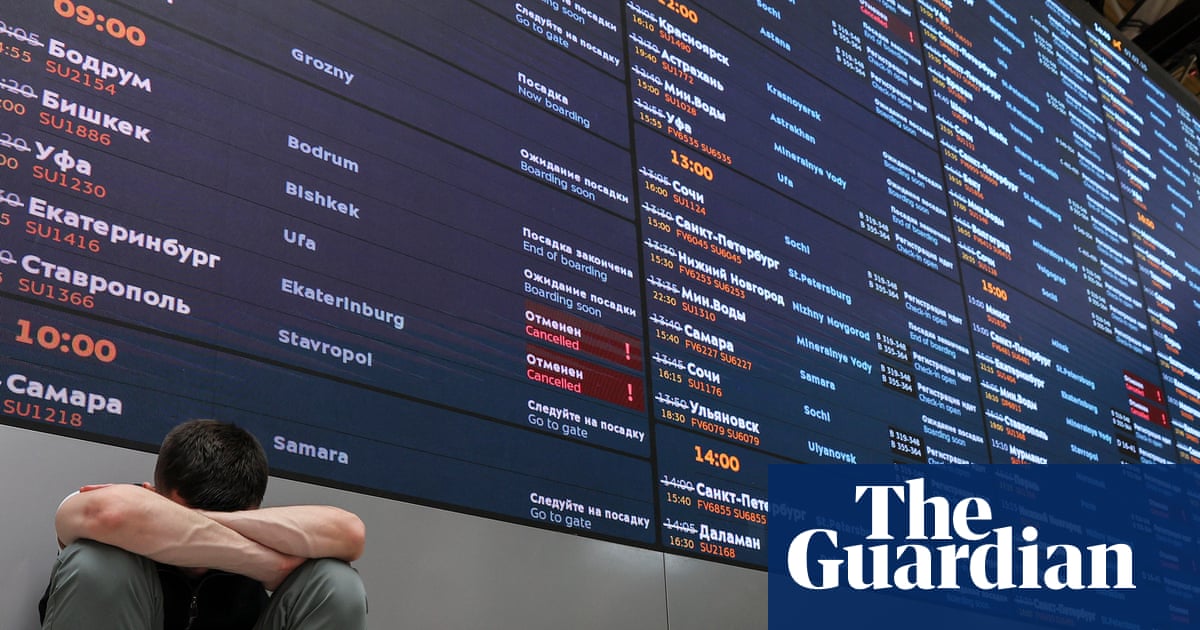
Ukrainian drone attacks are systematically disrupting Russian air travel, causing widespread flight cancellations and delays that impose significant operational and financial strain on the country's aviation industry, already hit by sanctions. This reflects Kyiv's deliberate strategy to escalate the costs of the war for ordinary Russians, evident in over 485 flight cancellations and 1,900 delays during a recent peak, leading to mass refunds and passenger accommodations. The persistent disruptions, which airports are preparing to be a permanent feature, are forcing international carriers to adjust schedules and have prompted leadership changes, signaling a growing challenge to Russia's infrastructure and stability.
Systematic Ukrainian drone and cyber attacks are imposing significant and escalating operational costs on Russia's aviation sector, a domain already strained by Western sanctions. The disruption is no longer isolated, as evidenced by a recent two-day period in July that saw 485 flight cancellations and approximately 1,900 delays, forcing mass passenger compensation. This reflects a deliberate Ukrainian strategy to internalize the costs of the war for the Russian populace and undermine the Kremlin's narrative of stability. The operational pressure is forcing Russian airports like Sheremetyevo to treat the chaos as a permanent feature and has compelled international carriers, including Turkish Airlines and Emirates, to adjust their schedules. Furthermore, the situation introduces severe secondary risks, highlighted by the accidental downing of an Azerbaijan Airlines jet by Russian air defenses, which created a significant diplomatic fallout and signals a heightened risk of catastrophic error. The dismissal of Russia's transport minister suggests the economic and political ramifications are now a matter of high-level concern for the Russian government.
AI-powered research, real-time alerts, and portfolio analytics for institutional investors.
Overall Sentiment
strongly negative
Sentiment Score
-0.70
