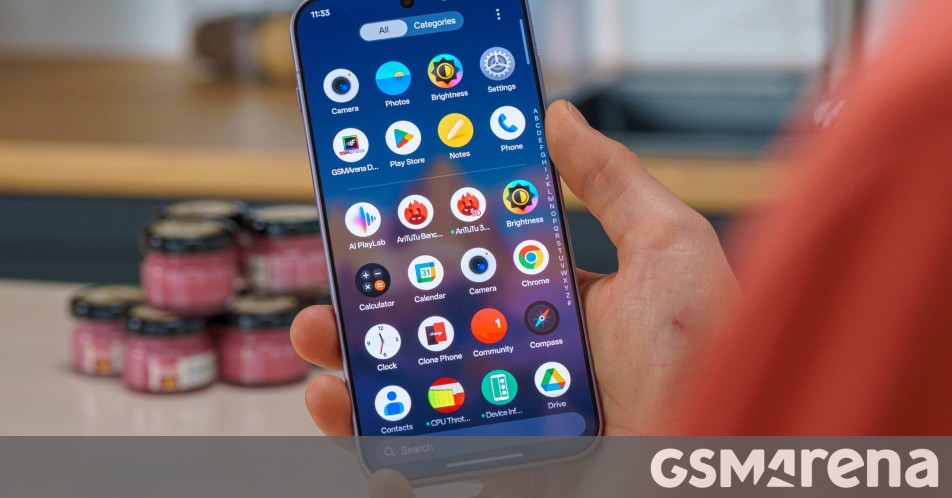
OnePlus will unveil a new Turbo series in China next month comprising two models, one of which was benchmarked with a Snapdragon 8s Gen 4. The phone reportedly packs a 9,000 mAh battery with 80W wired charging, an OLED display at 1.5K resolution and 165Hz refresh rate, is codenamed 'Volkswagen' and may receive an international launch including India; official China debut is expected in January.
Market structure: A China-first mass-market “Turbo” OnePlus with Snapdragon 8s Gen 4 and a 9,000 mAh battery primarily benefits component suppliers — Qualcomm (QCOM) for SoC, large-cell battery makers (CATL 300750.SZ, Samsung SDI 006400.KS) and high-refresh OLED suppliers (Samsung Electronics 005930.KS, BOE 000725.SZ). Global OEMs without vertically integrated supply (e.g., Xiaomi 1810.HK) face margin pressure if OnePlus pushes aggressive ASPs; I estimate mid/high-tier Android ASPs could see a 5–10% effective downward pressure in 6–12 months in markets where this device lands. Winners capture incremental unit share in India/EMs; losers are smaller ODMs that cannot match battery/display economics.
Risk assessment: Tail risks include an India regulatory or consumer backlash against China-branded devices (low-probability, high-impact within 0–3 months) and certification delays for large-capacity batteries that could shift shipments 3–6 months. Short-term (days–weeks) market moves will be muted until the China reveal in January 2026; expect volatility in suppliers around that event and reported India launch window (3–9 months). Hidden dependency: BBK’s internal supply chain may limit spillover to Foxconn/Luxshare, muting benefits to some listed EMS names.
Trade implications: Direct play — establish a 2–3% core long in QCOM (12-month horizon) to capture design-win momentum and buy a 9–12 month 10% OTM call spread to cap premium spend. Battery exposure: 1–2% long in CATL (300750.SZ) or Samsung SDI to ride larger cell demand (+30–50% cell content vs typical phones); pair trade — long QCOM, short Xiaomi (1810.HK) 1–1.5% to express share shift in India/EM. Reduce/avoid exposure to EMS names where BBK sources internally (avoid new long positions in 2317.TW Foxconn near-term).
Contrarian angles: The market may underprice battery and power-IC winners relative to SoC hype — 9,000 mAh implies 30–50% higher cell demand per unit, favoring CATL and TI/TXNL-style PMIC vendors (TXN). Conversely, consensus may over-rotate into QCOM; if BBK pushes customizations or switches to MediaTek in some SKUs, QCOM upside is capped — hedge with a small 3–6 month put on QCOM or size call spreads rather than outright longs. Historical parallel: OnePlus Nord launches compressed midrange ASPs for 6–12 months; expect similar cyclical repricing risk.
AI-powered research, real-time alerts, and portfolio analytics for institutional investors.
Request DemoOverall Sentiment
neutral
Sentiment Score
0.12
