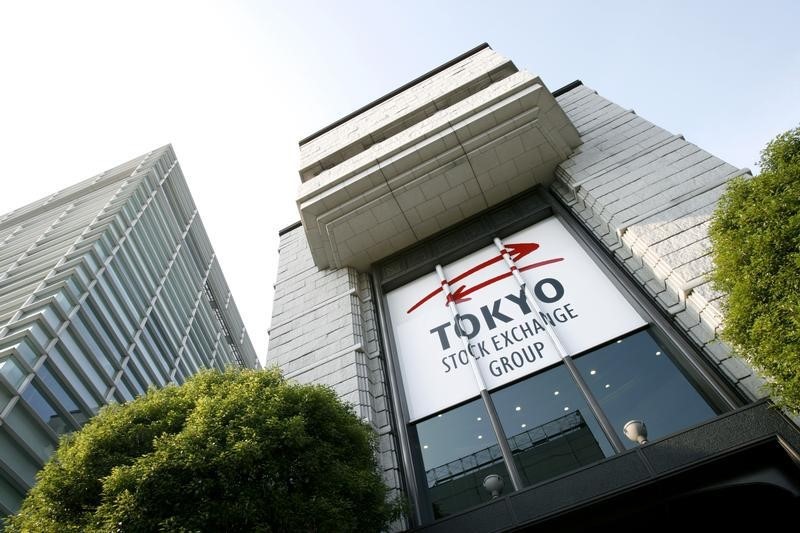
Bank of America says the Nikkei 225's recent selloff likely represents a near-term floor after a sharp volatility spike, but a sustained recovery hinges on easing macro and geopolitical uncertainty. The decline was amplified by a rapid unwinding of crowded AI-linked trades and Japan's heavy reliance on imported energy; stabilization in energy markets (and avoidance of Strait of Hormuz disruptions) is the key trigger for a rebound, while prolonged tensions could push markets below recent lows and lift energy/resource-linked stocks.
A Hormuz-driven energy shock transmits to Japan through three fast channels: import bill -> FX -> flows. A sustained $8–12/bbl Brent move would materially widen Japan’s external energy deficit and, absent currency offset, is likely to keep JPY weaker vs USD — mechanically amplifying Nikkei volatility as USD-based foreign holders revalue FX-exposed holdings and rotate out of crowded long-growth positions. Quant funds and levered retail that concentrated into AI names face margin-triggered spillovers: an energy-led liquidity shock forces cross-asset de-risking that hits the most crowded long vol profiles first.
Second-order winners are capital-light resource exporters and midstream/insurance players: miners and LNG infrastructure operators capture higher realized commodity spreads with limited immediate capex flexibility, while insurers and tanker owners can reprice risk and freight, boosting near-term revenues. Conversely, Japanese OEMs and input-heavy industrials suffer margin compression via higher fuel, shipping, and commodity inputs even if FX partly offsets — the net effect varies by supplier contracts (spot-indexed LNG vs long-term JCC-linked contracts) and inventory cycle.
Time horizons: expect headline-driven moves in days (spikes), policy/flow adjustments over weeks (central bank and strategic reserve responses), and structural investment shifts over quarters (capex into energy security and onshoring). Reversals come from rapid diplomatic de-escalation, coordinated SPR releases, or OPEC incremental output; persistent disruption tilts the macro regime toward higher realized inflation and steeper real yields, which is bad for long-duration growth names.
Given the current positioning, a tactical barbell — energy/resource longs with short exposure to crowded Japanese AI/high-beta names — offers asymmetry. Execution should be event-aware: step into positions on confirmed escalation (higher oil + insurance spreads) and trim on policy interventions or backstop releases. Size conservatively: initial sleeves 2–4% portfolio with strict stop-loss tied to oil and JPY cross thresholds.
AI-powered research, real-time alerts, and portfolio analytics for institutional investors.
Request DemoOverall Sentiment
mildly negative
Sentiment Score
-0.18
Ticker Sentiment
