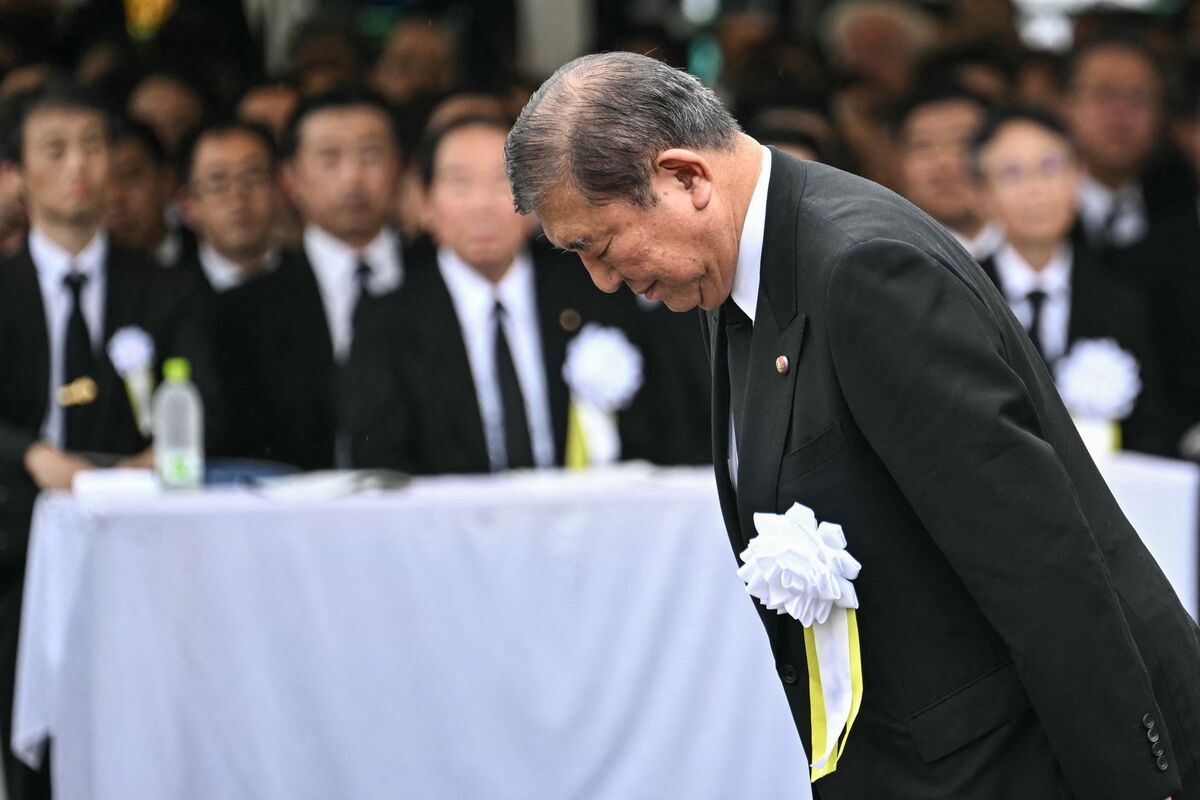
Japanese Prime Minister Shigeru Ishiba commemorated World War Two, expressing regret and emphasizing the need to learn from the conflict, stating Japan must never repeat the tragedy of war. This statement carefully balanced the need to address wartime atrocities with the imperative to avoid alienating right-leaning factions within his own party, highlighting the ongoing political tightrope walk regarding Japan's historical narrative.
Japanese Prime Minister Shigeru Ishiba's commemorative speech on World War Two represents a carefully calibrated political statement designed to navigate domestic political pressures. By expressing "regret" and emphasizing that Japan must "never choose the wrong path again," the Prime Minister addressed Japan's historical role without employing stronger language of apology that could alienate right-leaning factions within his party. The event is significant as a barometer of the current administration's stance on historical issues, a key factor in regional diplomacy. However, as indicated by a neutral sentiment score and a zero market impact score, financial markets have interpreted this statement as having no immediate implications for economic policy or corporate performance. The focus remains squarely on the domestic political landscape and the stability of the Ishiba government, rather than on any direct economic or market-moving catalyst.
AI-powered research, real-time alerts, and portfolio analytics for institutional investors.
Request DemoOverall Sentiment
neutral
Sentiment Score
0.00
