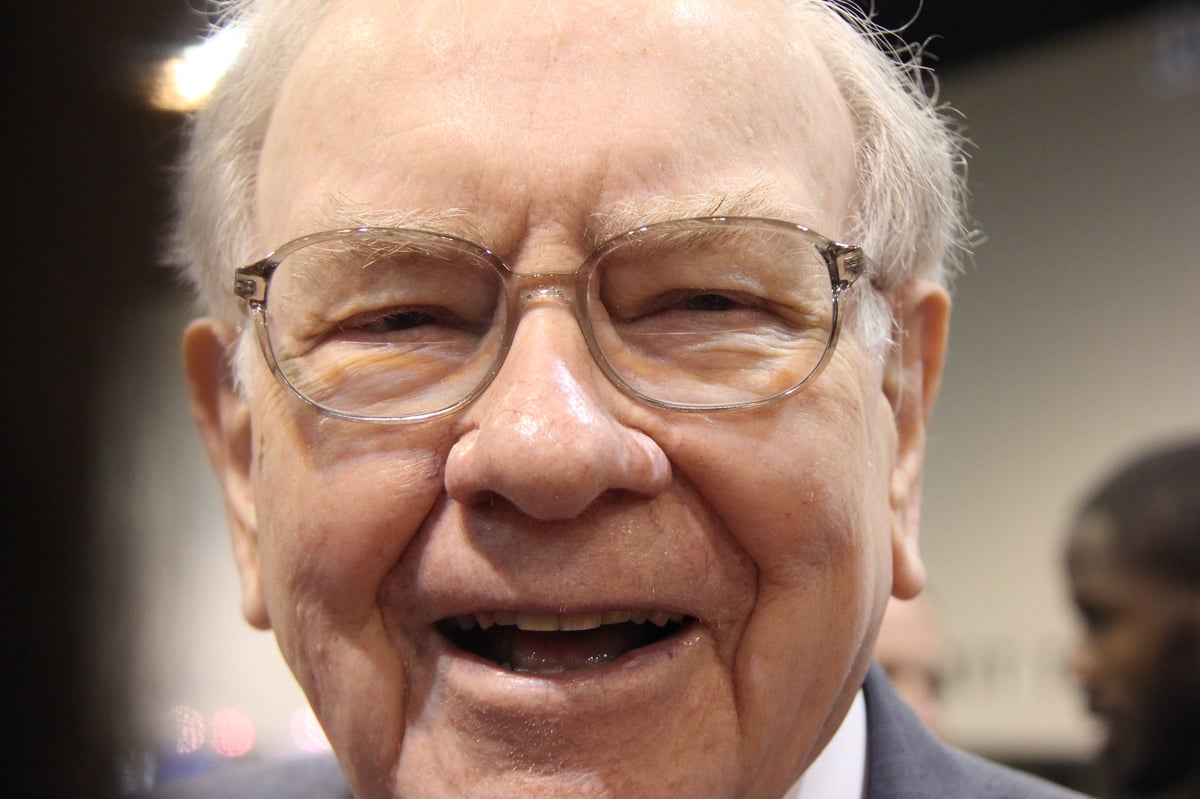
Berkshire Hathaway, led by Warren Buffett, holds roughly $305 billion in equities with nearly 24% concentrated in three Magnificent Seven names: Apple (21.3% of the portfolio), Alphabet (1.8%), and Amazon (0.7%). Berkshire has reduced its Apple stake by about 74% since early 2023, reflecting caution on concentration and AI exposure, while initiating a new position in Alphabet amid DOJ antitrust litigation that produced a milder-than-expected remedy. The piece notes valuation context—Alphabet near 30x forward earnings, Amazon ~32x forward—and highlights AWS’s 30% cloud market share in Q2 2025 and Apple’s strong buybacks and durable consumer franchise, framing these holdings as strategic bets on tech and AI-adjacent growth despite heightened investor wariness.
Winners are large cloud & platform incumbents (AMZN/AWS, GOOG/GCP, MSFT) that capture incremental AI compute and recurring software spend; hardware/infra suppliers (NVDA, AMAT) also benefit from elevated capex. Losers include smaller cloud integrators and ad-dependent publishers if ad budgets reallocate to AI-driven formats, and cyclical retailers that lack logistics scale. Cross-asset: equity concentration into mega-cap tech should compress market breadth, tightening corporate credit spreads for top-rated tech but increasing duration sensitivity in IG; options skew will stay elevated (buy-protection premium), and a stronger USD may persist as AI hype attracts global flows into US tech.
Key tail risks: adverse antitrust rulings (DOJ remedies within 3–12 months) that could require operational separation or limit ad monetization, a semiconductor supply shock, or an AI valuation unwind if growth misses 2025–26 expectations. Immediate (days) risks: earnings/AI announcements and DOJ updates; short-term (weeks–months): institutional rebalancing and quant flows; long-term (quarters–years): secular cloud/AI adoption driving revenue re-rating. Hidden dependencies include enterprise IT budgets and chip supply chains — a 10–20% slowdown in server GPU availability could materially cut cloud revenue growth.
Trades should express conviction but limit concentration risk. Prefer GOOGL/GOOG for convexity to search/cloud monetization and AMZN for AWS exposure; trim AAPL exposure if overweight given Berkshire’s selling signal. Use option spreads to define risk: 3–6 month call spreads on AMZN/GOOGL and put collars on AAPL around 8–12% downside thresholds; consider pair trades (long GOOGL vs short AAPL) to isolate ad/search vs consumer hardware risks.
Contrarian: the market underestimates AWS’s AI margin upside and overestimates near-term regulatory fatalism — historical parallels to MSFT 2000s show protracted fear then outsized compounding. However, crowding into the Magnificent Seven raises liquidity/tail-risk; plan position sizing and stop-loss rules accordingly.
AI-powered research, real-time alerts, and portfolio analytics for institutional investors.
Request DemoOverall Sentiment
mildly positive
Sentiment Score
0.28
Ticker Sentiment
