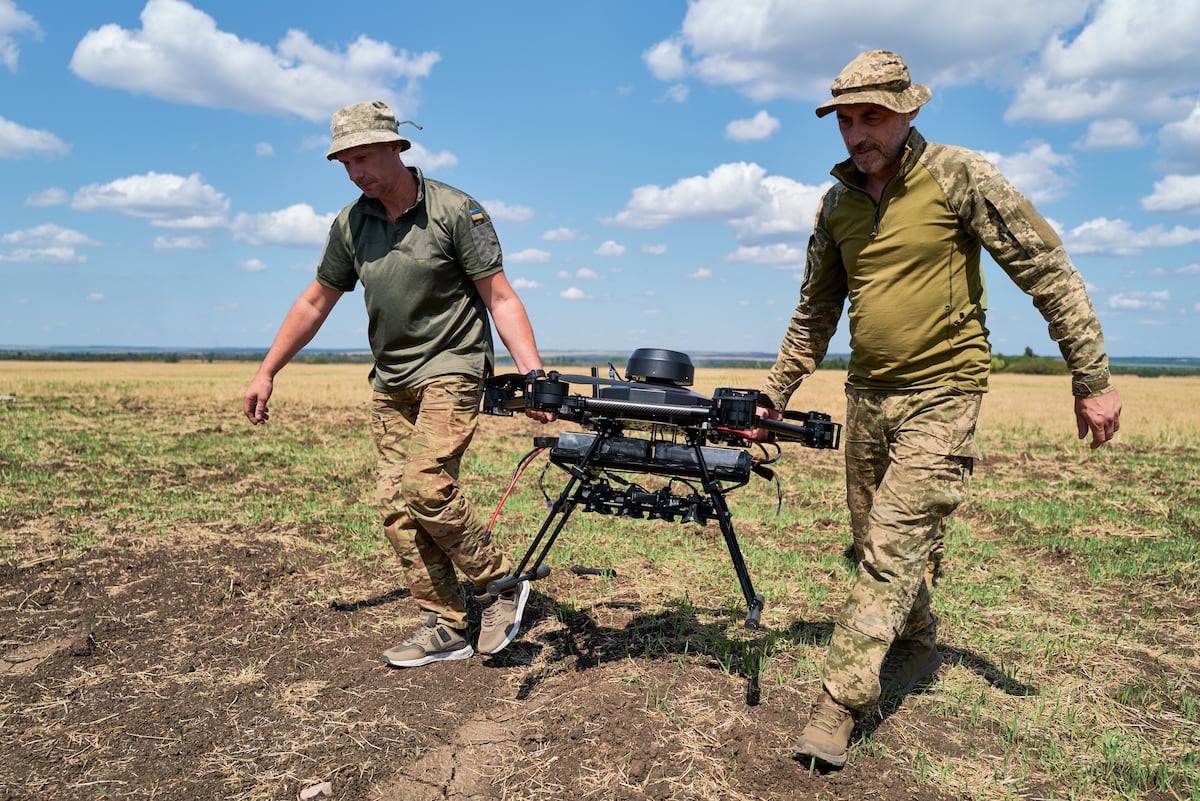
Ukraine reported 819,737 video‑confirmed drone hits in 2025, saying drones now account for more than 80% of enemy targets destroyed, with most systems produced domestically; nearly 240,000 strikes hit personnel, 62,000 hit light vehicles, 29,000 heavy vehicles and 32,000 targeted UAVs. The Ministry of Defence highlighted an Army of Drones verification and electronic points system that rewards operators and lets units redeem points on the Brave1 marketplace for drones and EW gear, while firms such as Germany’s Quantum Systems are selling Vector drones directly from Ukrainian production. The data-driven incentives and local manufacturing signal an accelerating defense procurement and supply‑chain shift with implications for defense suppliers and battlefield tactics, even as analysts caution drones supplement rather than replace conventional forces.
Market structure: Mass, low-cost drone production (article: >80% of destroyed targets) creates winners in small/medium drone OEMs (AeroVironment AVAV, Kratos KTOS), component suppliers (NVIDIA NVDA for edge AI, Teledyne TDY for sensors, Lumentum LITE for photonics) and electronic-warfare/system integrators (Raytheon RTX, Lockheed LMT). Pricing power shifts toward high-volume, low-margin producers for strike/recon drones while premium platform makers retain defense-contract stickiness; expect downward pressure on unit ASPs of legacy loitering munitions over 12–36 months.
Risk assessment: Tail risks include a) export-control tightening on dual-use components within 30–90 days, b) rapid escalation provoking broader sanctions or supply-chain shocks, and c) regulatory bans on commercial procurement of certain drone tech. Immediate risk (days-weeks): headline-driven volatility in defense equities; short-term (months): contract awards and procurement cycles; long-term (years): structural reallocation of defense budgets from heavy platforms to mass UAV production and EW countermeasures. Hidden dependency: relies on steady access to semiconductors, batteries and optics — bottlenecks here can flip winners to losers.
Trade implications: Direct plays — establish 2–3% long positions in KTOS and AVAV (industrial drone exposure) and 2% long in RTX (EW/system integration) as portfolio ballast, scaled in over 2–8 weeks. Pair trade — long RHM.DE (Rheinmetall, 2%) vs short GD (General Dynamics, 1.5%) for 6–12 months to express faster European rearmament; buy 12–18 month LEAP calls on KTOS/AVAV (25–35% notional) to capture upside while limiting downside. Rotate +3–5% from consumer cyclicals into defense ETFs (ITA/XAR) over next quarter; take profits at +40–50%, stop-loss -18–20%.
Contrarian angles: Consensus underprices the risk of export controls that could cripple small pure-play drone vendors while benefiting large primes with government ties (RTX, LMT) — this would invert winners within 3–6 months. Conversely, the market may overrate drone-only companies because drones complement, not replace, armor/artillery (per analysts); if artillery/infantry budgets remain stable, small drone names could see investor disappointment. Watch for procurement announcements (Germany/EU) and export-regulation drafts in next 30–90 days as binary catalysts.
AI-powered research, real-time alerts, and portfolio analytics for institutional investors.
Request DemoOverall Sentiment
mildly positive
Sentiment Score
0.30
