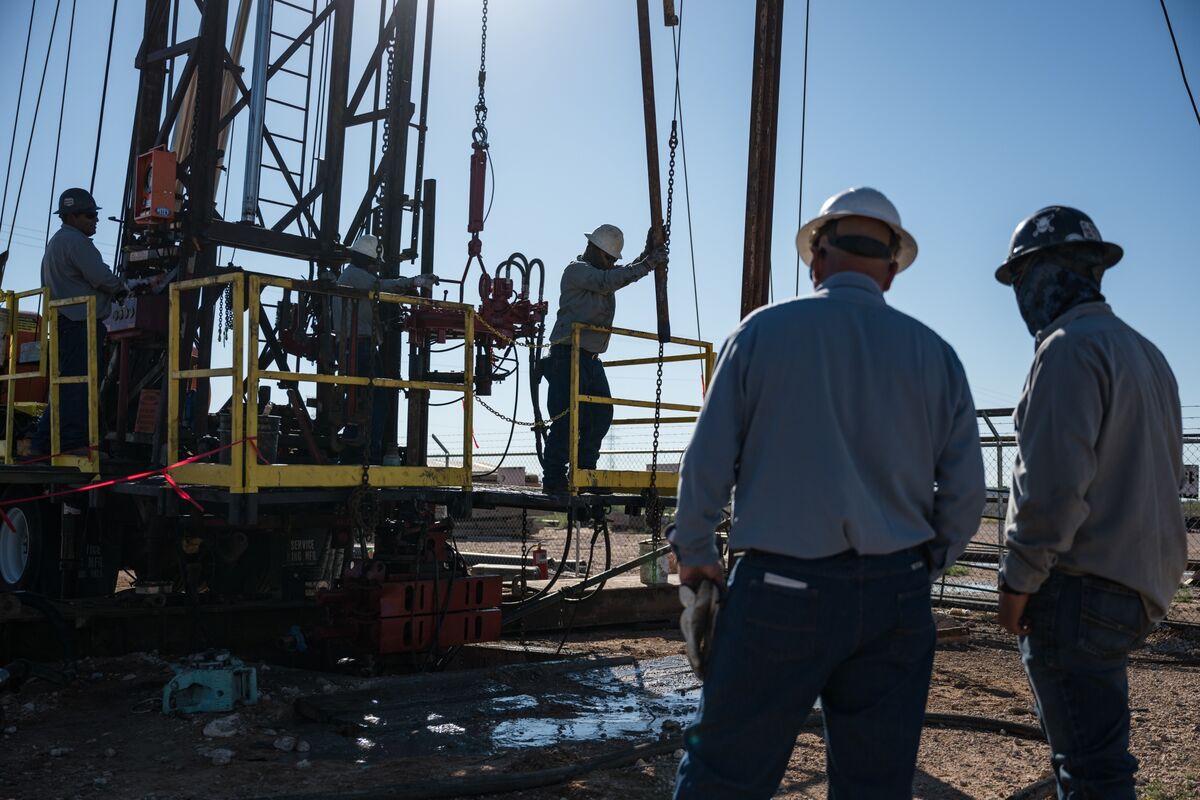
The Federal Reserve Bank of Dallas’ quarterly energy survey highlights that volatility in energy commodity prices — driven by the ongoing war in the Middle East — is making production planning difficult for firms. Respondents described the swings as “insane,” indicating firms may delay or alter production decisions in coming months, increasing sectoral supply uncertainty and price volatility.
Elevated, disorderly commodity volatility is imposing a tax on production planning: higher hedging costs and wider basis moves compress realized margins for smaller, short-cycle producers and raise the probability of voluntary curtailments over the next 1–6 months. That dynamic favors large integrated producers and trading desks that can flex storage, balance sheets, and marketing to monetize dislocations, while hurting mom-and-pop E&Ps and refiners facing feedstock unpredictability.
Second-order effects: midstream throughput becomes a binary risk — underproduction lowers take-or-pay utilization and pushes more cash to pipeline counterparties via contractual protections, but variable volumes force short-term working-capital swings and potential maintenance delays. Meanwhile, elevated option implieds create an asymmetric market where selling volatility (covered by physical or basis hedges) can be attractive, but requires explicit crash protections given fat-tail geopolitical risks.
Catalysts and timelines: a sustained price move will be driven by supply responses (US shale reactivation in 3–9 months), SPR releases or diplomatic gas/shipments in 30–90 days, and seasonal demand shifts over the next 60–120 days. Time-sensitive trades should therefore size for a volatility reversion in weeks to months while protecting for a geopolitical tail over the next quarter.
AI-powered research, real-time alerts, and portfolio analytics for institutional investors.
Overall Sentiment
mildly negative
Sentiment Score
-0.25
