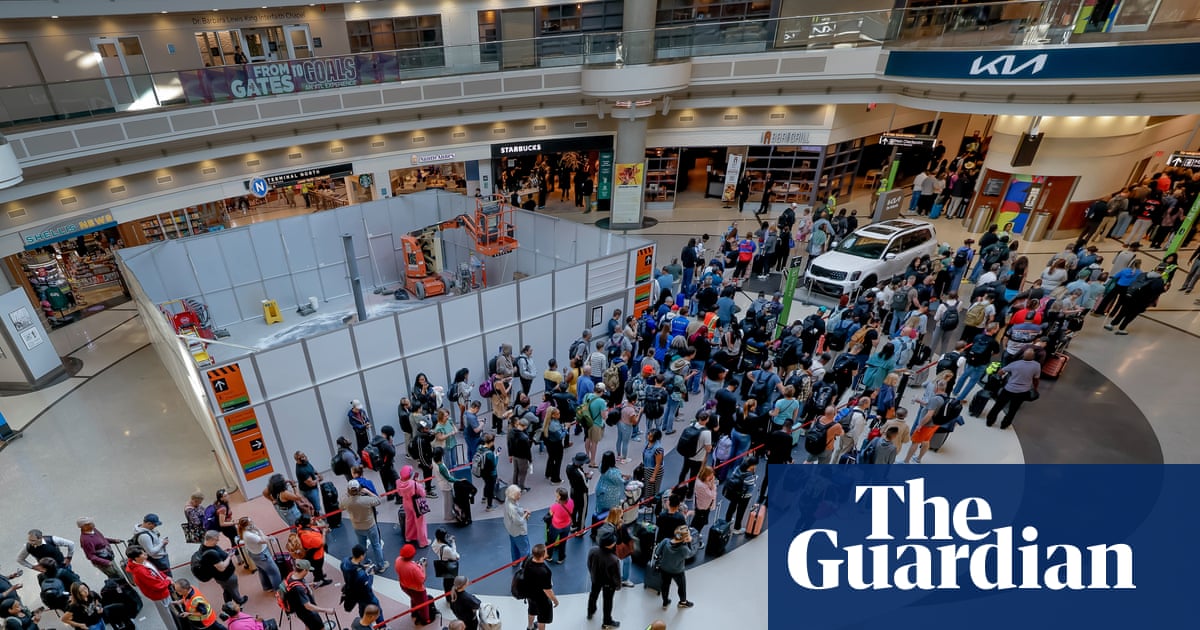
More than 400 TSA employees have quit since the DHS shutdown began and 3,450 officers called out on Sunday, with up to 40% absent at some airports, causing longer security wait times. The White House deployed ICE officers to 14 airports to fill gaps, while unions say ICE agents are untrained for aviation security and morale is plummeting as TSA workers enter a sixth week without pay. Political standoff persists: Democrats refuse to fund DHS without ICE reforms, Senate Republicans proposed funding DHS excluding ICE (which Trump rejected), prolonging operational and workforce uncertainty for airports and travel-related firms.
A staffing-driven capacity shock at airport checkpoints functions like a supply-side throttle on short-haul air travel: small per-passenger delays compound into gate turn inefficiencies and higher cancellation risk. Modeling a conservative 10–20 minute increase in average security processing time across a hub produces a 2–4% reduction in daily aircraft utilization, which translates into outsized disruption for carriers that rely on sub-45-minute turnarounds and high daily stage length (i.e., regional/low-cost fleets).
Second-order winners and losers diverge by business model rather than headline travel demand. Cargo and express logistics operators can capture yield upside as surface alternatives become slower and premium same-day capacity tightens; conversely, OTAs and last-minute leisure plays are exposed to booking pull-forward cancellation and reputational churn in the next 2–8 weeks. Airport concession and parking revenues may perversely benefit per-delay minute, but only if cancellations don’t suppress throughput — the net effect will be heterogenous across large-hub vs. point-to-point airports.
Key catalysts to watch in the near term are funding negotiations, union escalation signals, and real-time operational KPIs (7-day rolling average wait times, cancellation rates, and call-out percentages). The most likely reversal is an expedited funding patch or negotiated back-pay window within days–weeks; a protracted political impasse would manifest as durable capacity loss, forcing airlines to reprioritize networks and intensify regional consolidation over months.
AI-powered research, real-time alerts, and portfolio analytics for institutional investors.
Request DemoOverall Sentiment
strongly negative
Sentiment Score
-0.60
