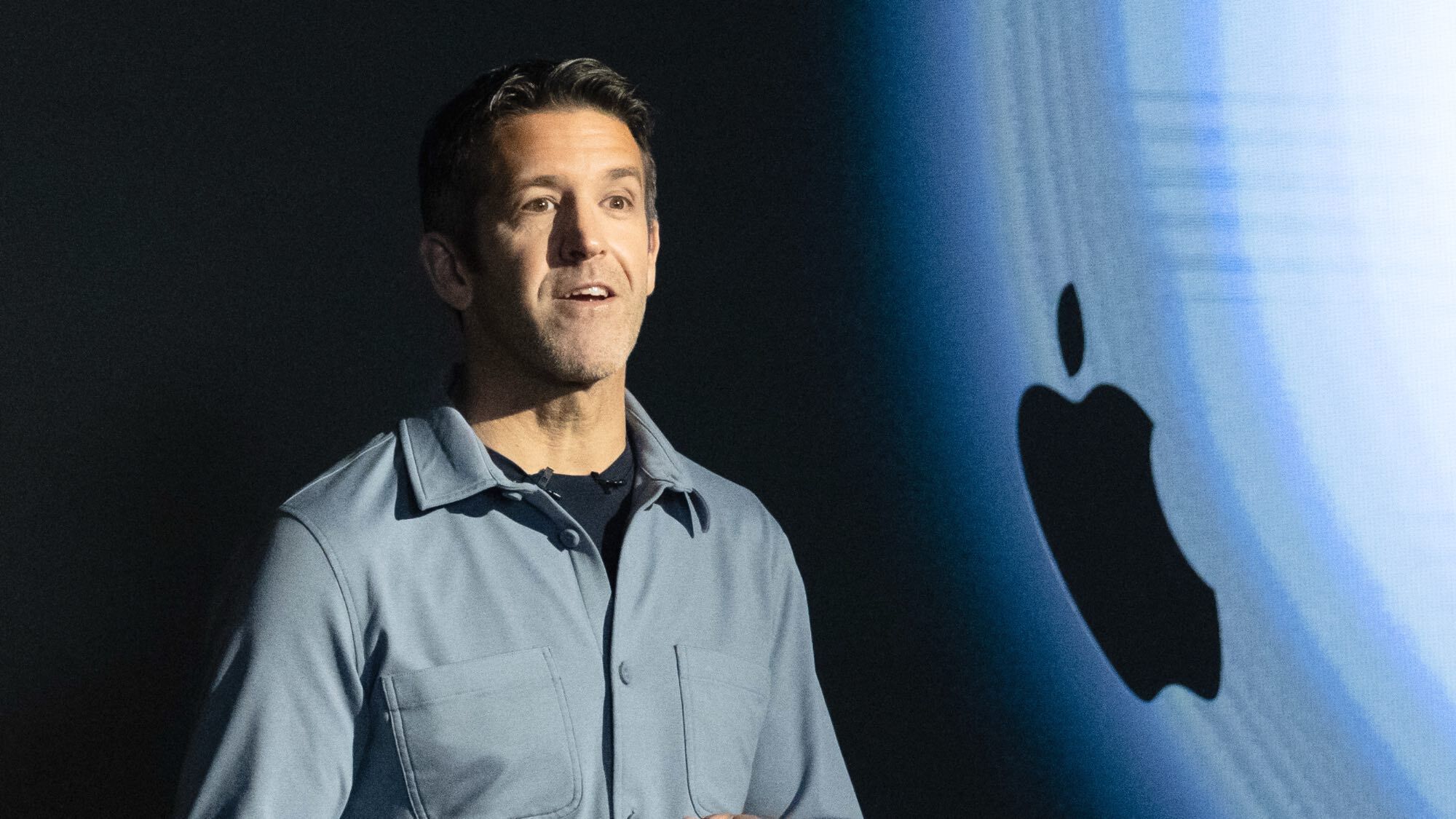
John Ternus, Apple’s soon-to-be CEO, emphasized Apple’s product-first approach to AI, saying the company focuses on leveraging technology to ship meaningful experiences rather than chasing models. He highlighted new hardware innovation, including a newly designed trackpad and enclosure work for the MacBook Neo, and reiterated Apple’s commitment to keeping the Mac and iPad distinct products. The article is largely qualitative, but it reinforces confidence in Apple’s leadership continuity and product pipeline ahead of Ternus taking over on Sept. 1.
The key implication is not a regime change, but continuity with a sharper product bias: Apple is signaling that AI monetization will be judged by device-level utility, not model size or benchmark leadership. That is supportive for gross margin durability because it preserves Apple’s ability to bundle compute, silicon, and software into premium hardware cycles rather than subsidizing standalone AI services. The market should read this as a reaffirmation that Apple’s AI strategy is an attach-rate story, which tends to compound over 12-24 months rather than re-rate on a single launch.
The bigger second-order effect is competitive: if Apple keeps pushing AI into existing hardware surfaces, the pressure shifts onto Android OEMs and Microsoft/Google to prove comparable consumer-grade workflows, not just feature parity. That benefits suppliers with content-rich device ecosystems and hurts vendors relying on generic AI differentiation. Intel remains structurally disadvantaged if Apple continues to optimize around proprietary silicon and custom form factors, because every new “from scratch” device reinforces the value of vertical integration and reduces the relevance of commodity PC architectures.
A near-term catalyst is product cadence, not CEO transition. If the new leadership sustains the same playbook through the next 2-3 launches, the stock can grind higher on multiple stability rather than earnings surprise; if not, the risk is that investors start questioning whether Apple can keep extracting premium pricing without a breakthrough AI experience. The contrarian view is that expectations are already high: any incremental AI feature that feels incremental rather than transformative could disappoint, but the downside should be shallow unless there is evidence of weakening upgrade intent or margin dilution from heavier on-device compute.
AI-powered research, real-time alerts, and portfolio analytics for institutional investors.
Request TrialOverall Sentiment
mildly positive
Sentiment Score
0.15
Ticker Sentiment
