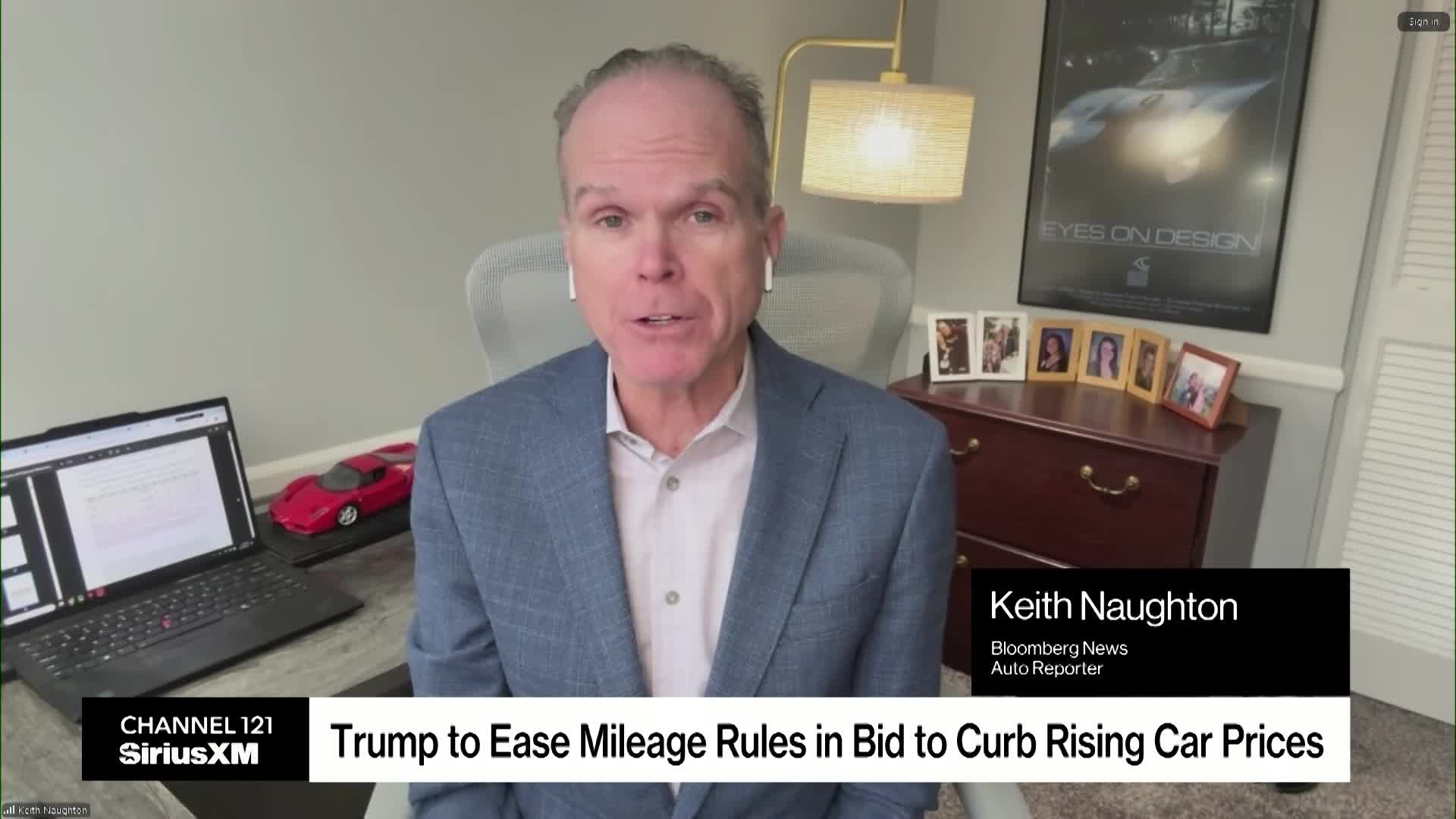
The Trump administration has rescinded the $7,500 consumer EV tax credit and zeroed penalties for failing fuel-economy/emissions standards, a move automakers welcome because it removes multi‑billion-dollar compliance costs and makes high-margin SUVs and pickups easier to sell. GM disclosed it reserved roughly $2 billion last year to buy regulatory credits and said it had geared up to build ~1 million EVs but is selling roughly 150,000, prompting write-downs and program cuts; tariffs remain an additional multi‑billion headwind. The policy rollback may lower upfront vehicle prices (administration estimates ~$1,000 per car) while increasing long‑term fuel consumption (Biden-era estimates cited: ~70 billion gallons saved to 2050 and ~$23 billion fuel savings, ~$600 per vehicle). For investors, the development is structurally positive for OEM near‑term margins but raises regulatory volatility, stranded-asset risks in EV investments, and potential consumer/policy backlash.
Market structure: Immediate winners are legacy OEMs able to shift mix to higher‑margin SUVs/pickups (Ford F, Stellantis STLA) and ICE parts suppliers; losers include EV infrastructure/charger names and battery‑metal juniors. Expect modest margin expansion for ICE sellers in 12–24 months as regulatory compliance cost lines fall (GM saved ~$2bn buying credits last year); concurrently global demand drivers (EU/China) keep some EV production intact, capping upside. Cross‑asset: oil/refining should see a small demand tailwind (supportive to XOM/CVX), lithium/nickel/copper demand trajectories weaken; IG credit for OEMs may improve modestly while tariff uncertainty keeps near‑term funding spreads wider by ~20–50bp for import‑exposed names.
Risk assessment: Key tail risks are a policy reversal post‑election or state (California/CARB) mandates forcing rapid re‑investment, stranded asset writedowns >$2–5bn for major OEMs, or tariff escalation disrupting supply chains. Timeline: days = volatility on headlines; weeks–months = earnings hits and impairment announcements; years = capex reallocation and global market share shifts. Hidden dependencies include export mix (if 30–40% of a plant’s output was for EU/China, OEMs may keep EV tooling) and residual‑value impacts on captive finance arms.
Trade implications: Actionable trades: establish 2–3% long positions in F and STLA with 6–12 month horizon to capture ICE mix tailwind; short 1–2% positions in EV charging/infra (BLNK) and select high‑cost battery juniors (e.g., LTHM/LAC) with 3–9 month horizon. Pair trade: long F (2%) / short TSLA (1%) to express margin swing while hedging macro EV demand resilience. Options: buy 6–9 month F/ STLA calls (25–35% OTM) funded by selling 3–4 month OTM puts on TSLA to monetize elevated IV; size defensively (notional ≤3% equity portfolio).
Contrarian angles: Consensus underestimates dual‑track production: OEMs will likely mothball but not fully abandon EV capacity, meaning metal demand won’t collapse—shorts in battery metals risk mean reversion. Reaction may be overdone in pure EV infra names; a durable re‑regulation catalyst (CARB/EU rule in next 6–12 months) would rapidly re‑rate EV assets. Watch three trigger points in next 60–180 days: EPA/CARB filings, Q4 OEM earnings disclosures of impairment amounts, and any tariff negotiation outcomes; adjust sizing if impairment guidance exceeds $1bn per OEM or if EU/China export constraints tighten.
AI-powered research, real-time alerts, and portfolio analytics for institutional investors.
Request DemoOverall Sentiment
mixed
Sentiment Score
0.08
Ticker Sentiment
