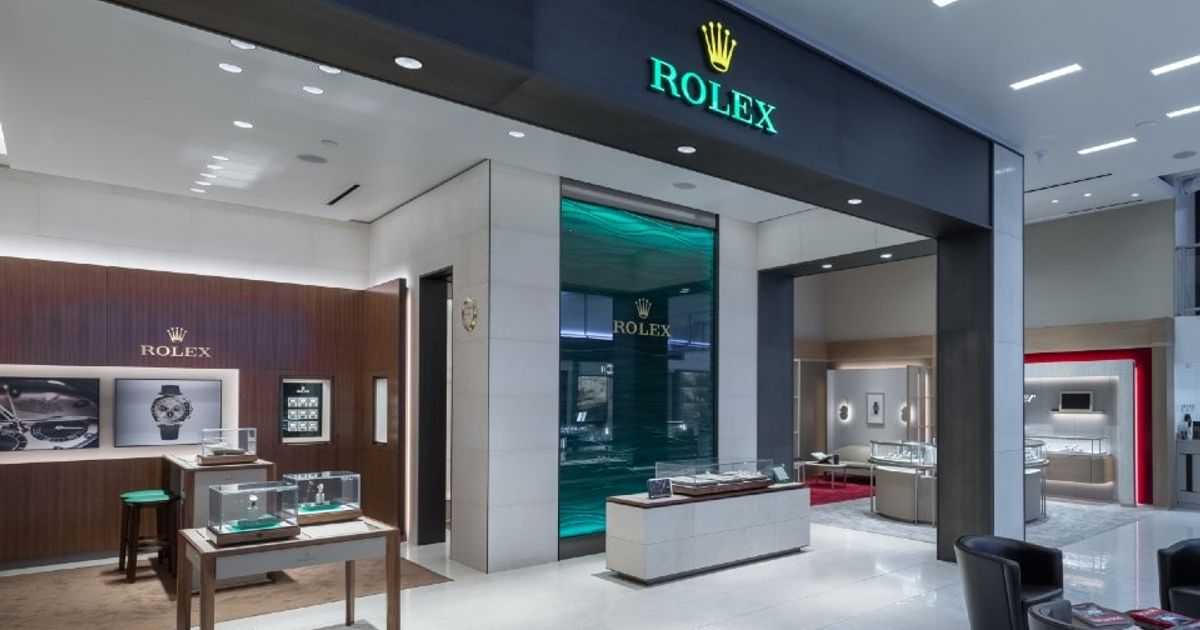
Watches of Switzerland has completed the acquisition of an 88% stake in family-owned Deutsch & Deutsch, adding four Rolex-anchored showrooms in Texas (El Paso, Laredo, McAllen and Victoria) and raising its US Rolex-anchored store count to 25. The acquired locations generated $67 million of revenue for the year ended 31 December 2024 with profitability aligned to the group’s US retail business; the deal includes an option to buy the remainder, the stores will retain the Deutsch & Deutsch name and existing leadership, and the shares rose ~5.7% on the announcement.
Market structure: Watches of Switzerland (LSE:WOSG) is the clear short‑term winner — adding four Rolex‑anchored showrooms that produced $67m in 2024 (~$16.8m/store) strengthens its US footprint to 25 Rolex sites and incrementally increases pricing power in the ultra‑luxury watch segment. Direct losers are independent regional jewellers and mid‑market chains that lack Rolex allocations; mid‑tier online players (e.g., NILE) face further channel bifurcation. The deal signals resilient high‑end demand vs. constrained supply (Rolex allocations remain scarce), which supports gross margins and secondary market price support for key SKUs; limited FX or commodities impact aside from a marginal positive correlation with elevated gold liquidity preferences among HNW clients.
Risk assessment: Tail risks include a sudden contraction in HNW US spending (recession, capital‑gains shock), Rolex allocation changes or termination of brand agreements, and integration/capex overruns from refurbishments; a 2–3 quarter SSS decline >5% would be material. Immediate impact (days): positive sentiment; short term (3–6 months): revenue recognition and initial refurb capex; long term (12–36 months): realize operational synergies and option to buy remaining equity. Hidden dependencies include concentration in Texas cross‑border/tourist flows and senior management retention linked to earn‑outs. Catalysts to watch: Rolex allocation notices, Q1/Q2 US SSS, and the timing/price of the option exercise (likely 12–18 months).
Trade implications: Direct play — establish a 1–2% long position in WOSG (LSE:WOSG), target +10–20% in 6–12 months, stop‑loss if acquisition margins underperform by >200bps or two consecutive quarters of negative SSS. Pair trade — long WOSG vs short Signet Jewelers (NYSE:SIG) sized 1:1 to capture luxury vs mid‑market dispersion over 6–12 months. Options — deploy a limited 0.5% notional into a 12‑month WOSG call spread 20–30% OTM to cap downside while retaining upside. Sector rotation — trim US mall/mid‑market retail ETF XRT by 1–2% and reallocate into global luxury names (LVMH MC.PA, Richemont CFR.S) for 6–12 month alpha.
Contrarian angles: Consensus celebrates store adds but may underweight integration risk and regional footfall variability — $67m is modest vs. WOSG group revenue and could be priced in already; if combined EBITDA contribution < expected by >10% the market could reprice. Historical parallels (luxury retailer bolt‑ons) show high initial enthusiasm then mean reversion if inventory allocation or brand terms tighten. Unintended consequence: higher concentration of Rolex sites may expose WOSG to brand‑level supply shocks; set a 90‑day monitoring trigger for Rolex allocation communications and a 12‑month margin convergence test to reassess positions.
AI-powered research, real-time alerts, and portfolio analytics for institutional investors.
Request DemoOverall Sentiment
moderately positive
Sentiment Score
0.40
