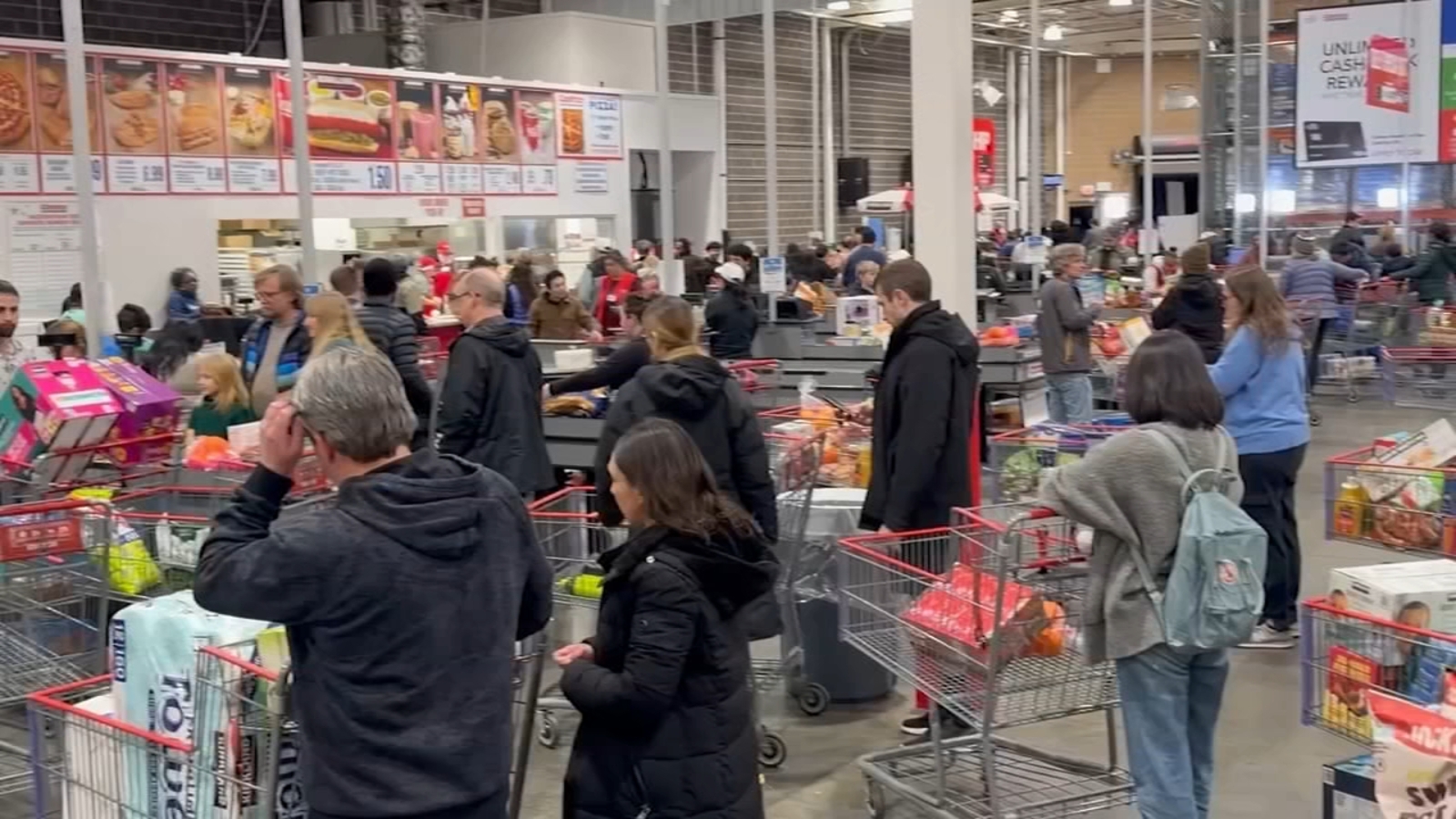
North Carolina Governor Josh Stein declared a State of Emergency and a Winter Storm Watch for central regions ahead of a storm expected Saturday through Monday, triggering widespread consumer rushes at retailers such as Costco, Publix and Harris Teeter with visible shortages in staples like milk and bread. Shoppers are stockpiling water, groceries and backup power amid concerns about ice-related tree and power-line damage that could spoil refrigerated goods (FoodSafety.gov notes a full freezer holds safe temperature ~48 hours), creating short-term demand spikes and localized inventory and logistics pressures for grocery chains, but limited broader market implications.
Market structure: Near-term winners are large, low-cost grocers (COST, WMT, KR) and cold-chain/logistics providers (Americold COLD, Sysco SYY) that can absorb surge demand and restock quickly; losers are small-format independents and sit-down restaurants suffering immediate traffic loss and spoilage. Pricing power tilts toward national chains for 1–3 weeks as panic buying raises basket sizes by an estimated 10–30% vs baseline for affected stores, supporting same-store-sales beats but pressuring labor/OT costs.
Risk assessment: Tail risks include prolonged multi-day grid outages (>48–72 hours) causing significant spoilage losses and insurance claims, and local anti-price-gouging enforcement that can compress margins; regulatory or logistics disruption scenarios could knock 1–3% off near-term EBITDA for exposed players. Immediate effects are measurable in days (sales spike, OOS inventory), short-term in weeks (replenishment, spoilage write-downs), long-term minimal unless repeated climate-driven weather events increase frequency over years.
Trade implications: Direct tactical plays favor 2–3% net long exposure to COST for downside protection and inventory turn resilience, and 1–2% long GNRC (Generac) for backup-power demand; buy short-dated call spreads (30–45 days) to limit capital. Pair trades: long COST (2%) / short SFM (1%) or small regional grocer for 4–8 weeks to capture share shift; hedge restaurant holdings with 6–12 week protective puts if exposure >2% of portfolio.
Contrarian angles: Consensus overweights short-lived sales spikes; retailers will incur incremental spoilage and labor costs that compress margins more than headline same-store-sales suggest — expect post-storm margin mean reversion within 4–8 weeks. Historical parallels (Northeast storms) show 1–3 week sales bump and 2–5% margin drag from spoilage/OT; mispricing exists in small-cap grocers and quick-serve restaurant names where temporary traffic loss is being double-counted into multi-quarter deterioration.
AI-powered research, real-time alerts, and portfolio analytics for institutional investors.
Request DemoOverall Sentiment
mildly negative
Sentiment Score
-0.25
Ticker Sentiment
