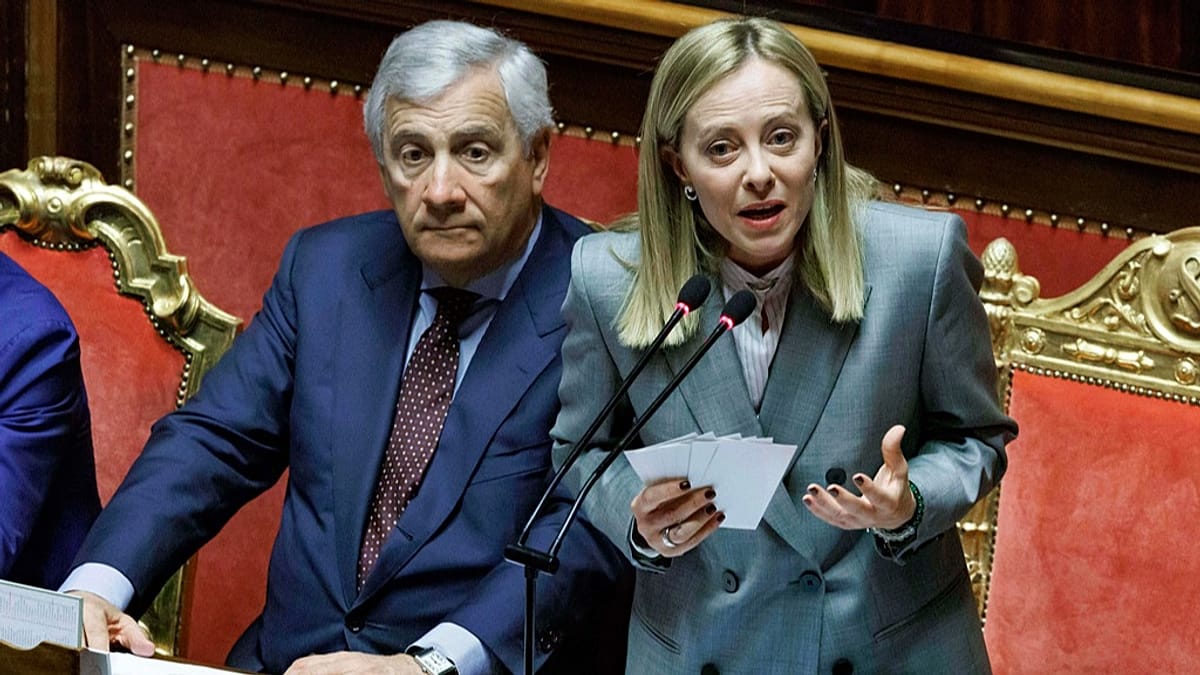
Italian Prime Minister Giorgia Meloni said signing the EU‑Mercosur trade deal in the coming days would be “premature,” a stance that, combined with opposition from France, Hungary, Poland and Austria, is likely to derail the European Commission’s plan to have President Ursula von der Leyen sign the pact in Foz do Iguaçu; the deal needs a qualified majority (15 of 27 states representing at least 65% of the EU population). Italy is demanding additional agricultural safeguards and a reciprocity clause to ensure Mercosur producers meet EU production and environmental standards, and Rome’s agriculture minister has instructed MEPs to seek stronger amendments even after the European Parliament approved a safeguard package. The objection from Italy and pressure from farmers’ groups, which plan protests, leaves the near‑term signature and implementation timeline uncertain and increases political risk around liberalisation of EU‑Latin American agricultural trade.
Italian Prime Minister Giorgia Meloni declared signing the EU-Mercosur trade deal in the coming days "premature," a stance that, together with active opposition from France, Hungary, Poland and Austria, is likely to prevent the European Commission from securing the qualified majority (15 of 27 member states representing at least 65% of the EU population) needed to authorize President Ursula von der Leyen to sign in Foz do Iguaçu; the Commission had hoped to sign on 20 December for a pact struck in 2024 with Argentina, Brazil, Paraguay and Uruguay to liberalise trade. Italy’s demand centers on additional agricultural safeguards and a reciprocity clause to ensure Mercosur producers meet EU production, environmental and animal-welfare standards, and Rome’s Agriculture Minister has instructed MEPs to seek stronger amendments even after the European Parliament approved a safeguard package. Domestic political pressure is tangible: Italy’s main farmers’ group Coldiretti will join a Brussels protest, and MEPs including Carlo Fidanza say current safeguards are too cumbersome or insufficient. The near-term outlook is elevated political risk and timeline uncertainty; sentiment signals show moderately negative tone (sentiment_score -0.4) but only modest market-impact score (0.3), implying policy risk rather than immediate market dislocation while investors await final language and the EU Council vote.
AI-powered research, real-time alerts, and portfolio analytics for institutional investors.
Request DemoOverall Sentiment
moderately negative
Sentiment Score
-0.40
