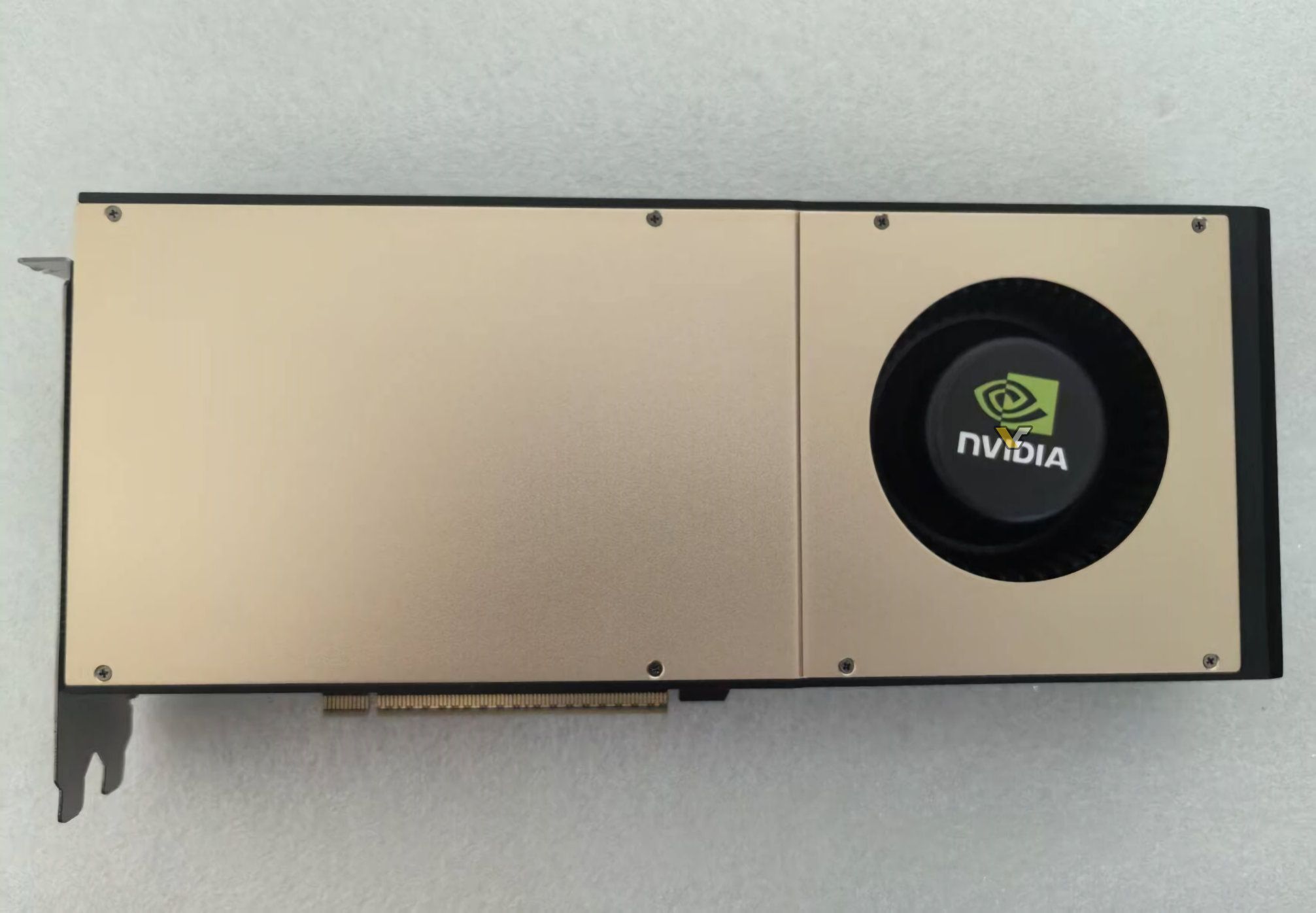
Aftermarket vendors in China are retrofitting Nvidia Blackwell (RTX 50-series) gaming cards into blower-style designs for AI data-center use, listing models including blower RTX 5090 (32 GB) at ¥29,000 (~$4,156), RTX 5080 at ~$1,288, RTX 5070 Ti at ~$1,103 and RTX 5060 Ti at ~$573 — roughly a $100–many-hundred-dollar premium versus gaming variants. The conversions target dense server racks where blower coolers and increased VRAM are advantageous, reflecting strong local demand for AI-capable hardware despite U.S. export controls on flagship units and ongoing informal reassembly operations; the development signals sustained aftermarket price power and demand pressure on GPU supply in China.
Market structure: Aftermarket blower-style Blackwell cards sold in China signal a willing-to-pay cohort for high-VRAM, rack-optimized GPUs outside official channels, supporting higher realized GPU prices (we estimate a 10–30% premium vs retail on these models). Direct winners: NVDA (intact demand for Blackwell dies drives pricing power), memory suppliers (incremental GDDR7 demand), and local system integrators/resellers capturing outsized margins. Losers: mainstream gaming OEM channels and western cloud providers if supply is diverted; AMD (AMD) and Intel (INTC) may lose relative share in high-density AI deployments due to CUDA lock-in.
Risk assessment: Key tail risks include tightened US export controls or coordinated crackdowns in China that could remove a domestic gray market overnight (scenario: NVDA ADR swings -20%+ intra-quarter). Short-term (weeks) volatility will spike on policy headlines; mid-term (1–6 months) inventory and pricing signals matter; long-term (12–36 months) outcome depends on whether China localizes GPU dies or VRAM supply (would reduce NVDA addressable revenue). Hidden dependencies: power density, memory availability, and local engineering to retrofit blowers—constraints that can cap scale quickly.
Trade implications: Tactical overweight NVDA (1–3% portfolio) and memory supplier MU (Micron) (0.5–1%) to play sustained demand; hedge with a small underweight in AMD (0.5–1%) as relative loser. Use options to express convexity: buy NVDA 3–6 month call spreads (buy 30–40 delta, sell 70–80 delta) to cap cost while capturing upside if China demand persists. Rotate capital out of consumer GPU retailers and into data-center focused stocks and SOXX by +2–3% over 1–6 months.
Contrarian angles: Market may underprice sanction/friction risk—consensus likely assumes demand translates to NVDA revenue; instead expect revenue leakage to gray market resellers limiting NVDA's topline capture (underappreciated). Conversely, the market may underappreciate durability of Chinese retrofit operations enabling a multi-year secondary market that supports elevated GPU pricing despite sanctions (repeat of GPU-mining diversion patterns). Watch for regulatory catalysts (BIS notices, China raids) that can flip narratives quickly.
AI-powered research, real-time alerts, and portfolio analytics for institutional investors.
Request DemoOverall Sentiment
mildly positive
Sentiment Score
0.25
Ticker Sentiment
