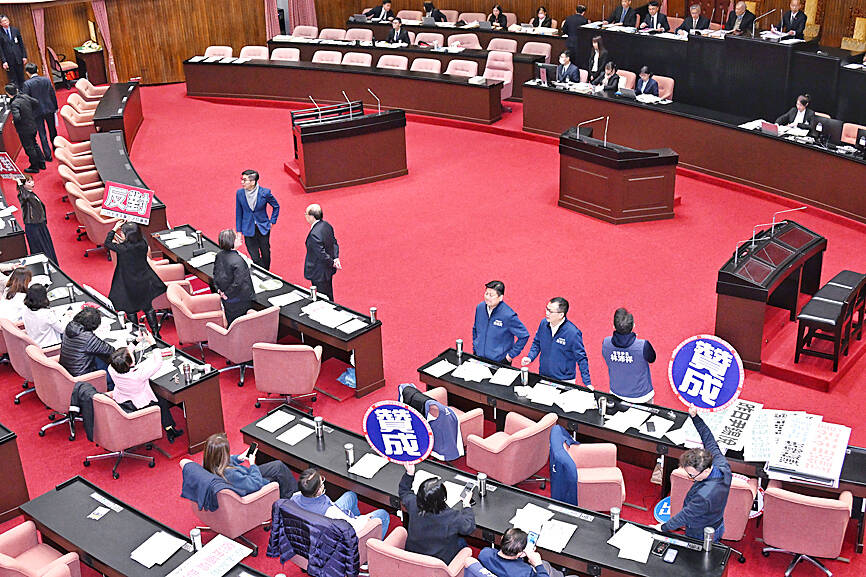
Taiwan's legislature approved a motion to initiate impeachment proceedings against President William Lai by a 61-50 vote, accusing him of undermining constitutional order after he did not promulgate a law increasing local governments' share of public revenues; a roll-call vote is slated for May 19 after a series of public hearings and review sessions in January and April. The dispute — driven by the premier's refusal to countersign the measure on fiscal-sustainability grounds and the opposition majority in the Legislative Yuan — raises political and governance risks for Taiwan, while separate security and geopolitical developments (a high-profile assassination in Moscow and U.S. approval of an arms package to Taipei including HIMARS and M109A7 howitzers) amplify regional uncertainty for investors.
Market structure: Political gridlock and an impeachment process (hearings Jan 14–22, roll call May 19) raise near-term Taiwan domestic risk. Winners: defense/surveillance suppliers and safe-haven assets (USD, gold) as demand for arms and security services increases; losers: Taiwan domestic cyclicals (retail, property), local banks and municipal credit reliant on the contested revenue-sharing amendment. Expect TWD depreciation vs USD, 10–30bp wider Taiwan sovereign spreads, and >5% potential divergence between export tech (resilient) and local-consumption sectors (weaker) over 1–3 months.
Risk assessment: Tail risks include a constitutional crisis (impeachment advancing to the court), Chinese economic/ trade retaliation, or kinetic escalation — each could trigger >15% selloff in Taiwan equities and >50–100bp sovereign spread widening. Short-term (days–weeks): event-driven volatility around January hearings; medium (months): fiscal policy uncertainty depresses domestic demand; long-term (years): structurally higher defense budgets and diversification of supply chains. Hidden dependency: export-led Taiwan tech (TSM) is vulnerable to secondary trade sanctions and shipping/logistics disruption.
Trade implications: Tactical plays: overweight US defense contractors (LMT, RTX, NOC) for 6–12 months; underweight/hedge Taiwan domestic cyclical exposure via EWT puts or short positions in major Taiwanese banks (2881.TW, 2882.TW) for 1–3 months. Use options around the Jan and May volatility windows: buy May (3–6 month) EWT puts 5–10% OTM or TSM 6-month put spreads to cap premium. Rotate portfolio from domestic consumption toward security/defense, USD, and 0.5–1% allocation to GLD.
Contrarian angles: The market may overprice removal probability — two-thirds legislative threshold plus Constitutional Court unanimity makes immediate removal low probability, so downside could be temporary (historical political shocks in Taiwan tended to mean-revert within 3–6 months). Opportunity: a disciplined buy-the-dip plan into high-quality exporters (TSM/TSM) on >10% drawdown, while recognizing the risk that escalatory Chinese responses to US arms sales could inflict real supply-chain damage.
AI-powered research, real-time alerts, and portfolio analytics for institutional investors.
Request DemoOverall Sentiment
moderately negative
Sentiment Score
-0.50
