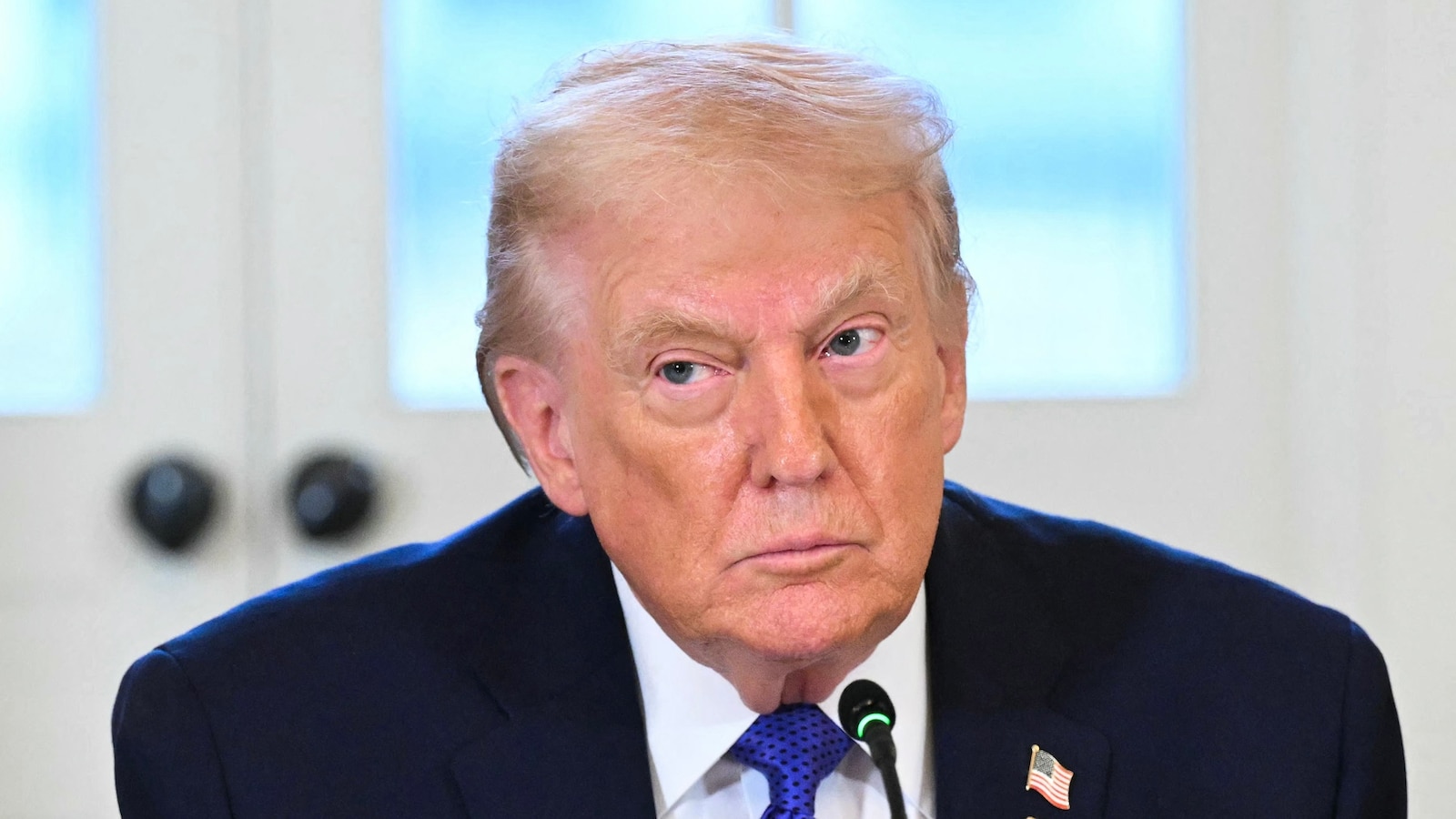
President Trump reiterated plans to assert U.S. control over Greenland—by purchase or force—arguing that inaction would allow Russia or China to gain strategic advantage, comments made while meeting oil executives about Venezuela. The proposal has drawn firm rejection from Greenlandic and Danish officials and bipartisan skepticism in Congress, while Vice President Vance and the administration stress Arctic missile-defense importance; Secretary of State Marco Rubio is expected to meet Danish and Greenlandic counterparts next week. Immediate market implications appear limited, though continued rhetoric raises geopolitical risk for defense and Arctic-related energy investments.
Market structure: Immediate winners are U.S. defense and missile‑defense contractors (Lockheed Martin LMT, Northrop Grumman NOC, Raytheon RTX) and Arctic/minerals juniors that would gain optionality on Greenland resources (rare earths, uranium, nickel). Losers are geopolitical-sensitive European exporters and Greenland/Danish sovereign‑risk exposures; pricing power shifts toward firms with Arctic logistics, ISR and base‑building capabilities. Commodities (nickel, rare earths) see higher implied forward premiums; oil upside is modest near term but meaningful if exploration timelines (2–6 years) accelerate.
Risk assessment: Tail risks include diplomatic rupture with Denmark or an accelerated basing agreement leading to 1–3% shock to regional supply chains and a >50 bps rise in 2–5y U.S. yields if defense spending is expanded; military action remains low probability (<5% near term). Time horizons: days—FX/volatility spikes around diplomatic meetings (next 7–14 days); weeks–months—contract awards and budget signals; years—resource development and capex. Hidden deps: Congressional resistance, Greenland local governance, environmental permitting and EU/NATO responses can derail projects.
Trade implications: Favor selective long-defense equities and Arctic resource juniors, funded by small macro hedges. Use 3–12 month option structures (call spreads) to express upside while capping premium; favor pair trades that go long defense vs short discretionary/cyclicals to capture rotation. Size positions conservatively (1–4% each) and tie scaling to catalyst windows (Rubio meeting, FY budget cycle).
Contrarian angles: Consensus treats remarks as theater; the mispricing is in small‑cap Greenland miners and options on defense names—these assets underreact to political rhetoric but overreact to formal security commitments. Historical parallels: Cold War Arctic investment cycles produced multi‑year alpha for defense contractors and miners; unintended consequences include stronger EU/Danish coordination that could push work to European contractors (negative for US-only plays). Monitor explicit government statements—those will reprice the market.
AI-powered research, real-time alerts, and portfolio analytics for institutional investors.
Request DemoOverall Sentiment
moderately negative
Sentiment Score
-0.30
