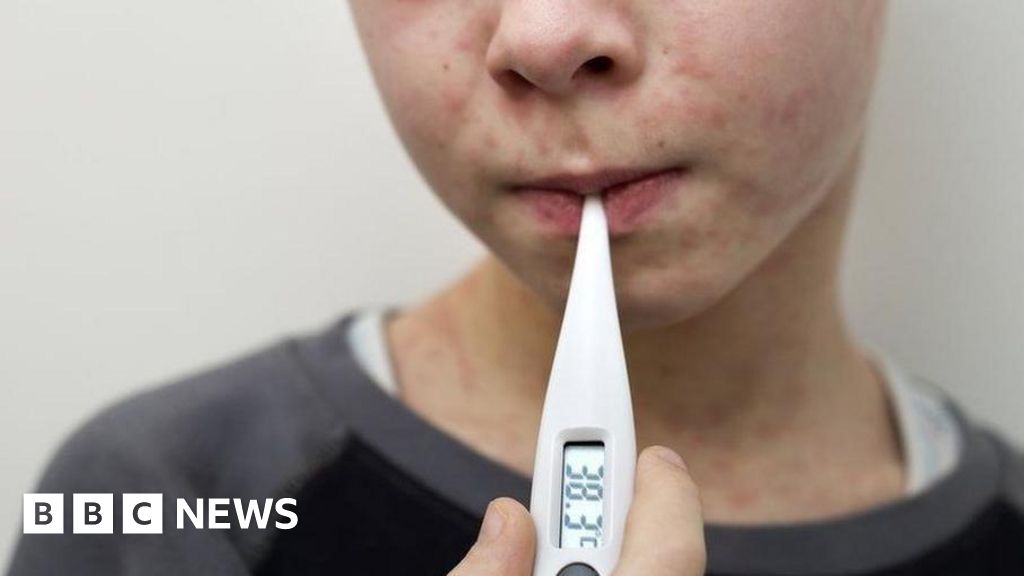
The World Health Organization has revoked the UK’s measles elimination status after 3,600 suspected cases in 2024 and more than 1,000 cases in 2023, reflecting sustained transmission and vaccination coverage below the 95% herd-immunity threshold (92% first MMRV dose and just under 85% second dose at end-2024). The UKHSA and NHS are promoting measures — including an earlier 18-month second-dose appointment and catch-up vaccinations — which could modestly increase short-term demand for immunisation services and public-health spending, but the development is primarily a public-health concern with limited direct market-moving implications.
Market structure: The immediate winners are vaccine manufacturers with MMR/MMRV portfolios (e.g., GSK, Merck, Sanofi), primary-care vaccinators (retail clinic chains) and diagnostic/serology providers; losers are local NHS budgets and any service lines strained by outbreaks. The 92%/~85% uptake vs 95% herd-immunity threshold implies several hundred thousand to low‑millions of catch‑up doses are likely needed over 12–24 months, supporting near-term procurement but limited pricing power given tendering and generic pricing dynamics.
Risk assessment: Tail risks include supply bottlenecks (manufacturing lead times), renewed anti‑vax refusal limiting uptake, or government caps on spend via centralized tendering that compresses margins for suppliers. Time horizons: immediate (weeks) = elevated appointment volumes and stock orders; short (3–9 months) = procurement rollouts/call‑ups; long (1–3 years) = structural campaign to restore ≥95% coverage or persistent pockets of low uptake.
Trade implications: Tactical long exposure to vaccine OEMs and diagnostics with 3–12 month horizons is preferred; use small-sized equity positions (1–2%) or defined‑risk options to capture procurement catalysts while avoiding long-term margin weakness. Sector tilt: increase Healthcare & Biotech allocation by 2–4% short term; avoid financing or long-duration plays on UK trusts likely to see budget stress.
Contrarian angles: Markets underprice secondary beneficiaries — cold‑chain/logistics and retail clinic networks (e.g., Boots/Walgreens) that capture walk‑in demand — and overestimate product pricing upside because procurement is tendered. If the UK moves to school‑entry mandates within 30–90 days, upside is compressed into a short window; conversely, sustained hesitancy would limit upside, so size positions accordingly.
AI-powered research, real-time alerts, and portfolio analytics for institutional investors.
Request DemoOverall Sentiment
mildly negative
Sentiment Score
-0.25
