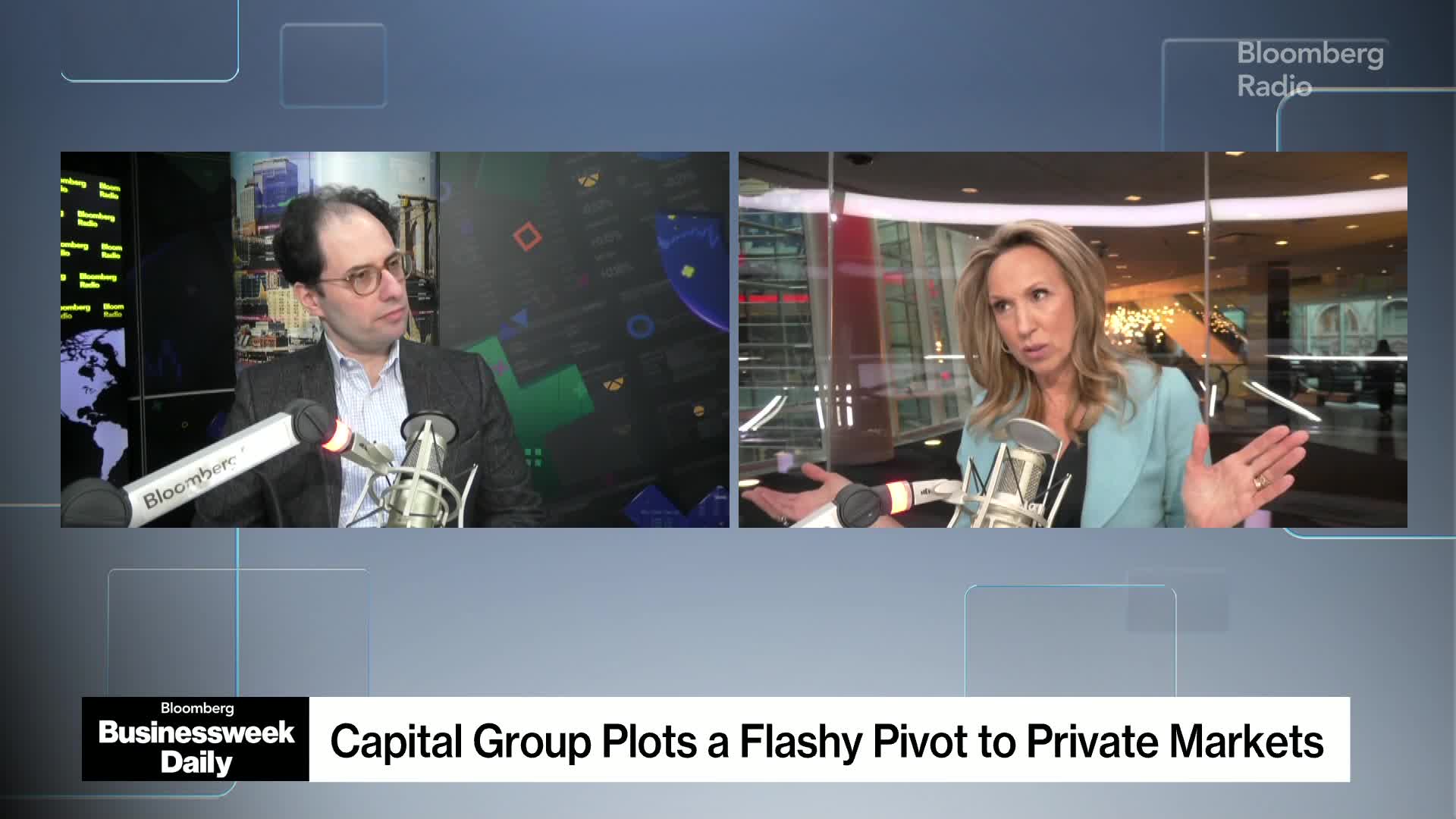
Capital Group, the near‑centennial asset manager best known for its American Funds mutual‑fund business, is broadening beyond active mutuals into active ETFs and private assets—notably private credit—after experiencing mutual fund redemptions. Its active ETF lineup has grown to about $100 billion since debuting around 2020–2022, and it has launched interval funds combining roughly 60% public and 40% private credit exposures to balance liquidity and access for advisor clients; the strategy seeks to capture rising advisor demand but places the firm in a highly competitive market with higher‑fee, less liquid product structures.
Market structure: Capital Group’s push into active ETFs and interval private-credit funds benefits distributor-aligned firms (LPLA/LPL Financial) and private-asset managers (KKR-style sponsors) that capture fee-rich product flows; ETF/servicing providers (STT) also gain incremental volume. Mutual-fund-only managers with large retail equity exposure face continued redemption risk and margin pressure — expect active-fee capture of ~100–200bp per AUM shift into private-credit products. Capital’s $100bn active-ETF run-up in ~4 years and 60/40 public/private interval fund structures suggest modest near-term liquidity for retail while preserving higher fee economics.
Risk assessment: Key tail risks are regulatory intervention (SEC guidance on retail private funds or marketing restrictions within 3–12 months), liquidity mismatches in interval funds if redemptions spike (>15% quarterly), and valuation shocks if credit spreads widen >200–300bps. Operational risks include fund-administration scale-up and advisor-channel conflicts that could slow flows; a severe credit dislocation would accelerate markdowns and advisor withdrawals. Monitor quarterly flows and HY spread moves weekly.
Trade implications: Tactical longs: distribution plays (LPLA) and private-asset sponsors (KKR) with options leverage; infrastructure plays (STT) as a hedge. Prefer 3–12 month timeframes: capture product rollouts and advisor adoption while hedging credit tail risk. Avoid large convictions versus BlackRock’s scale; fee compression is a slow-moving risk over multiple quarters.
Contrarian view: Consensus overestimates rapid retail migration to illiquid private funds — advisor friction, compliance and SEC scrutiny will likely cap mass adoption to mid-single-digit % of retail AUM over 1–3 years. Historical parallels (PE firms’ retail pushes) show distribution is necessary but not sufficient; mispricing could appear in advisor-platform names priced for aggressive flows. Watch for unintended consequences: private-credit yield inflation could crowd out public HY demand, tightening liquidity in the bond market.
AI-powered research, real-time alerts, and portfolio analytics for institutional investors.
Request DemoOverall Sentiment
mildly positive
Sentiment Score
0.18
Ticker Sentiment
