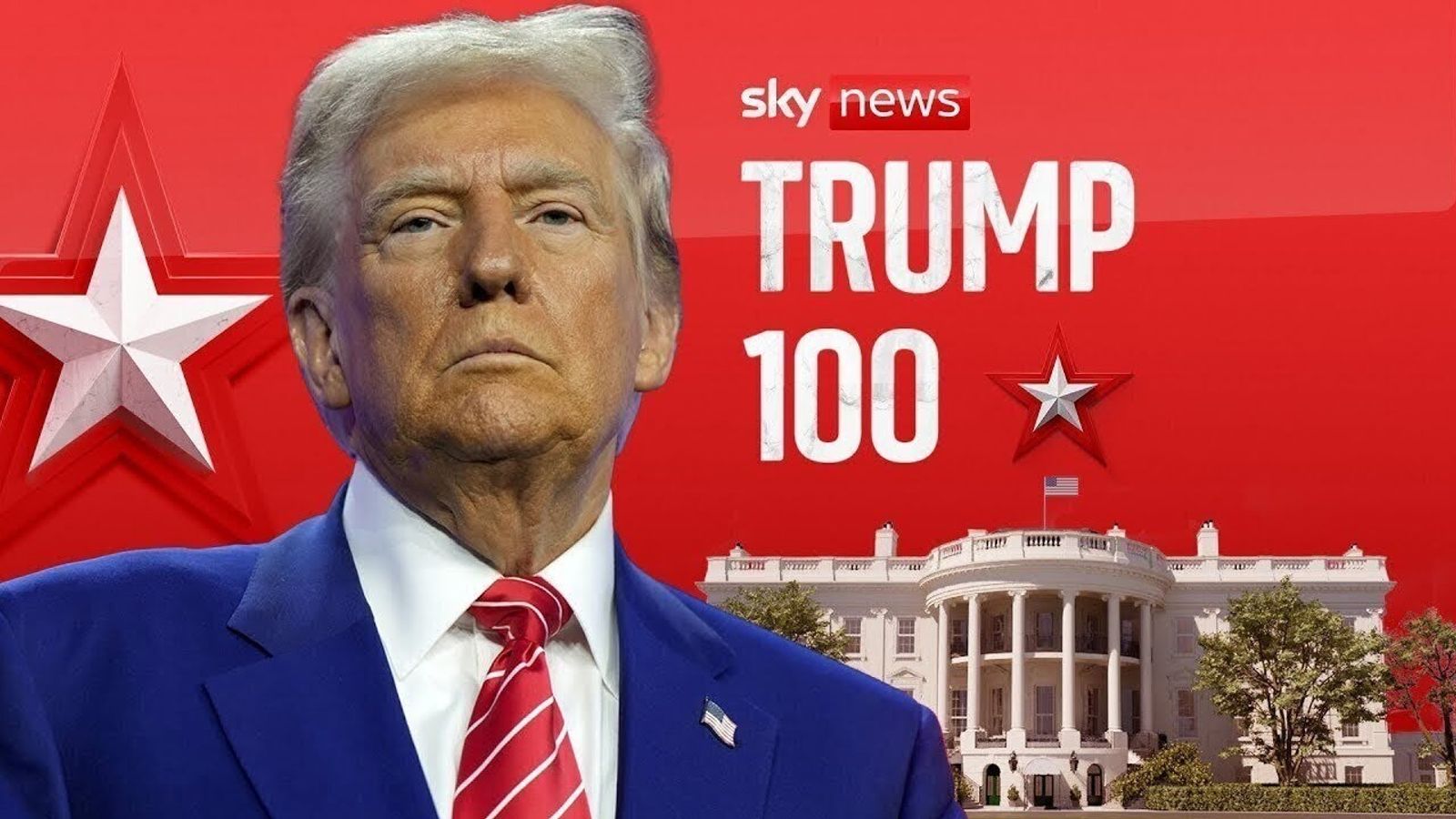
A Sky News 'Trump100' New Year special hosted by Martha Kelner, James Matthews and Mark Stone previews 2026 as a potentially consequential and volatile year for the United States and global affairs, framing political developments as the central focus. The episode signals heightened uncertainty for next year’s political landscape and invites listeners to follow the series for deeper analysis and implications.
Market structure: A highly politicized 2026 (elections + elevated geopolitics) favors defense contractors (LMT, RTX, GD) and cybersecurity vendors (PANW, FTNT) via predictable budget and contract upside, while consumer discretionary, travel & leisure (UAL, DAL, XLY) face demand shocks and pricing pressure. Safe-haven flows will intermittently bid US Treasuries, USD and gold (GLD), but fiscal loosening risks could push real yields higher and compress bond prices; oil is asymmetric — +15–30% spikes possible on supply disruptions, while sustained demand weakness could cut prices 10–20%.
Risk assessment: Tail scenarios include a contested election or regional war causing a rapid S&P drawdown of 15–30% and VIX spikes to 40–60 within weeks; low-probability regulatory actions (big-tech ad/antitrust) could knock 10–25% off affected capex-linked names. Time horizons differ: immediate (days) = volatility and FX moves; short (weeks–months) = sector rotations and earnings surprises; long (quarters) = budgetary changes, capex reallocation and higher structural defense/energy spend. Hidden dependencies include semiconductor/supply-chain chokepoints for defense and EV metals for energy transitions; catalysts include primary results, mid-year conventions, major incidents at sea or border.
Trade implications: Favor quality cyclicals with pricing power (defense, energy) and own option-based insurance; initiate modest longs in LMT/RTX and GLD/UUP while buying SPY downside protection and VIX call spreads for 3–6 month horizons. Pair trades: long defense vs short airlines or consumer discretionary to capture asymmetric demand shock exposure; rotate from high-duration growth into value/commodity cyclicals if real yields rise >50bp. Timing: set hedges now and scale into directional positions after primary calendar clarity (March–June 2026).
Contrarian angles: Consensus underestimates fiscal expansion under certain election outcomes — that would pro-cyclical boost banks (JPM) and inflation, hurt long-duration growth and raise yields; conversely, market complacency about orderly elections could be overdone. Historical parallels (2008 credit shock, 2016 political shocks) show volatility can be prolonged if confidence fractures; unintended consequence: sustained defense spend could create metal/supply bottlenecks benefitting miners (FCX) and specialty suppliers, while also stoking headline inflation that pressures real rates.
AI-powered research, real-time alerts, and portfolio analytics for institutional investors.
Request DemoOverall Sentiment
neutral
Sentiment Score
0.00
