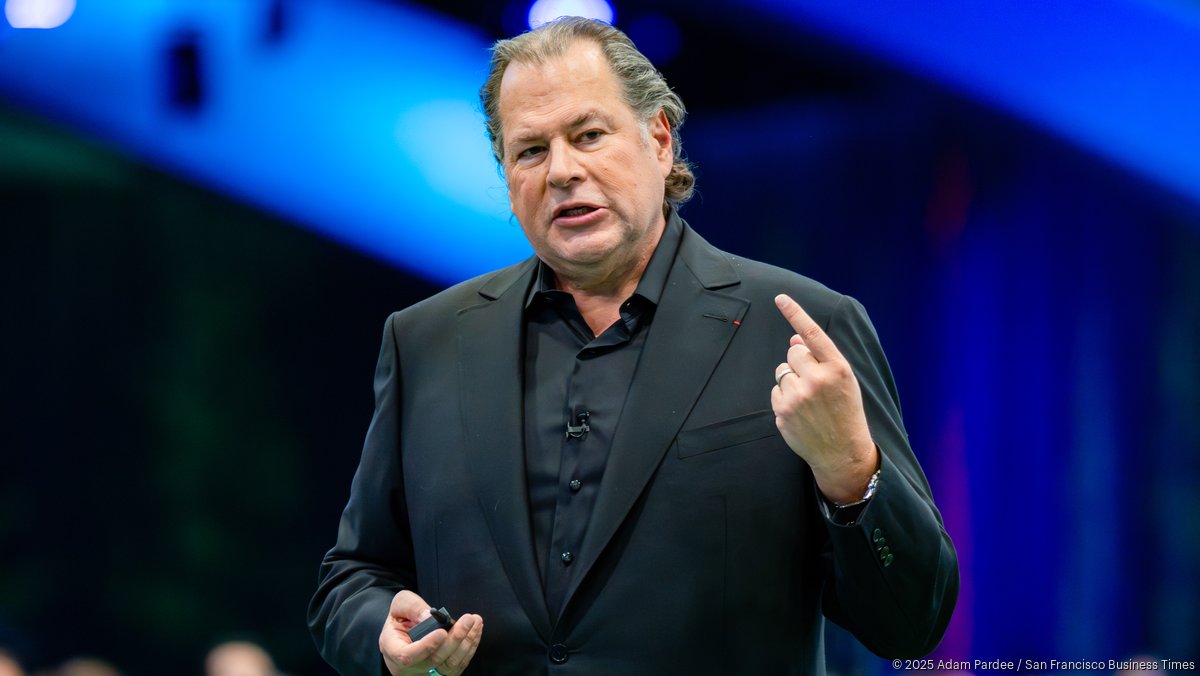
Salesforce CEO Marc Benioff said some companies are rebalancing workforces due to AI, while others are restructuring to cut costs or to free up funds for data-center investment. His comments are high-level, contain no company-specific figures or guidance, and are unlikely to move markets but underscore ongoing corporate shifts toward AI adoption and infrastructure spending.
The incremental reallocation of corporate payroll toward AI and data-center related capital creates a multi-layered winners’ map: hyperscalers and GPU suppliers capture the compute demand spike, but the most persistent margin tailwind may land with data‑center landlords and power/renewables providers that solve site and energy constraints. Expect a 12–36 month cadence: near-term RFPs and managed‑service deals boost vendors and software partners; physical buildouts (land, substations, cooling) determine which real estate owners actually capture durable cash flow.
A second‑order supply shock is underappreciated. High‑density racks drive disproportionate demand for specialized switchgear, chillers and medium-voltage upgrades; equipment lead times (6–18 months for transformers, 9–24 months for major grid upgrades) create vendor pricing power and project delays that can compress near-term supply of capacity even as headline demand surges. That bifurcates winners: players that own shovel‑ready sites or grid agreements (low execution risk) vs. speculative land buyers.
Key risks and catalysts: a macro slowdown or a rapid reduction in per‑inference costs (model or silicon efficiency) would materially cut near-term compute spend — this flips the story in 3–9 months. Regulatory labor constraints or public backlash could slow workforce rebalancing and delay savings funnels into capex. Monitor hyperscaler contract mix (colocation vs. dedicated builds) and utility rate filings as 3–12 month leading indicators of durable demand shifts.
AI-powered research, real-time alerts, and portfolio analytics for institutional investors.
Overall Sentiment
neutral
Sentiment Score
0.00
Ticker Sentiment
