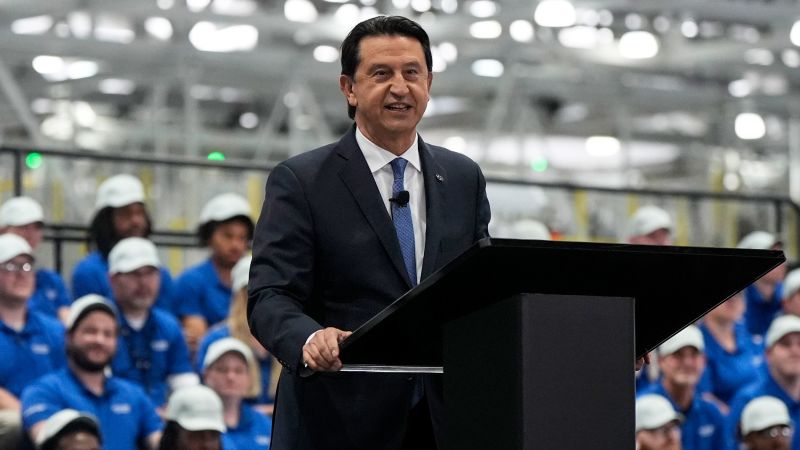
A recent US Department of Homeland Security enforcement operation at the Hyundai-LG Battery Plant in Georgia led to the detention and deportation of over 300 specialized South Korean workers, causing Hyundai CEO José Muñoz to project a 2-3 month delay in the plant's opening. Despite this operational setback and the challenge of replacing the deported workers who possess unique expertise, Hyundai reaffirmed its $2.7 billion investment in Phase 2 of the Georgia complex, while Muñoz advocated for a specialized visa category for foreign experts critical to advanced manufacturing projects in the US.
A significant US Department of Homeland Security raid at the Hyundai-LG joint venture battery plant in Georgia has introduced a material operational risk to Hyundai's US electric vehicle strategy. The deportation of over 300 specialized South Korean workers is projected by CEO José Muñoz to delay the plant's opening by two to three months, directly impacting the timeline for domestic EV battery production. This event highlights a critical vulnerability in the US advanced manufacturing supply chain: a dependency on foreign expertise that, according to Muñoz, is not available domestically. Despite this near-term disruption, Hyundai has publicly reaffirmed its long-term commitment by moving forward with a $2.7 billion Phase Two investment. The incident also exposes potential governance and communication gaps within the joint venture structure, as the plant is operated by LG Energy Solution and the Hyundai CEO was not immediately informed. Muñoz's subsequent engagement with the Trump administration and his public call for a new specialized visa category underscore a broader geopolitical and regulatory risk for foreign companies making substantial capital investments in the United States.
AI-powered research, real-time alerts, and portfolio analytics for institutional investors.
Overall Sentiment
mixed
Sentiment Score
0.00
