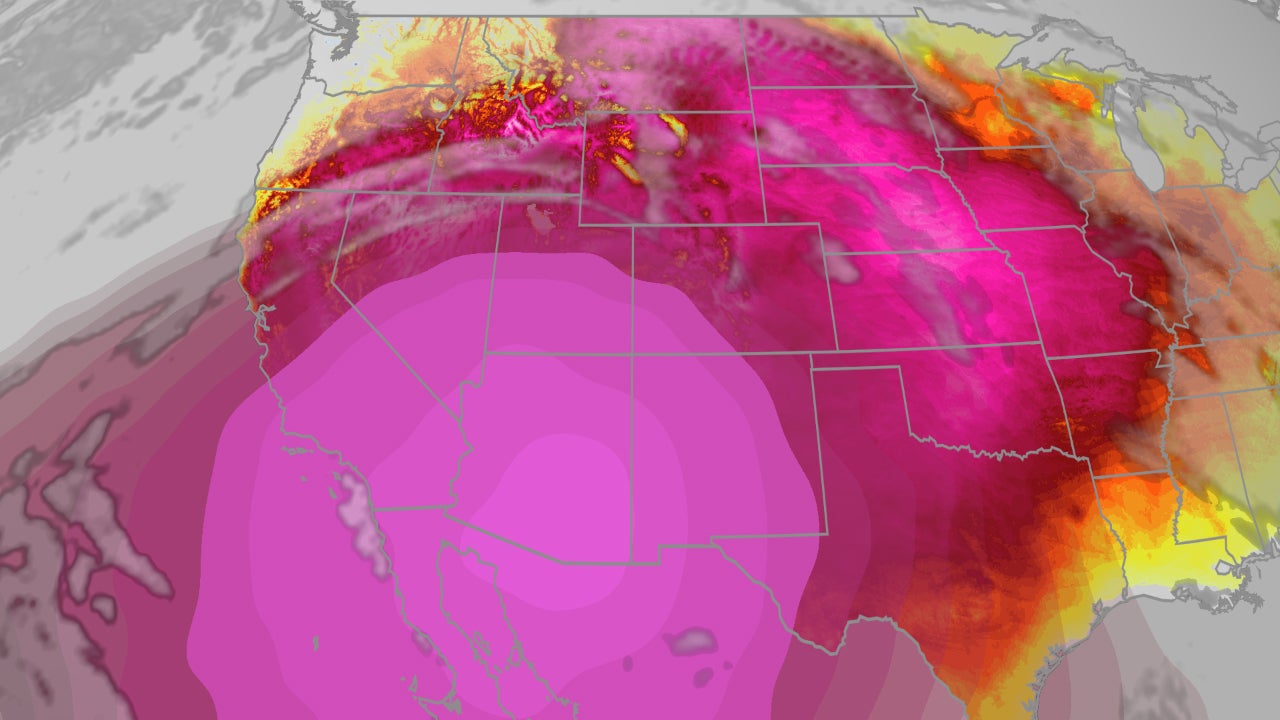
Over 100 cities and 11 states could threaten all-time March record highs as a record-strength heat dome blankets the West into the Plains. Phoenix is forecast to register at least four straight days of 100°F+ (typically not reached until May 2), Las Vegas and downtown Los Angeles have a small chance of hitting 100°F in March, and the U.S. all-time March record of 108°F (Rio Grande City, TX) is in jeopardy. Impacts include severely depleted snowpack (Colorado mid-March lowest in 40 years; California Sierra at ~42% of average), heightened early-summer fire risk and potential Southwest drought expansion; Climate Central estimates this magnitude of March heat is at least 5x more likely due to climate change.
This event is a supply/demand shock concentrated on the electricity and water vectors rather than a fuel-supply shock — think acute system stress over weeks, then chronic resource tightening over months. Expect more frequent late-afternoon ramp risk for grids that are heavy in solar: midday supply will be strong but evening net demand and ancillary service prices will spike, widening the “duck curve” premium and rewarding fast-ramping, dispatchable capacity and storage. Reduced mountain snowpack converts what is normally a spring liquidity buffer into an end-of-season supply gap, which forces greater withdrawals from reservoirs and increases the probability of municipal water restrictions and higher water utility revenues/rate cases into 2026. Insurance and reinsurance are second-order squeezes: earlier season fuels larger-than-normal acreage exposure to wildfire and crop loss, which compresses insurer loss ratios and raises the chance of out-of-cycle reserve raises this year. Agricultural input markets (fertilizers, irrigation equipment) will tighten if early-season heat reduces yields or accelerates irrigation needs; that manifests in commodity price moves with a 3–9 month lag rather than immediate basis shocks. The main near-term catalyst that would reverse these pressures is synoptic pattern change — a deepening trough or late cold storm — which would quickly relieve power stress and slow snowmelt, making the first 7–14 days the highest-conviction trading window.
AI-powered research, real-time alerts, and portfolio analytics for institutional investors.
Overall Sentiment
mildly negative
Sentiment Score
-0.25
