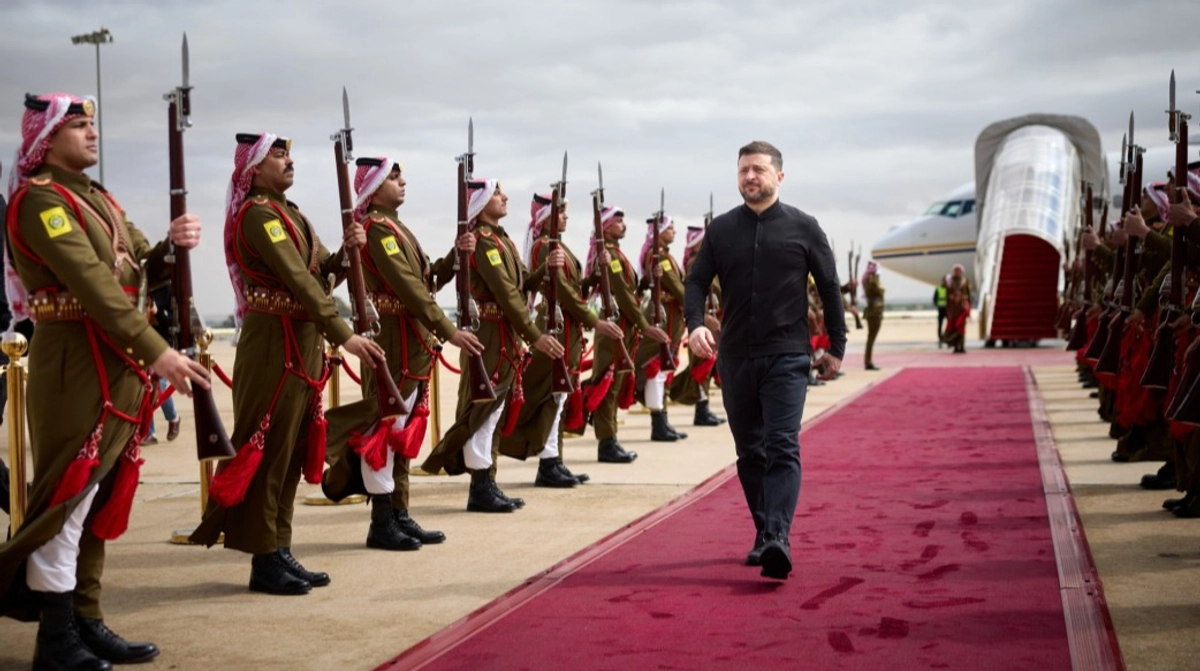
Ukrainian President Volodymyr Zelenskyy offered Ukraine's assistance to the US in unblocking the Strait of Hormuz, citing Kyiv's experience reopening the Black Sea corridor. He stressed the US is primarily handling Hormuz operations and Ukraine is prepared to support if needed; G7 ministers have said any navigation mission would require the Middle East war to cease. The statement is diplomatic and factual with limited immediate market impact, though it could affect energy-security risk premiums if it led to operational action.
Transferring the Black Sea corridor playbook to a narrow chokepoint implies a different operational and market footprint: minesweeping, unmanned surface/underwater vehicles (USVs/UUVs), and escorted convoys reduce transit time volatility far faster than building alternate pipelines or storage. Practically, successful implementation would compress war-risk premia for tanker voyages by 30–60% within 1–3 months, lowering spot freight rates and insurance surcharges even if crude prices remain elevated.
The most immediate market response will be in freight and insurance layers rather than upstream production: tanker spot rates and war-risk insurance are the first-to-react instruments, so shipping equities and freight derivatives will see the largest short-term re-pricing. Conversely, refiners and inland logistics that benefited from higher waterborne freight/insurance spreads would see margin pressure if transit risk normalizes, creating a cross-sector divergence that can be pair-traded.
A key second-order geopolitical risk is escalation via proxy attacks—naval escorts and visible multinational deployments can deter state action but also raise the probability of limited kinetic encounters, which would spike crude and freight curves nonlinearly (think $5–$15+ per barrel moves inside 2–6 weeks on an attack that disables transit). The policy conditionality (mission tied to ceasefire milestones) makes timing binary: market dislocations will cluster around diplomatic breakthroughs or headline escalations.
For portfolio construction this means short-duration tactical plays around freight/war-risk and longer-duration directional exposure to defense and unmanned maritime tech. Exit triggers must be headline-driven (ceasefire announcements, major incidents) and position sizes capped to absorb 15–25% event tail moves given the asymmetric kink in premiums.
AI-powered research, real-time alerts, and portfolio analytics for institutional investors.
Request DemoOverall Sentiment
neutral
Sentiment Score
0.00
