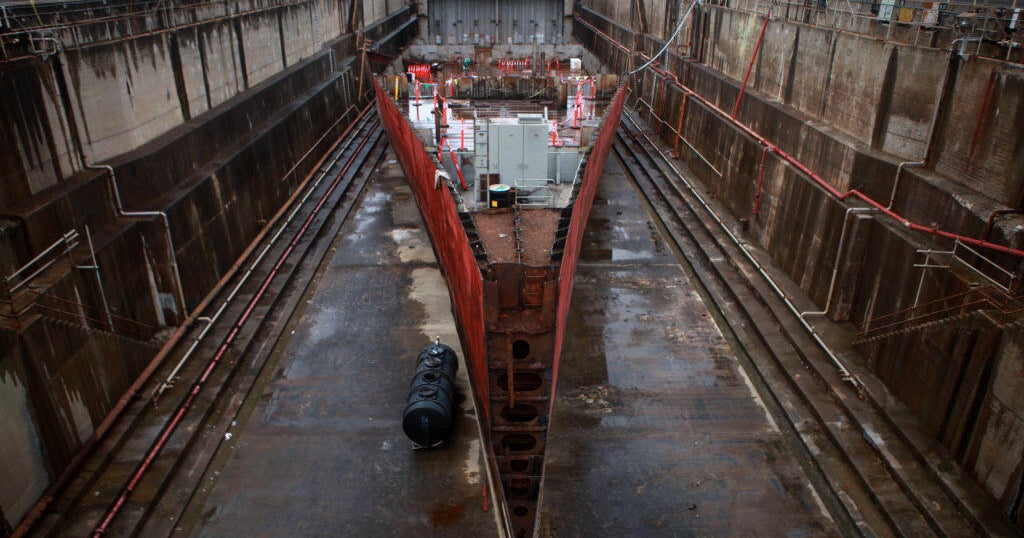
Mare Island Dry Dock, LLC informed Vallejo officials on Dec. 30 it will permanently close the Mare Island Dry Dock and terminate all employees, affecting more than 80 full-time union and non-union workers. Company officials cited losing a critical U.S. Coast Guard contract—reportedly awarded to a Portland-based firm with a bid reported to be over $1 million different than Mare Island's—and "unforeseen business circumstances," a development that raises regional defense-industrial and labor-market concerns and follows a separate Anheuser-Busch plant closure in the county impacting some 200 workers.
Market structure: The immediate winners are competitor shipyards and defense contractors that pick up USCG and federal maintenance work; the losers are local Vallejo industrial employers, suppliers, and owners of underutilized waterfront real estate. Expect a modest reallocation of small- to mid-size USCG service contracts over 3–12 months, favoring larger, multi-site operators with capacity to absorb icebreaker work; pricing power for those operators should improve by low-double-digit percentage points on affected contract lines if capacity tightens.
Risk assessment: Tail risks include a federal protest or Congressional intervention that reverses the award (within 30–90 days) or accelerated federal funding for regional shipyard upgrades (6–24 months) that could reopen competitive bids; both would materially change winners. Near term (days–weeks) unemployment and local fiscal stress are the main impacts; medium-term (quarters) is potential loss of skilled labor from the region reducing local labor supply for other Bay Area industrial employers.
Trade implications: Deploy concentrated, time-boxed exposure to large public shipbuilders/maintenance primes (HII, GD) to capture reallocated contract revenue over 3–12 months; use option overlays to control downside. Reduce/trim exposure to California industrial real-estate concentration and county muni exposure (Solano) by 0.5–1% of portfolio to reflect downside risk to rents/municipal revenues in next 6–18 months.
Contrarian angles: The market will likely underprice the chance of a successful contract protest or political reversal—if a GAO protest is filed within 30 days, volatility will spike and a long-tail recovery for local assets becomes possible. Conversely, if USCG clarifies procurement rationale within 60 days and other yards benefit persistently, HII/GD upside is underappreciated; mispricings will show up in near-term options implied volatilities and small-cap regional industrial debt spreads.
AI-powered research, real-time alerts, and portfolio analytics for institutional investors.
Request DemoOverall Sentiment
moderately negative
Sentiment Score
-0.50
