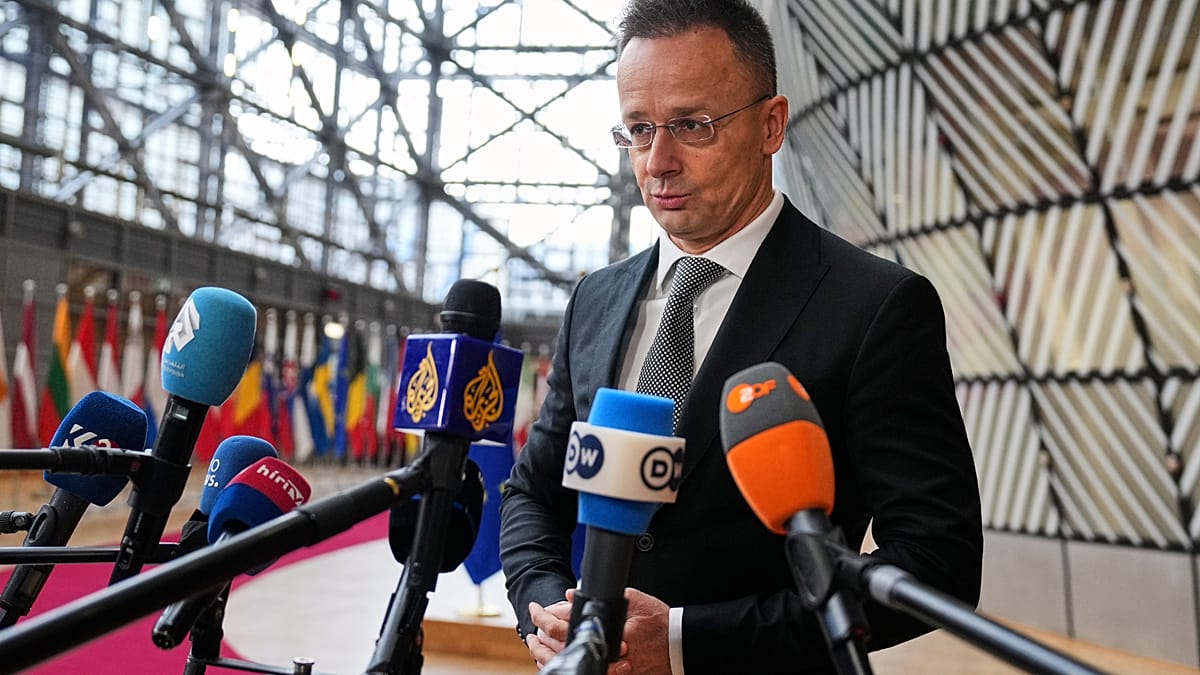
Hungary's foreign minister Péter Szijjártó reiterated Budapest's veto of an EU emergency loan and a planned sanctions package over a dispute with Ukraine about damage to the Druzhba oil pipeline, accusing Kyiv of political blackmail while Ukraine and the European Commission point to a Russian strike on Jan. 27. The move puts unanimity for new sanctions and a €90 billion loan at risk, with Budapest also threatening to withhold electricity until oil flows resume and continuing imports of Russian oil despite EU pressure to wean off Russian fuels by 2027. The standoff raises near-term geopolitical risk and regional energy-supply uncertainty, potentially forcing last-minute EU concessions and keeping energy prices and policy risk elevated for investors with exposure to Central European energy and defense-sensitive assets.
Market structure: Short-term winners are Russian crude exporters and European refiners that can access Russian oil (Hungarian incumbents like MOL), while losers are Hungarian sovereign credit, the forint and EU-funded Ukrainian aid flows. Expect spot Brent to gap higher on transit headlines (a tactical $3–8/bbl move over days if Druzhba remains offline) and nearby Brent/WTI curves to push into mild backwardation as regional supply tightens.
Risk assessment: Tail risks include a complete Druzhba shutdown or renewed Russian strikes causing a multi-week physical supply shock (Brent +$15+/bbl) and EU political fragmentation that forces market segmentation. Immediate (48–72h): FX and oil volatility spikes; short-term (weeks–3 months): widening Hungary sovereign spreads by 50–200bp; long-term (6–18 months): accelerated EU re-routing and capex into alternative pipelines/LNG reducing Russia’s long-run pricing power.
Trade implications: Tradeable trades are short-duration commodity plays and political-risk hedges rather than long equity levers. Tactical plays: short EUR/HUF forwards and buy 1–3 month Brent call spreads; selectively long MOL equity on margin upside versus buying Hungarian sovereign CDS as a hedge. Rebalance away from EU regional banks and small-cap Hungarian equities into Energy/Defense exposures until clarity.
Contrarian angles: Consensus expects protracted disruption; miss is political resolution via last-minute EU concessions (Orbán extracting side-payments) which would unwind oil spikes within weeks — making >3-month outright long oil risky. Conversely, markets may underprice protracted credit stress in Budapest; a >100bp sovereign spread move would create idiosyncratic buying opportunities in discounted Hungarian assets once EU compromise is priced in.
AI-powered research, real-time alerts, and portfolio analytics for institutional investors.
Request DemoOverall Sentiment
moderately negative
Sentiment Score
-0.45
