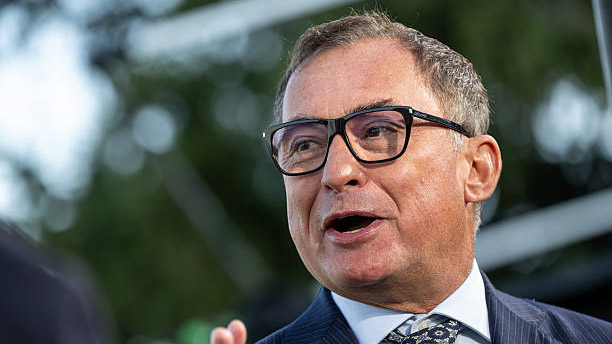
Recent commentary from Federal Reserve officials indicates a dovish shift, with St. Louis Fed President James Bullard suggesting a potential 100 basis point rate cut and Philadelphia Fed President Patrick Harker advising an immediate end to balance sheet runoff, while Pimco's Clarida views Chair Powell's approach positively. Concurrently, geopolitical tensions persist as China signals a united front with India against US tariffs.
Commentary from key Federal Reserve officials signals a significant dovish shift in monetary policy orientation. St. Louis Fed President James Bullard has explicitly suggested the potential for a 100 basis point interest rate cut, while Philadelphia Fed President Patrick Harker has advised an immediate cessation of the balance sheet runoff. This dovish sentiment is further contextualized by Pimco's Richard Clarida's endorsement of Chair Powell's approach as 'reasoned' and 'thoughtful,' suggesting broad support for a more accommodative stance. Juxtaposed against this monetary easing outlook are persistent geopolitical headwinds, specifically China's declaration that it will 'firmly stand' with India against U.S. tariffs. This creates a conflicting narrative for markets, with the prospect of looser financial conditions being counter-weighed by the risk of escalating trade disputes that could dampen global growth and corporate performance.
AI-powered research, real-time alerts, and portfolio analytics for institutional investors.
Request DemoOverall Sentiment
Neutral
Sentiment Score
0.10
