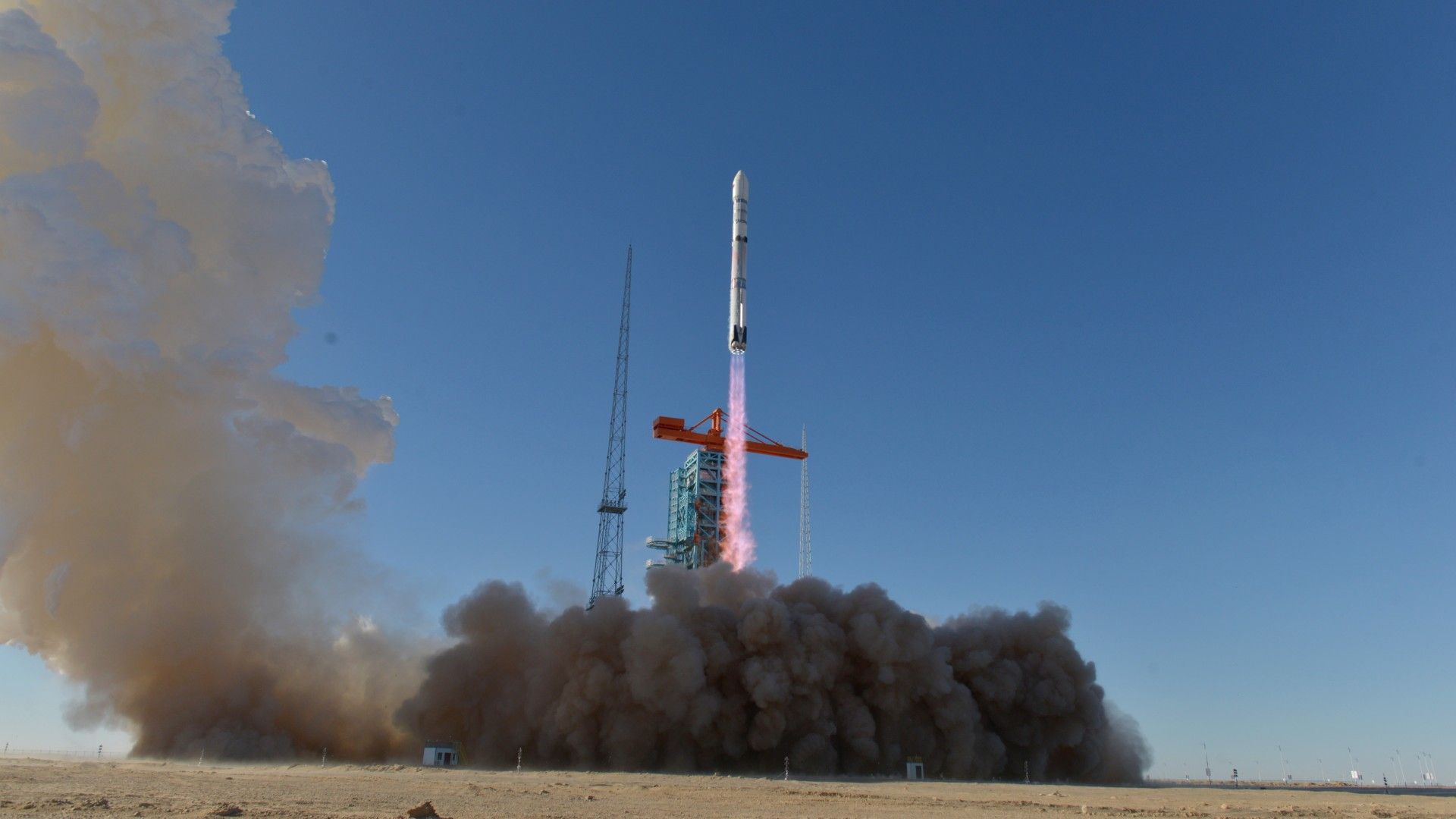
Landspace's 66-meter reusable Zhuque-3 launched from Jiuquan successfully placed its expendable second stage and payload into orbit on its maiden flight, but the stainless-steel first stage experienced an engine anomaly during the landing burn, caught fire and exploded near the designated recovery zone. The company says key technical objectives — including recovery system verification, engine throttling and attitude control — were met and is investigating the cause of the landing failure; the vehicle uses nine methane/LOX Tianque-12A engines and has an LEO payload capacity of ~18,300 kg.
Market structure: The maiden Zhuque‑3 reached orbit but failed a soft recovery — signal is that China has credible reusable-rocketry capability on the margin, which benefits low‑cost launch adopters (satcom and constellation developers) and component suppliers focused on methane engines and recovery hardware. Direct winners: satellite operators that can lower launch budgets (e.g., IRDM, VSAT) and niche suppliers that can scale reusable hardware; losers: high‑cost expendable specialists and small private launch SPACs with no tech path to reusability. If reuse scales to >1 recovery per year per vehicle across multiple providers, industry launch pricing could compress by 10–20% over 2–5 years.
Risk assessment: Tail risks include tightened export/regulatory regimes (US/EU blocking tech transfer to China), a high‑profile repeat failure that raises insurance premiums >25%, or Chinese subsidy pullback that removes scale economics; each can swing valuations by >30% for small-cap launch plays. Timeline: immediate (days) = sentiment swings; short (weeks–months) = follow‑up flight data and insurer rate adjustments; long (2–5 years) = pricing structure and CAPEX for recovery infrastructure. Hidden dependencies: insurance/recovery logistics, ground‑support CAPEX, and availability of methane supply chains and certified engine vendors.
Trade implications: Direct tactical plays: overweight US-exposed reusable/medium‑lift specialists and defense integrators that win government payloads; underweight legacy commercial aerospace exposure to margin pressure. Use options to express asymmetric upside: 9–12 month call spreads on Rocket Lab (RKLB) to cap cost while keeping upside from market share gains; consider small put protection on large commercial aerospace names (BA) for near‑term downside if pricing shock emerges. Rebalance towards satellite operators (IRDM, VSAT) that benefit from lower launch cost per satellite by +1–2% overweight.
Contrarian angles: The market will likely overreact to the dramatic booster failure while undervaluing the orbital success — missing that payload insertion validates the baseline vehicle and upper‑stage revenue path. Reaction may be overdone for well‑funded public players with repeatable test schedules; chaseable mispricings exist in small‑cap launchers where two consecutive successful recoveries within 6 months would re‑rate multiples by >40%. Watch for unintended consequences: cheaper launches could concentrate constellation supply chains and increase counterparty concentration risk for a handful of launch providers.
AI-powered research, real-time alerts, and portfolio analytics for institutional investors.
Request DemoOverall Sentiment
mixed
Sentiment Score
0.05
