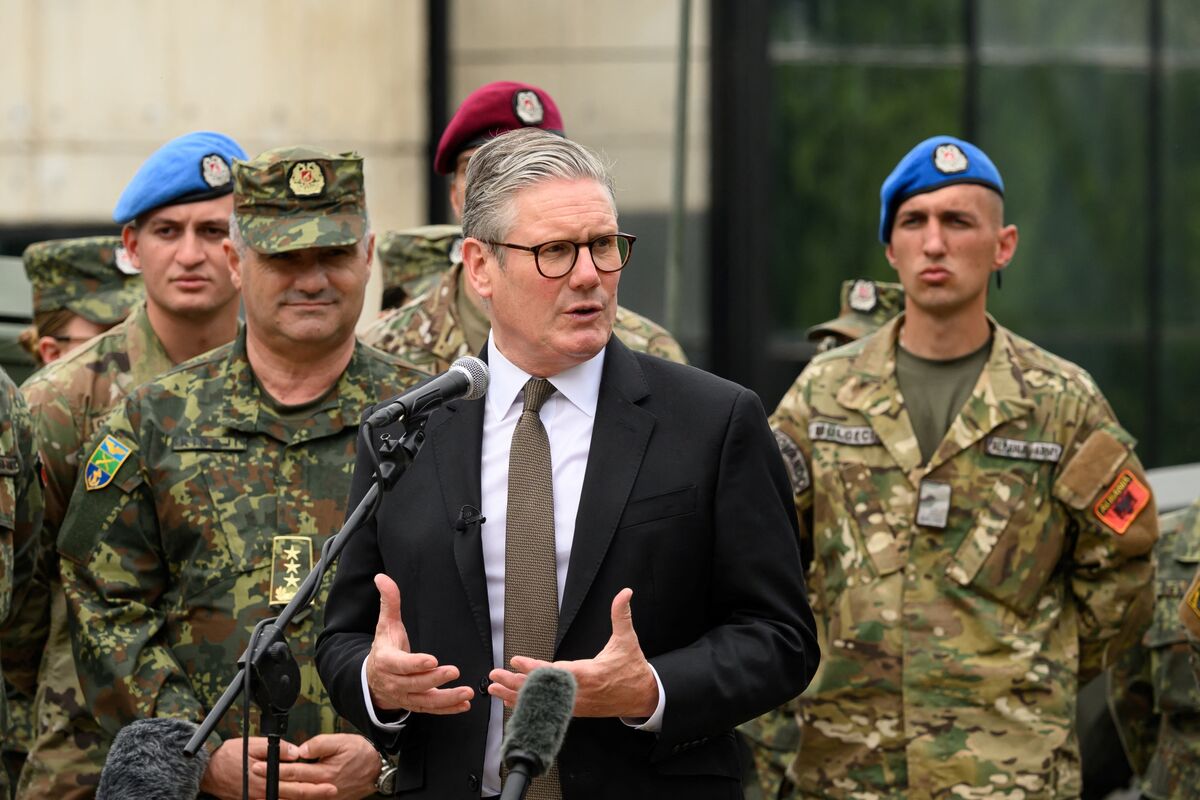
UK Prime Minister Keir Starmer is considering a Ministry of Defence request to commit to NATO's proposed defense spending target of 3.5% of national output by 2032. NATO Secretary-General Mark Rutte is pushing members to adopt this new target, along with an additional 1.5% of GDP for security-related projects, at an upcoming meeting. This consideration comes amid pressure from the US for NATO members to increase defense spending, potentially straining the UK's public finances.
The UK government, under Prime Minister Keir Starmer, is actively considering a Ministry of Defence proposal to commit to a new NATO military spending target of 3.5% of national output by 2032. This potential commitment, which North Atlantic Treaty Organization Secretary-General Mark Rutte is urging members to adopt at an upcoming meeting, also includes a proposed earmark of an additional 1.5% of GDP for other security-related projects such as cyber and border control. This development occurs amid heightened geopolitical tensions and explicit demands from figures like US President Donald Trump for NATO members to allocate as much as 5% of GDP to defense. The primary implication for the UK is the significant pressure this would place on its "already stretched public finances," as noted in the article. The associated mildly negative sentiment and cautious tone suggest that while strategically important, achieving these targets will likely involve difficult fiscal trade-offs, potentially impacting other areas of public spending or requiring increased government borrowing or taxation.
AI-powered research, real-time alerts, and portfolio analytics for institutional investors.
Request DemoOverall Sentiment
mildly negative
Sentiment Score
-0.30
