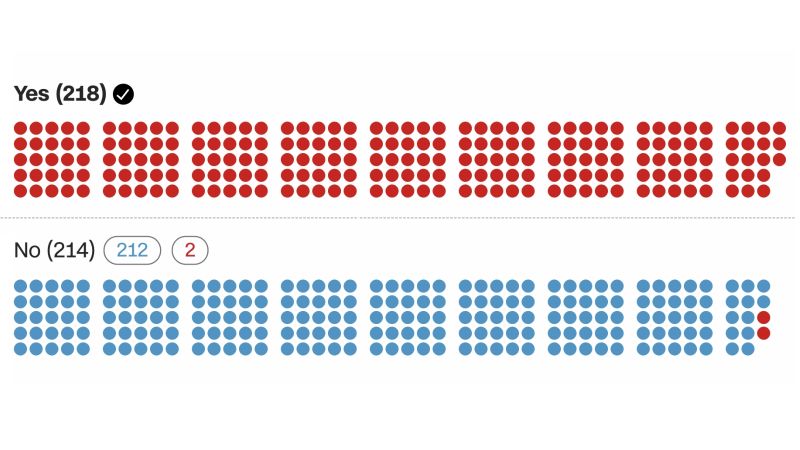
The US House of Representatives narrowly passed a significant domestic policy bill, 218-214, which extends Trump-era tax cuts, boosts military and border security spending, and reduces social safety net outlays. The legislation, a key victory for President Trump, now awaits his signature, signaling a continuation of current fiscal priorities and a notable shift in federal spending allocation.
The US House of Representatives has passed a significant domestic policy bill by a narrow 218-214 margin, solidifying a fiscal agenda characterized by extended tax cuts, increased military and border security spending, and reduced social safety net outlays. This legislation signals a direct reallocation of federal capital, creating clear beneficiaries in sectors like defense and security contracting. The continuation of Trump-era tax cuts is poised to support corporate profitability, particularly for domestically-focused firms. However, the corresponding decrease in social spending could introduce headwinds for consumer-facing industries by potentially constraining disposable income for certain demographics. The bill's passage, despite near-unanimous opposition from Democrats and two dissenting Republicans, marks a key legislative victory for the administration and, as the 0.6 market impact score suggests, is expected to have tangible economic consequences.
AI-powered research, real-time alerts, and portfolio analytics for institutional investors.
Request DemoOverall Sentiment
neutral
Sentiment Score
0.00
