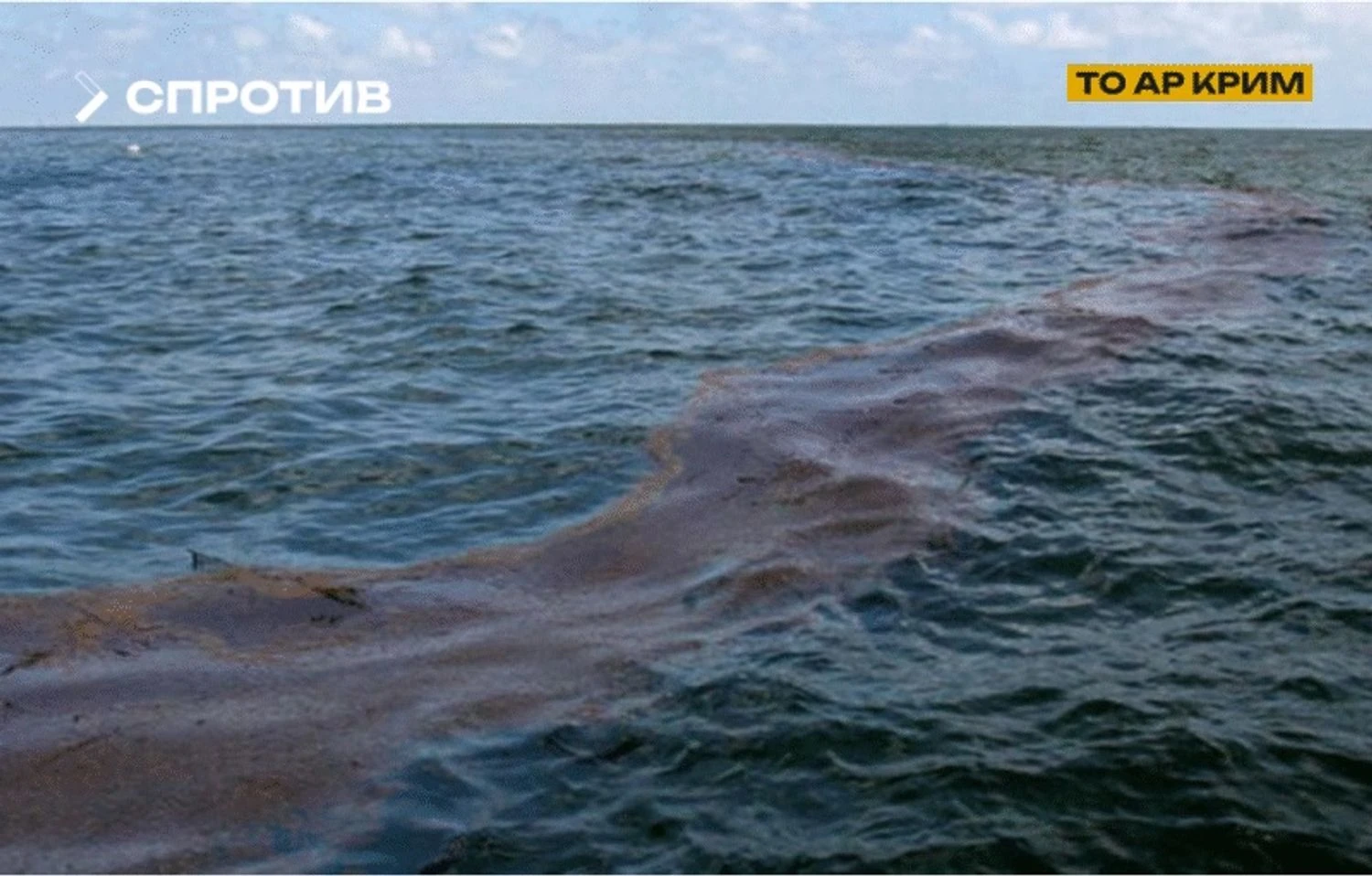
Researchers reported more than 600 active methane emission points off occupied Crimea and about 350 additional seeps in the Caucasus coastal zone, including hydrates at depths up to 725 meters, which they link to Russian offshore drilling, coastal construction and military exercises concentrated around Cape Fiolent, Sevastopol Bay and the Kerch Strait. The Center for National Resistance warns that depressurization of seabed layers is causing uncontrolled methane releases (with ~25x the warming potential of CO2), seabed degradation and the risk of cascading explosive emissions that would lower oxygen levels, cause mass marine die-offs and could render the deep Black Sea a permanent dead zone. Scientists who documented the emissions were reportedly ordered to stay silent, and analysts caution the environmental fallout could extend to the coastal ecosystems of Turkey, Romania and Bulgaria, underscoring the environmental costs of the occupation.
Researchers recorded over 600 active methane emission points off occupied Crimea and roughly 350 additional seeps in the Caucasus coastal zone, including gas hydrates at depths up to 725 meters; the Center for National Resistance links the rise in seeps to offshore drilling, coastal construction and regular naval exercises concentrated around Cape Fiolent, Sevastopol Bay and the Kerch Strait. Those scientific teams documenting excessive emissions were reportedly ordered to refrain from public comments, reducing independent transparency about scope and evolution.
Methane in these seeps retains heat about 25 times more effectively than CO2, and analysts warn that seabed depressurization and hydrate collapse could trigger cascading explosive emissions, localized oxygen depletion, mass marine die-offs and the creation of a persistent deep-water dead zone in the Black Sea. The article explicitly flags transboundary ecological risk to coastal ecosystems in Turkey, Romania and Bulgaria.
Market signals show strongly negative sentiment (score -0.65) with modest market-impact scoring (0.35), highlighting reputational, regulatory and sovereign-risk channels for investors exposed to regional offshore energy, coastal infrastructure and related supply chains; potential outcomes to monitor include liability for remediation, tightened rules on offshore work, operational disruptions to ports and fisheries, and reduced data transparency from local authorities.
AI-powered research, real-time alerts, and portfolio analytics for institutional investors.
Request DemoOverall Sentiment
strongly negative
Sentiment Score
-0.65
