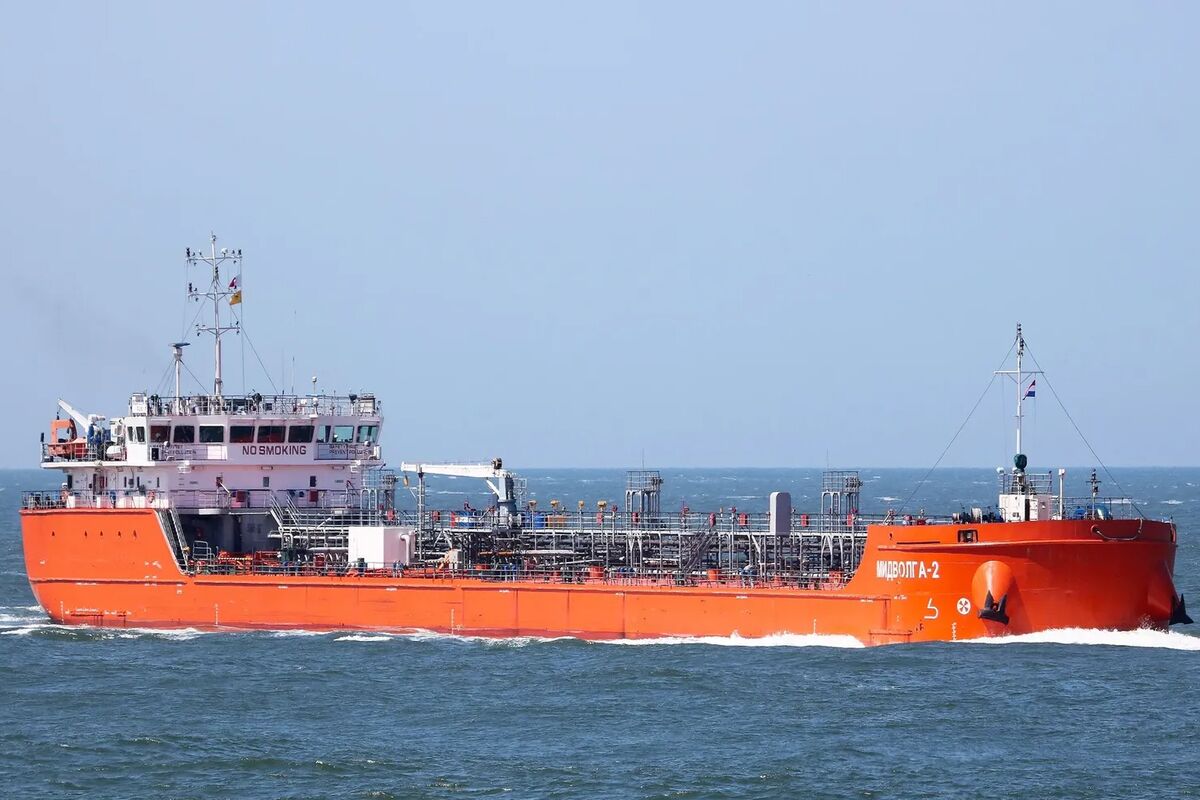
The Russia-flagged tanker Midvolga-2, carrying sunflower oil from Russia to Georgia, was attacked about 80 miles off Turkey’s northern coast, Turkish Transport Ministry maritime authorities said, marking the fourth similar incident in a week. The strike highlights escalating risks to Black Sea shipping lanes, with potential near-term disruptions to edible-oil supply chains and upward pressure on freight and insurance costs, and raises geopolitical tensions that investors should monitor for knock-on effects in commodity logistics and regional trade flows.
Market structure: Attacks on Black Sea shipping immediately lift war-risk insurance and short-term tanker charter rates; owners of product/crude tankers (e.g., FRO, EURN) gain pricing power as capacity tightens while Black Sea exporters/exporters of sunflower oil and container lines face higher costs and delays. Expect a near-term freight spread widening of 20–50% for routes touching the Black Sea/Bosphorus and insurance premia jump 30%+ on exposed voyages within days. Competitive dynamics favor flexible tanker fleets and non-Black Sea storage/processing hubs that can capture rerouted volumes.
Risk assessment: Tail risks include (A) closure of key straits or large-scale state interdiction (low probability, >10% chance over 12 months) causing energy/agri shocks, and (B) escalation prompting wider shipping sanctions that freeze assets (material for Russia-linked fleets). Immediate (days) volatility will be highest in freight, insurance, and edible-oil spreads; weeks–months view depends on recurrence—if attacks continue >4 weeks, expect structural rerouting and permanent marginal cost increases. Hidden dependencies: European food inflation and consumer goods logistics are second-order transmission vectors.
Trade implications: Tactical trades should favor short-dated directional exposure to tanker owners and ag-commodities: long flexible tanker equity/credit and long agricultural oil proxies; use options to cap downside while exploiting volatility. Cross-asset: sovereign/peripheral EM FX with Russia exposure may weaken; long USD/short RUB/RSX-sensitive assets is plausible if attacks persist >30 days. Catalysts to watch: weekly Baltic tanker indices, Lloyd’s war-risk bulletin, and Turkish strait traffic notices — spikes should trigger trade scaling.
Contrarian angles: The market may overprice permanent disruption—if attacks are episodic (under 4 weeks) freight/insurance premia likely mean-revert 30–70% within 6–8 weeks, creating fade opportunities. Historical parallels (Gulf attacks 2019) showed a 3–6 month premium then partial reversion; therefore prefer option-defined or spread trades over naked directional exposure. Unintended consequences include accelerated pipeline/rail investment and higher capex for fleet insurance compliance — identify beneficiaries before consensus repricing.
AI-powered research, real-time alerts, and portfolio analytics for institutional investors.
Request DemoOverall Sentiment
moderately negative
Sentiment Score
-0.45
