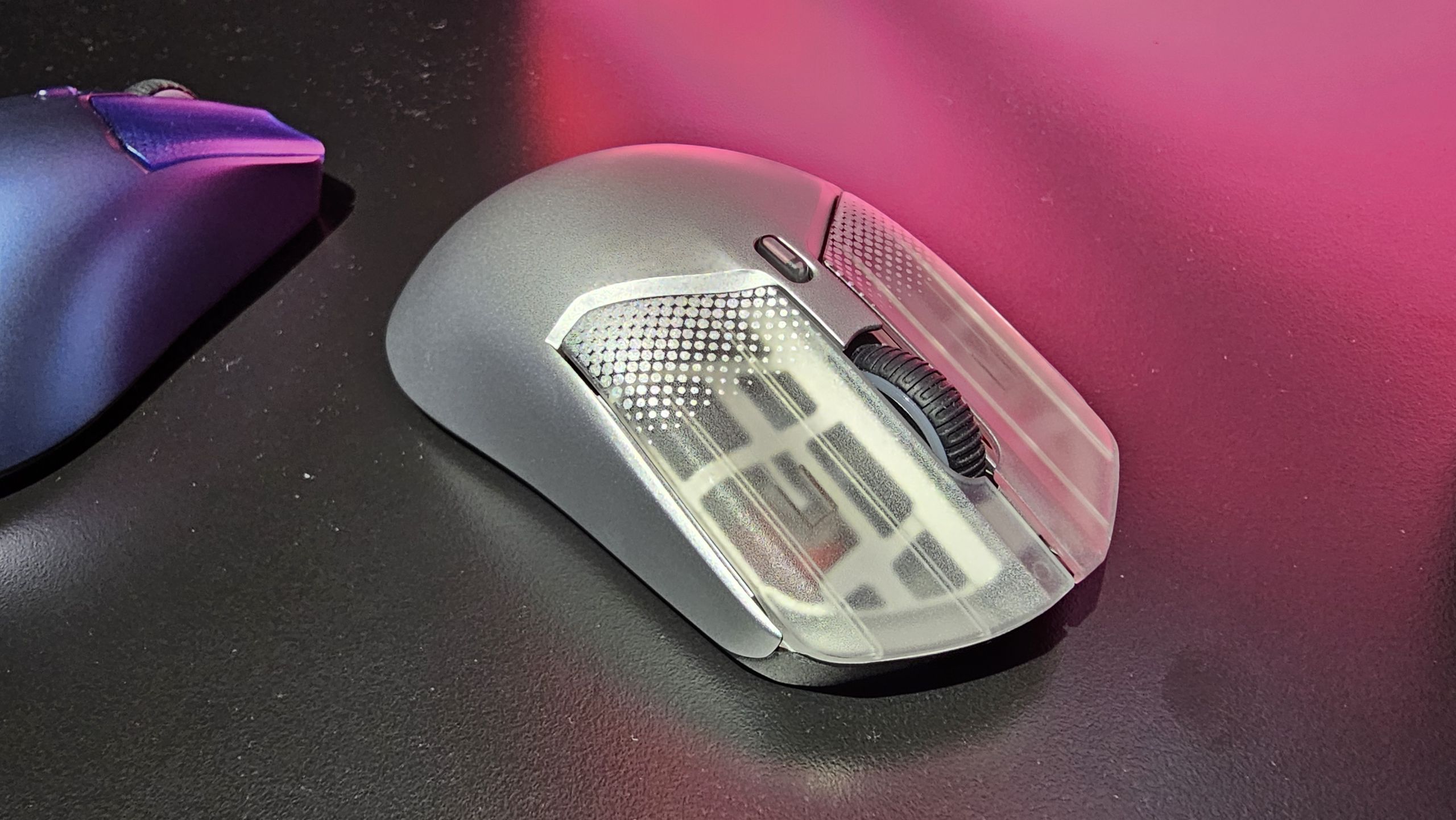
Researchers have developed a novel "Mic-E-Mouse" technique, demonstrating that high-performance optical mouse sensors (20,000 DPI or higher) can be repurposed to capture acoustic vibrations from a desk surface and convert them into audible speech using signal processing and AI. This method allows for covert eavesdropping, even through benign software accessing mouse data, achieving speech recognition accuracy of 42% to 61%. This discovery introduces a significant new vector for acoustic privacy breaches and cybersecurity risks, highlighting how common peripherals can be exploited for surveillance in an AI-driven threat landscape.
Motion sensors in high-performance mice can be used as a microphone to spy on users, thanks to AI — Mic-E-Mouse technique harnesses mouse sensors, converts acoustic vibrations into speech This mouse has ears. A group of researchers from the University of California, Irvine, have developed a way to use the sensors in high-quality optical mice to capture subtle vibrations and convert them into audible data. According to the abstract of Mic-E-Mouse (full PDF here), the high polling rate and sensitivity of high-performance optical mice pick up acoustic vibrations from the surface where they sit. By running the raw data through signal processing and machine learning techniques, the team could hear what the user was saying through their desk. Mouse sensors with a 20,000 DPI or higher are vulnerable to this attack. And with the best gaming mice becoming more affordable annually, even relatively affordable peripherals are at risk. It all begins when a user has a mouse like this attached to a compromised computer. Note that this compromise does not necessarily mean a complicated virus installed through a backdoor — it can be as simple as an infected FOSS that requires high-frequency mouse data, like creative apps or video games. This means it’s not unusual for the software to gather this data. From there, the collected raw data can be extracted from the target computer and processed off-site. "With only a vulnerable mouse, and a victim’s computer running compromised or even benign software (in the case of a web-based attack surface), we show that it is possible to collect mouse packet data and extract audio waveforms," the researchers state. The processing works like this: the raw audio data is run through digital signal processing using a Wiener Filter, where you can start to hear some information. This is then further cleared up through a neural model, giving the researchers clear audio. Although this is a novel method for extracting audio from unsuspecting targets, it’s not exactly the first time that someone has attempted to covertly record targets. One famous example from the Cold War was when the KGB gifted the American ambassador in Moscow a replica of the Great Seal with an embedded passive microphone. It only activated when it was hit by a high-frequency radio signal, leaving it undetected for nearly seven years. The concept of the Mic-E-Mouse is similar — using an unsuspecting device to capture audio data. However, this method is empowered by AI models, allowing the researchers to get a speech recognition accuracy of about 42 to 61%, effectively turning your mouse into an eavesdropping microphone, though. The proof of concept is certainly unnerving, but it will hopefully prompt future steps taken to prevent this sort of acoustic privacy violation, the kind that would have been unthinkable in a world before AI. Get Tom's Hardware's best news and in-depth reviews, straight to your inbox. Follow Tom's Hardware on Google News, or add us as a preferred source, to get our up-to-date news, analysis, and reviews in your feeds. Make sure to click the Follow button! Jowi Morales is a tech enthusiast with years of experience working in the industry. He’s been writing with several tech publications since 2021, where he’s been interested in tech hardware and consumer electronics. - edzieba ReplyMouse sensors with a 20,000 DPI or higher are vulnerable to this attack DPI has nothing to do with this method. Instead, this requires 8KHz (or higher) mouse polling to avoid being Nyquist-limited. Since DPI is not mentioned in either the video or in the paper, I assume this is just some nonsense hallucinated by whatever LLM was asked to write the article. - BTM18 Reply Thank you.edzieba said:DPI has nothing to do with this method. Instead, this requires 8KHz (or higher) mouse polling to avoid being Nyquist-limited. Since DPI is not mentioned in either the video or in the paper, I assume this is just some nonsense hallucinated by whatever LLM was asked to write the article. Come on tom's. Enough slop. - fiyz I'm not worried, considering I use high DPI and low sensitivity + acceleration = I highly doubt there's enough input from vibrations. Then there's the fact I prefer to speak as little as possible? So they are gonna be wasting a lot of resources to gain very little information about me.Reply Still, it wouldn't be hard to counter, we just need an algo to hop the input data around in a novel pattern - habermas Reply If you take a look at the graph in the article you will notice that 20.000 is indeed the threshold listed on the Y-axis of the graph for mice being vulnerable.edzieba said:DPI has nothing to do with this method. Instead, this requires 8KHz (or higher) mouse polling to avoid being Nyquist-limited. Since DPI is not mentioned in either the video or in the paper, I assume this is just some nonsense hallucinated by whatever LLM was asked to write the article. AI-paranoia much? - habermas Reply Thank you for what? Helping you to misread the article?BTM18 said:Thank you. Come on tom's. Enough slop. - George Pearson The accuracy of this hypothetically AI based recording is what?Reply This whole boogey man article is a waste of e-ink. TH quit hiring these click bait AI writers to fill your website. - Zaranthos In other news anti-virus companies have added a premium AI defense tier that charges double what grandma is currently paying promising to provide the latest defense from wifi mapping your every move through the house and your mouse listening to you. Update your automatic subscription now! I would add but if it hasn't already happened it'll be added soon.Reply - habermas Reply Let me help you read the article for you:George Pearson said:The accuracy of this hypothetically AI based recording is what? allowing the researchers to get a speech recognition accuracy of about 42 to 61% - Paul Alcorn Reply Please do not accuse our authors of using AI to write articles. The paper does mention DPI.edzieba said:DPI has nothing to do with this method. Instead, this requires 8KHz (or higher) mouse polling to avoid being Nyquist-limited. Since DPI is not mentioned in either the video or in the paper, I assume this is just some nonsense hallucinated by whatever LLM was asked to write the article. - gg83 Reply What an amazing study! It seems this tech could be used to talk to other dimensions!!!!!!!! I loved the article.habermas said:Thank you for what? Helping you to misread the article? A newly demonstrated cybersecurity vulnerability, termed "Mic-E-Mouse," reveals that high-performance optical mice can be repurposed as covert listening devices. Research from the University of California, Irvine, shows that sensors with 20,000 DPI or higher can capture acoustic vibrations from a surface, which are then converted into audible speech using AI and signal processing. The method achieves a speech recognition accuracy of 42% to 61%, establishing a viable, novel threat vector for acoustic eavesdropping. This vulnerability can be exploited through compromised or even benign software that requires high-frequency mouse data, such as video games, broadening the potential attack surface. While the general sentiment is moderately negative due to the new privacy risk, the low market impact score of 0.25 suggests this is currently a proof-of-concept with limited immediate market-wide implications. The mention of Google (GOOGL) is incidental to its news platform and carries no direct financial relevance, as confirmed by a neutral per-ticker sentiment score.
AI-powered research, real-time alerts, and portfolio analytics for institutional investors.
Request DemoOverall Sentiment
moderately negative
Sentiment Score
-0.50
Ticker Sentiment
