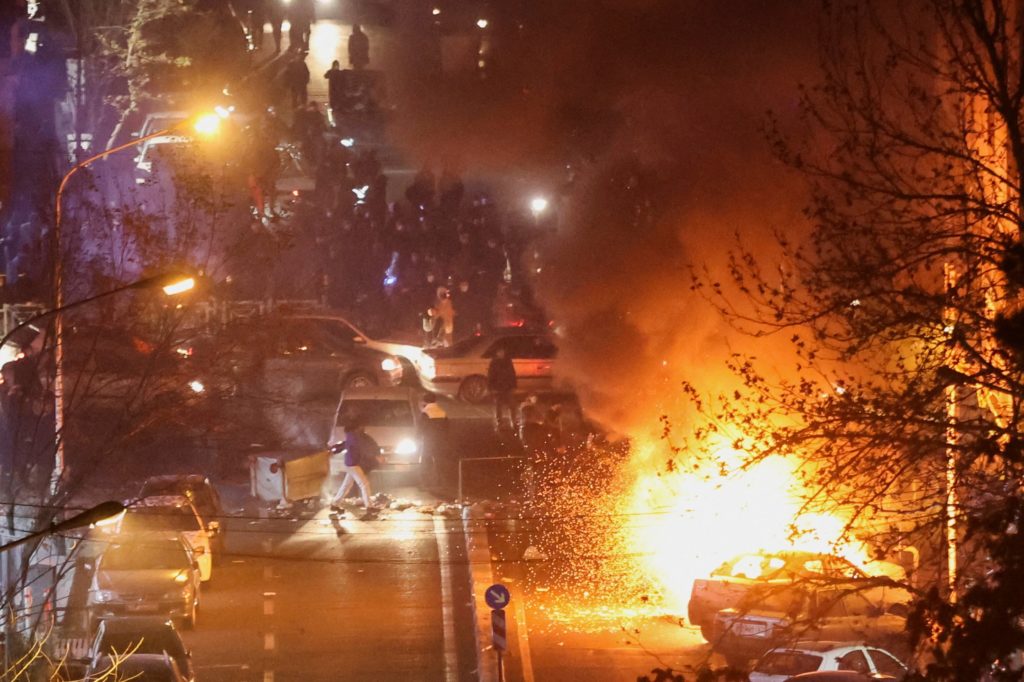
Iran has imposed a near-total internet blackout amid a brutal crackdown on nationwide protests that activists say has killed thousands (reports cited 3,000–3,500+), with hanging reports and continued repression despite international attention. Exiled crown prince Reza Pahlavi urged U.S. military strikes on IRGC assets while U.S. political signaling has been mixed; analysts note no large-scale defections in the IRGC and argue the regime remains capable of control. Tehran reportedly sold roughly $60 billion of oil through black-market channels, limiting the bite of sanctions but highlighting a tail risk that tighter interdiction or escalatory military action could quickly raise oil risk premia and regional tail-risk pricing for emerging-market and energy exposures.
Market structure: Geopolitical escalation in Iran is a near-term positive for defense contractors (Lockheed LMT, Northrop NOC, Raytheon RTX) and energy producers (XOM, CVX, XLE) because markets price a 5–15% crude spike within days if Iran-related chokepoints or oil export disruptions appear. Financials and EM assets (EEM, local EM sovereign bonds) are immediate losers as risk premia widen; gold (GLD) and short-dated Treasuries (TLT) should see safe‑haven bids of ~3–7% and 1–3% respectively on first signs of military action. FX moves: USD appreciation vs. regional FX (TRY, IRR proxies) and commodity currencies (CAD/NOK) will be driven by oil and risk-off flows.
Risk assessment: Tail risks include closure of the Strait of Hormuz (stress scenario: incremental 3–8 mb/d offline → Brent +$10–$35) and broader regional war that forces prolonged sanctions; low-probability but >1% annualized. Time horizons: immediate (days) = volatility spikes and knee‑jerk rallies in defense/energy; short (weeks–months) = potential sanctions tightening or Chinese/Indian offset purchases moderating price moves; long (quarters+) = higher defense budgets and re‑routing supply chains. Hidden dependencies: China/India clandestine purchases, IRGC internal cohesion, and oil storage inventories that can blunt first-order shocks. Catalysts: US/regional strikes, major IRGC defections, or confirmed Iranian export interdictions.
Trade implications: Tactical plays favor 2–3% long positions in top-tier defense names (LMT, NOC, RTX) and 2–3% exposure to energy (XLE or front‑month Brent), entered within 3–7 trading days and re‑assessed at 6–12 weeks. Options: buy 3‑month call spreads on XOM/XLE (10–20% OTM) to express oil upside with defined downside; allocate 0.5–1% to 30–60 day VIX call options or 2% to out‑of‑the‑money SPX puts as tail hedges. Rotate out of EM cyclicals (EEM, select tourism/airline names like UAL/DAL) toward US defensives until visibility returns.
Contrarian angles: Consensus is pricing a permanent step‑up in risk; historical parallels (2019 strikes, 2020 tanker incidents) show spikes often fade in 4–8 weeks absent wider conflict, so defense/energy moves could be overbought. The market may underweight China's ability to offset Iranian export losses, which would cap oil upside and pressure energy longs; therefore use defined‑risk option structures and stop‑loss thresholds (e.g., trim energy longs if Brent >$90 or revert >20% from peak). Unintended consequences: a sustained oil surge could force central banks to re‑tighten, pressuring equities broadly.
AI-powered research, real-time alerts, and portfolio analytics for institutional investors.
Request DemoOverall Sentiment
moderately negative
Sentiment Score
-0.45
