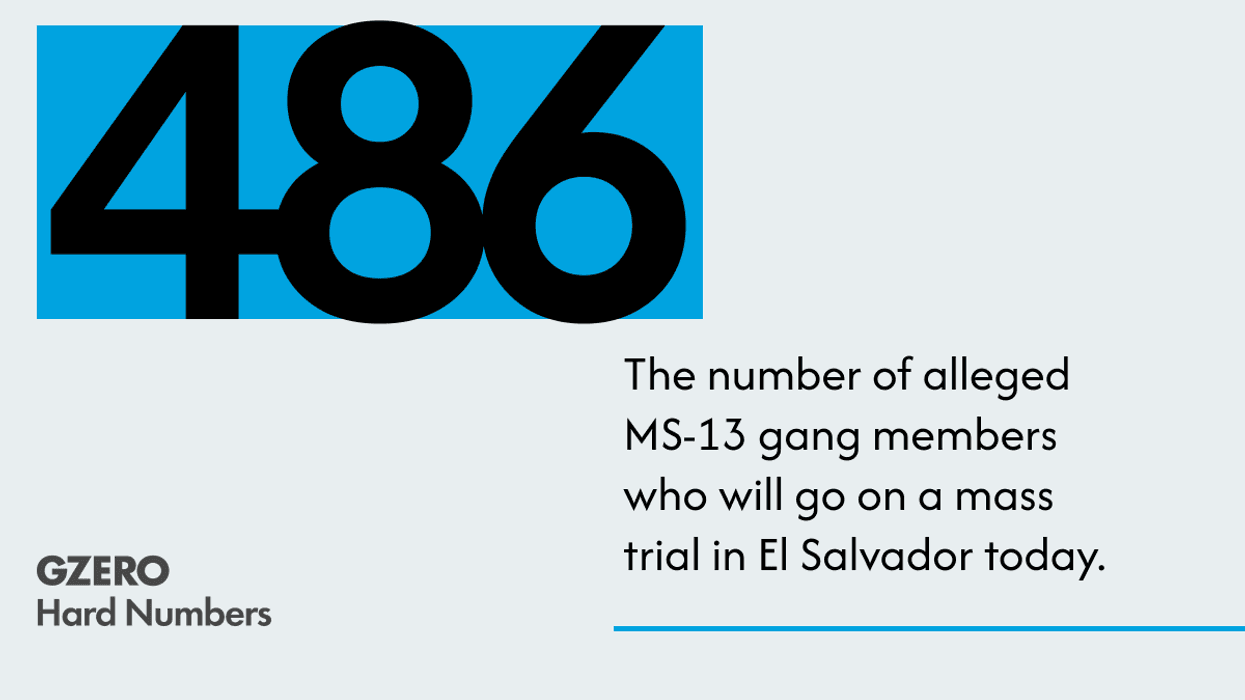
El Salvador is holding a mass trial involving a group accused of 47,000 crimes committed between 2012 and 2022, including murder, extortion, and drug and arms trafficking. The article highlights President Nayib Bukele’s hard-line security strategy, which has driven down the homicide rate but raised concerns about civil liberties and democratic backsliding. The piece is primarily political and legal in nature, with limited direct market impact.
This is less a one-off criminal case than a stress test for institutional credibility in an emerging market that has deliberately traded process for control. In the near term, the market-friendly interpretation is lower headline crime and better tourist/FDI optics; the second-order risk is that the state’s enforcement machinery becomes more arbitrary, raising the discount rate for any asset exposed to rule-of-law risk. That tends to help entities with short-duration cash flows and hurt businesses that need multi-year capital commitments, local financing, or stable courts.
The biggest beneficiaries are likely to be politically aligned domestic sectors: construction tied to public works, security-adjacent services, and any consumer-facing businesses that monetize a safer street environment quickly. The losers are more subtle: banks, insurers, and lenders with unsecured retail/SME books may enjoy lower delinquency in the next 6-12 months, but the tradeoff is greater sovereign and reputational risk if the government’s legitimacy erodes or sanctions pressure rises. For external investors, the key issue is not today’s homicide trend; it is whether a mass-trial model normalizes broad asset seizures, capital controls, or selective enforcement over the next 1-3 years.
Consensus may be underestimating how quickly “order” can become a growth headwind if it deters foreign direct investment, NGO funding, and multilateral support. The near-term macro data can still look better because base effects and security improvements lower operating friction, but the valuation ceiling for Salvador-linked exposure is lower if institutions are seen as reversible. The clean contrarian stance is that the market may be too focused on social stability and not enough on governance risk premia, which usually show up later through funding costs rather than immediately in GDP.
Catalyst-wise, watch for any escalation in international criticism, judicial pushback, or sanctions language over the next few months; those would matter more than the trial outcome itself. If the government broadens detentions or retroactively changes legal standards, the trade should move from ‘re-rating on safety’ to ‘multiple compression on expropriation risk.’
AI-powered research, real-time alerts, and portfolio analytics for institutional investors.
Request TrialOverall Sentiment
neutral
Sentiment Score
-0.10
