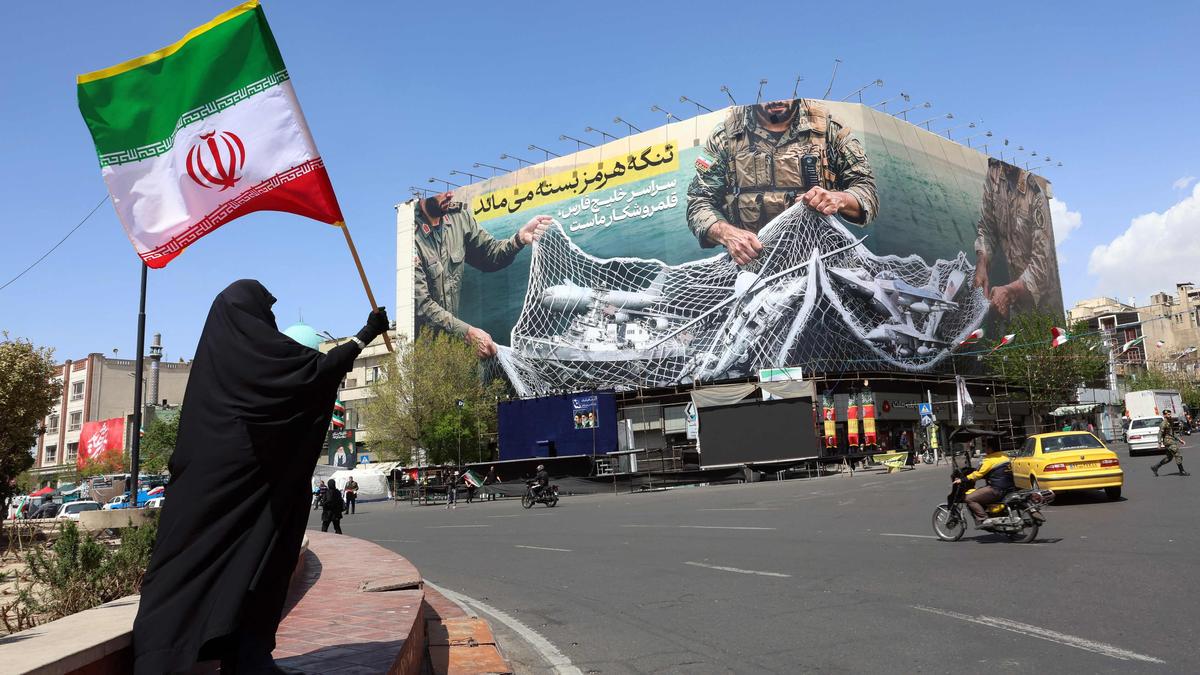
UN Security Council set to vote on a resolution addressing Iran's threats to the Strait of Hormuz as Iran's IRGC says the strait has undergone 'irreversible strategic changes' and Iran rejects the latest ceasefire, seeking a permanent end to the war. Israeli military warned civilians in Iran not to use trains after air defences responded to missiles amid a new wave of strikes; Pakistan's mediation efforts are entering a 'critical, sensitive' stage. These developments elevate near-term risk of energy-market disruption and broader risk-off moves across financial markets.
Market pricing is treating disruption to Gulf exports as a short, volatile shock rather than a multi-year structural break; that creates asymmetric opportunities in both energy and logistics. If transits slow or insurance blacklists Gulf routes, expect crude tanker voyage times to rise by ~10–20 days on reroutes around Africa, adding an estimated $1–3m incremental cost per VLCC voyage and pushing freight and refinery feedstock premia up within 1–6 weeks.
Defense and aerospace firms stand to collect order flow and reactive budgets quickly, but much of that is already priced into near-term equities; the larger second-order winners are specialist marine insurers and owners of idle global storage capacity who can monetise contango. Conversely, container shipping, short-cycle petrochemical exporters, and ports with concentrated Gulf throughput will see margin pressure; expect container freight indices to surge then compress demand 2–3 months out if elevated bunker/insurance costs persist.
Key catalysts: (1) military escalation or effective interdiction of chokepoints — days to weeks — will spike spot crude and freight volatility; (2) a credible diplomatic de-escalation or coordinated SPR release — 1–6 weeks — can quickly snap prices back; (3) sustained insurance/flagging restrictions or sanctions — 3–12 months — will reallocate trade lanes and cap supply access for specific buyers. Tail risk remains: a prolonged partial closure could lift Brent by +25–40% within 30–90 days, but a swift diplomatic reset can erase >50% of that move within weeks.
AI-powered research, real-time alerts, and portfolio analytics for institutional investors.
Overall Sentiment
strongly negative
Sentiment Score
-0.65
