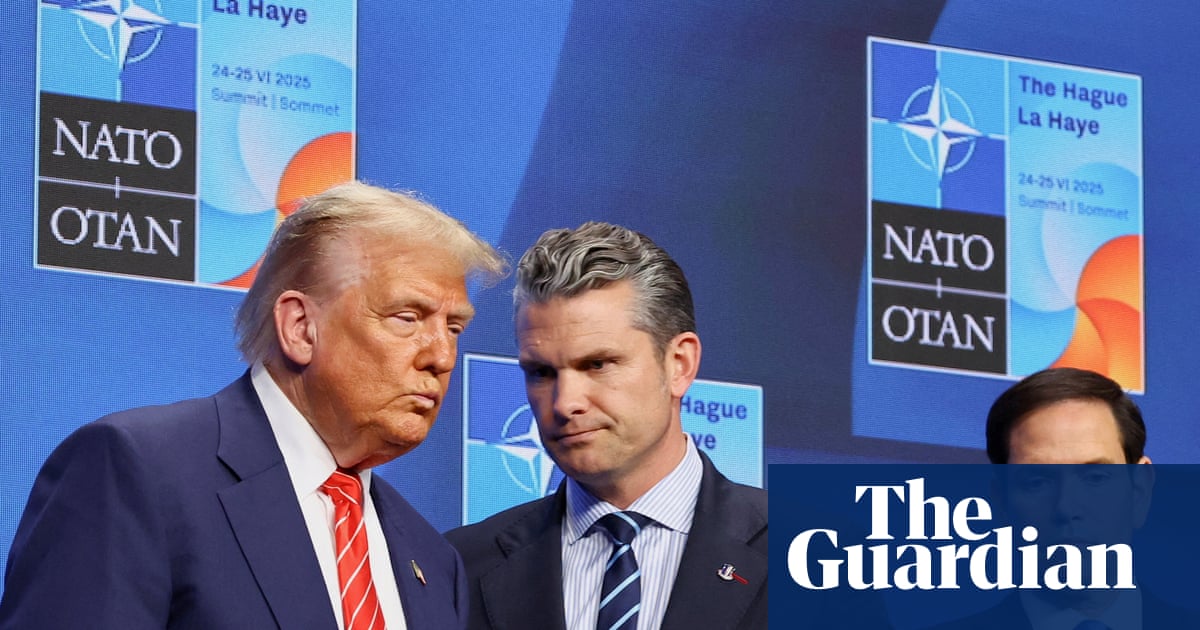
A survey of 15 European countries found only 11% now see the US as an ally, down from 16% six months ago and 22% in November 2024, with majorities in every country doubting Washington would come to their aid. Europeans are increasingly backing higher defense spending, EU collective borrowing, and reduced dependence on US military hardware, while support for replacing Nato remains low at 29%. The findings point to rising European defense self-reliance and a more defensive policy stance ahead of key G7 and Nato summits.
This is less a headline about public opinion than a leading indicator for European budget allocation. When the political center of gravity shifts toward self-help, the first beneficiaries are not the obvious defense primes alone but the entire domestic industrial stack: munitions, electronics, sensors, secure communications, power systems, shipbuilding, and dual-use software. The second-order effect is that procurement will likely bias toward suppliers with local content and sovereign control, which structurally hurts US platform exporters and any European contractor with high US dependency or exposed transatlantic program mix. The fiscal implication matters more than the sentiment change. Even modest incremental defense targets can crowd out non-defense discretionary spending in already-fragile coalition governments, which raises dispersion across European sovereigns: fiscally conservative northern countries can absorb rearmament, while Italy, Spain, and Austria face a higher probability of either slower implementation or stealth funding via EU-level borrowing. That means the market should distinguish between “headline defense spending” and actual executable budget capacity over the next 12-24 months. The most actionable trade is relative value inside Europe, not a blanket long on defense. The market is likely underpricing the duration of procurement backlogs, so order books can support multiple expansion for names with exposure to ammunition replenishment, air defense, and European production localization. Conversely, any easing in US-European tensions would mostly be a sentiment reversal, not a reversal of the procurement pipeline; that makes dips after diplomatic improvement headlines better entries than exit signals. The bigger contrarian point is that this trend may actually accelerate EU industrial policy beyond defense, creating spillover winners in grid, cybersecurity, and critical infrastructure capex.
AI-powered research, real-time alerts, and portfolio analytics for institutional investors.
Request DemoOverall Sentiment
mildly negative
Sentiment Score
-0.15
