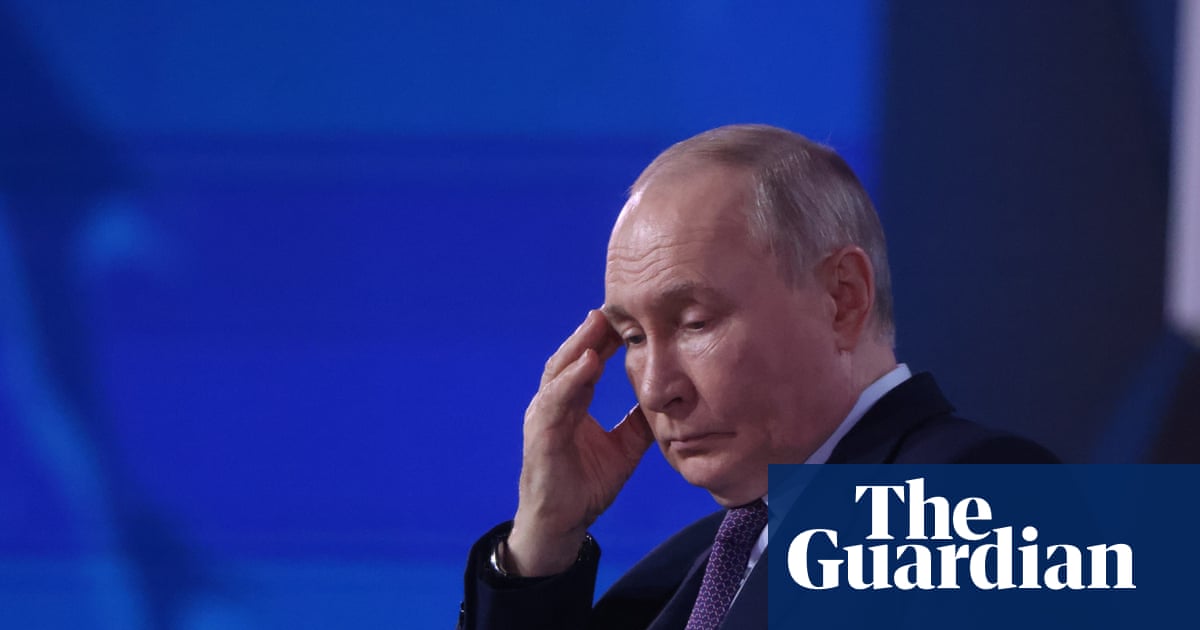
Russia's defence bill rose 42% to Rbs13.1tn (~£121bn) last year and President Putin has asked oligarchs to donate to cover a strained defence budget amid continued invasion of Ukraine. Moscow raised Rbs320bn (~£2.95bn) from a one-off 10% windfall levy in 2023, increased VAT to 22% to target Rbs600bn over three years, and is considering another windfall tax if the rouble weakens; the January–February budget deficit already exceeded 90% of the full-year projection. Continued hostilities over Donbas and sanctions-driven discounted oil sales create ongoing downside risks to Russian fiscal stability and to energy markets and sanctions-related spillovers.
Moscow’s resorting to one-off private contributions and heavier taxation signals a fiscal balancing act that will be iterative, not instantaneous. Expect a 3–12 month cadence of ad hoc measures (windfall levies, higher VAT, selective carve-outs) that compress cash flow for large exporters and raise political tail-risk for owners of domestic strategic assets.
Sanctions-driven oil discounts and the need to fund prolonged procurement create two offsetting market forces: weaker ruble/FX-implied losses and downward pressure on Russian export realizations versus a concentrated, predictable demand shock into domestic defense suppliers. That widens margins for domestic defense incumbents (faster state payments, lower competitive entry) while reducing free-cash-flow for commodity exporters, which will depress capex and raise default/ restructuring risk over 6–18 months.
Second-order winners are global defense primes and parts suppliers who can substitute into allied procurement (order visibility and higher margins), and liquid USD-denominated sovereign/higher-quality EM assets that provide safe-yield pickup vs idiosyncratic Russian exposure. Main losers are Russia-centric commodity exporters and foreign counterparties with credit lines or repo exposure to sanctioned names — an operational liquidity squeeze can crystallize within weeks if counterparties pull lines or FX trading is curtailed.
AI-powered research, real-time alerts, and portfolio analytics for institutional investors.
Request DemoOverall Sentiment
strongly negative
Sentiment Score
-0.62
