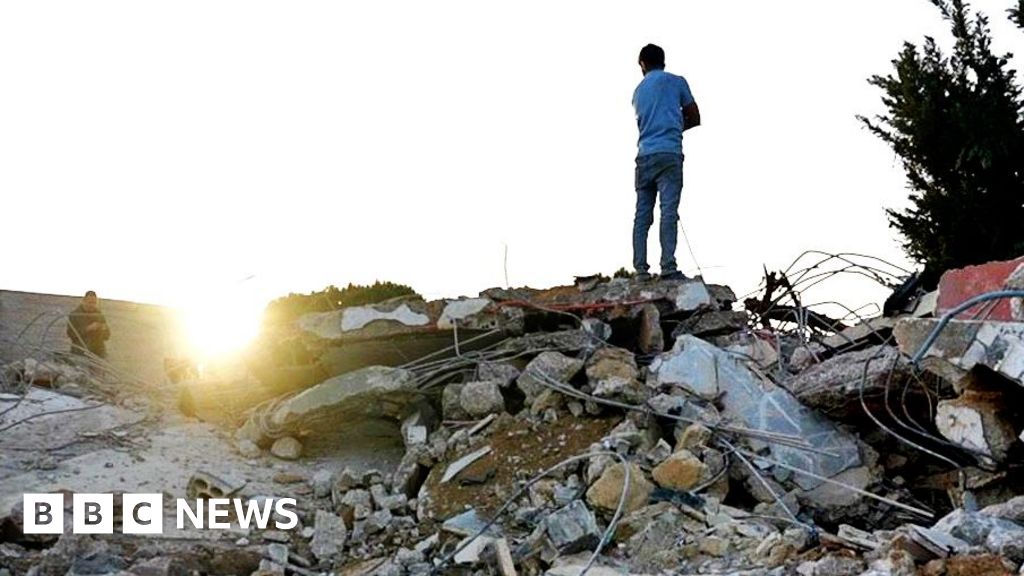
The ceasefire between Israel and Hezbollah has effectively failed, with continued Israeli airstrikes, Hezbollah rocket/drone attacks, and more than 2,800 people killed in Lebanon since the war began, including over 400 after the truce. Israel says it is maintaining a 5% occupied security zone in southern Lebanon, while Lebanon remains deeply destabilized with over 1 million displaced and widespread destruction across the south. The conflict remains a major regional geopolitical risk with potential spillovers for Lebanon, Israel, and broader Middle East security.
The key market signal is not the persistence of violence itself, but the failure of the ceasefire to create a credible enforcement regime. That keeps the conflict in a low-to-medium intensity state that is bad for reconstruction, insurance, and any sovereign-risk normalization in Lebanon, while also forcing Israel to maintain an expensive forward security posture with no durable exit ramp. The second-order effect is a prolonged capex freeze: even where direct damage stops, households, municipalities, and utilities will defer rebuilding until they believe the perimeter has stabilized, which can take quarters rather than weeks. For Lebanon’s domestic politics, the more important shift is that destruction is reinforcing the very armed-network logic policymakers want to unwind. When the state cannot provide protection or rapid recovery, local dependence on Hezbollah’s social apparatus rises even if political support is fragile. That creates a negative feedback loop: the weaker Hezbollah becomes militarily, the more its civilian embeddedness matters, making disarmament harder and raising the probability of intermittent flare-ups that keep donor money sidelined. For regional markets, the tail risk is not a full-scale Lebanon war but a miscalculation that broadens the theater into Israel’s northern border, Syria logistics, or Iranian-linked assets. The consensus likely underestimates how long “managed instability” can persist: months of drones/strikes can be enough to suppress tourism, port utilization, property repair, and bank credit growth without triggering the kind of headline event that forces diplomatic intervention. The tradeable implication is that the pain sits in low-quality EM assets and near-border infrastructure, while defense supply chains and hard-security beneficiaries remain supported. Contrarian view: the move may be underpriced as a humanitarian catastrophe but overpriced as a macro contagion. Lebanon’s sovereign and bank complex can stay impaired regardless of near-term headlines, yet the event set alone is not enough to justify a broad EM selloff unless it feeds into wider regional shipping or energy disruption. The cleaner expression is relative-value: own security spenders, short fragile reconstruction proxies, and wait for any diplomatic window to fade volatility before adding exposure.
AI-powered research, real-time alerts, and portfolio analytics for institutional investors.
Request DemoOverall Sentiment
strongly negative
Sentiment Score
-0.78
