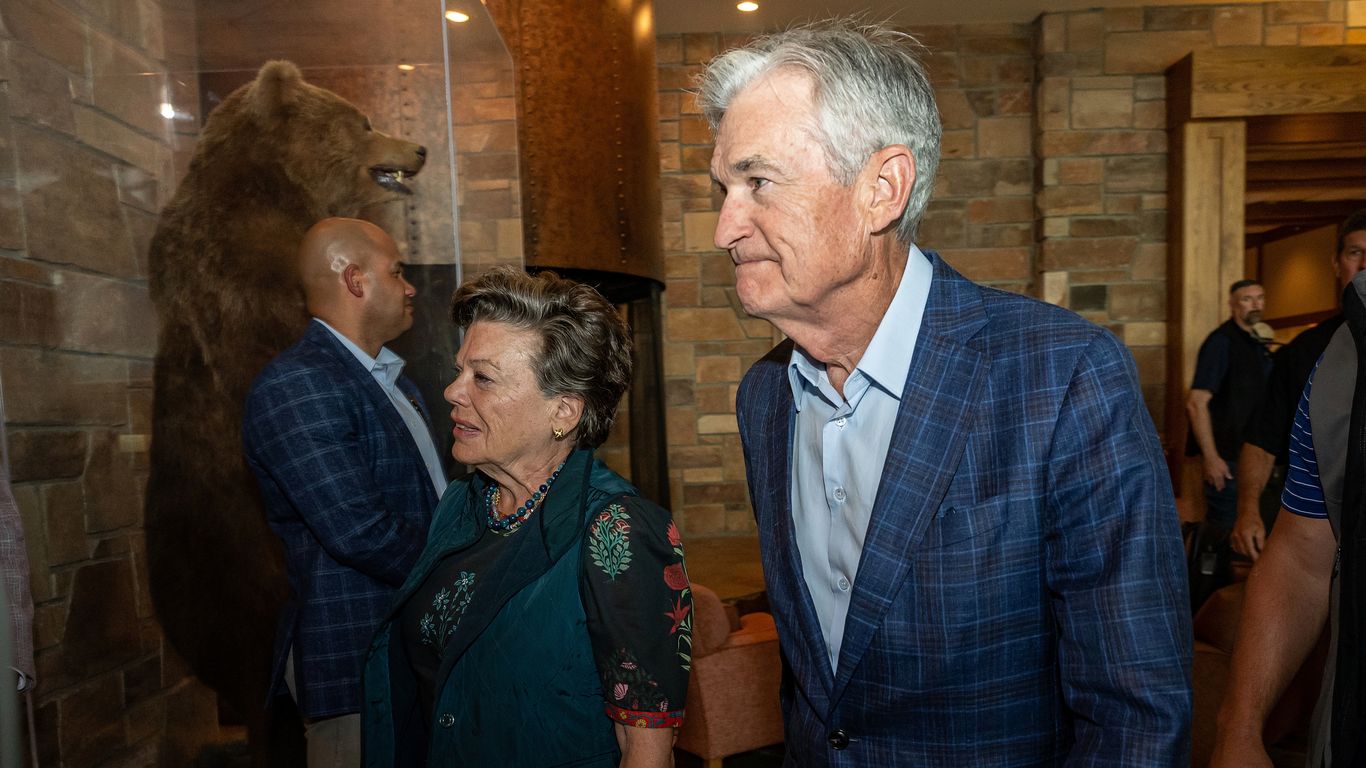
Federal Reserve Chair Jerome Powell, in his anticipated Jackson Hole address, indicated a potential interest rate cut as early as mid-September, contingent on incoming economic data and implicitly rejecting political influence. He highlighted rising downside risks in the labor market and the visible, albeit likely temporary, inflationary impact of tariffs. Furthermore, Powell unveiled an updated monetary policy framework, shifting from mitigating employment "shortfalls" to "deviations" to ensure a more balanced approach to managing employment and inflation in the current economic landscape.
In a pivotal Jackson Hole address, Federal Reserve Chair Jerome Powell signaled a potential policy adjustment, opening the door for an interest rate cut as soon as the mid-September meeting. This dovish tilt is explicitly conditioned on incoming economic data and serves as an implicit rejection of political pressure, reinforcing the Fed's operational independence. The primary catalyst for this consideration is the labor market, which Powell described as being in a 'curious kind of balance' with rising 'downside risks to employment' that could materialize rapidly. While acknowledging that tariffs now have 'clearly visible' effects on consumer prices, the Fed's base case is that this inflationary impact will be 'relatively short-lived,' suggesting a willingness to look through this pressure if other economic indicators weaken. Critically, this near-term flexibility is counterbalanced by the unveiling of a new long-term monetary policy framework. By shifting from mitigating employment 'shortfalls' to 'deviations,' the Fed is adopting a more symmetrical approach, designed to prevent a repeat of being late to fight the inflation of 2021-2022. This structural change implies a lower tolerance for overheating and suggests a more hawkish long-term posture compared to the previous framework.
AI-powered research, real-time alerts, and portfolio analytics for institutional investors.
Overall Sentiment
mixed
Sentiment Score
0.00
