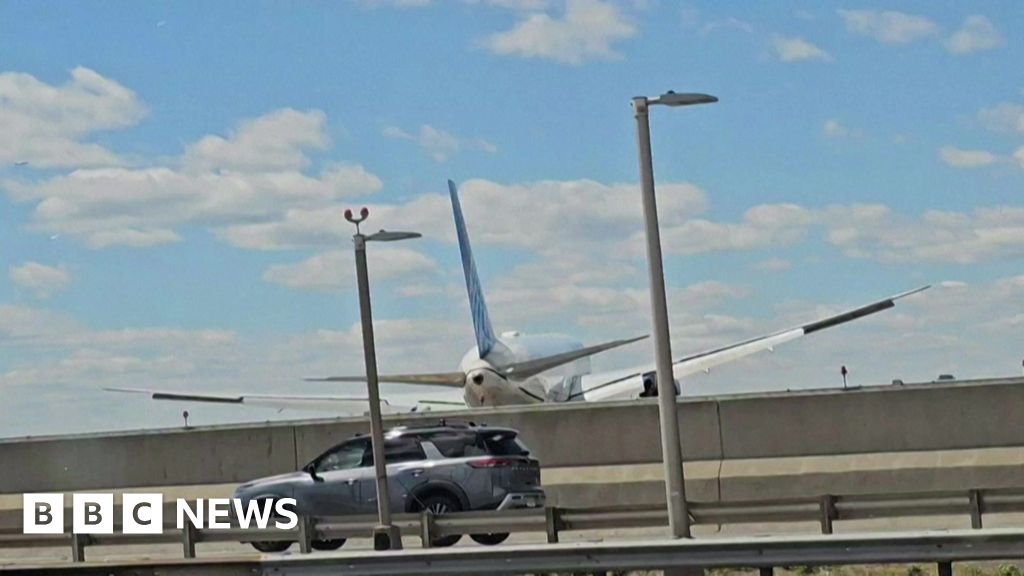
A United Airlines Boeing 767 clipped a truck and streetlight while landing at Newark Airport, injuring the truck driver slightly but safely landing with all 231 passengers and crew unharmed. United said it will conduct a rigorous flight safety investigation and has removed the crew from service, while the NTSB has launched an investigation and requested the cockpit voice and flight data recorders. The incident is operationally negative for United but appears limited in immediate market impact.
This looks less like a direct earnings event for UAL and more like a tail-risk repricing catalyst for the entire large-cap airline complex. The immediate earnings impact should be immaterial, but the market will focus on whether this expands into an operational-safety narrative: any NTSB scrutiny, crew removal, or maintenance grounding raises the odds of follow-on disruption, inspection costs, and a temporary increase in safety-related overhead. In a sector where valuation is already sensitive to reliability and margin discipline, even a low-probability headline can compress multiples for weeks before any financial damage is visible.
The second-order risk is regulatory and legal rather than aviation-loss severity. If the recorded data indicates any procedural or ATC ambiguity, the issue can extend from a one-off incident to broader scrutiny of airport surface/approach coordination, which may pressure airport authorities and ground-handling contractors more than the airline itself. That creates a subtle relative-value opportunity: suppliers and airport infrastructure names with weaker operating controls may see a bigger reputational hit than carriers, while diversified peers can benefit if capacity is constrained by inspections or precautionary operational pauses.
Consensus will likely treat this as noise because no passengers were hurt, but that may understate the asymmetry. The stock typically absorbs single-incident headlines quickly; the real downside comes if the investigation uncovers a pattern of maintenance or training deficiencies, which could create a 1-3 month overhang via higher insurance commentary, delayed aircraft returns, and analyst caution around 2025 margin assumptions. If the probe is clean, the move should mean-revert fast; if not, the overhang can persist into the next quarterly print.
AI-powered research, real-time alerts, and portfolio analytics for institutional investors.
Request DemoOverall Sentiment
mildly negative
Sentiment Score
-0.15
Ticker Sentiment
