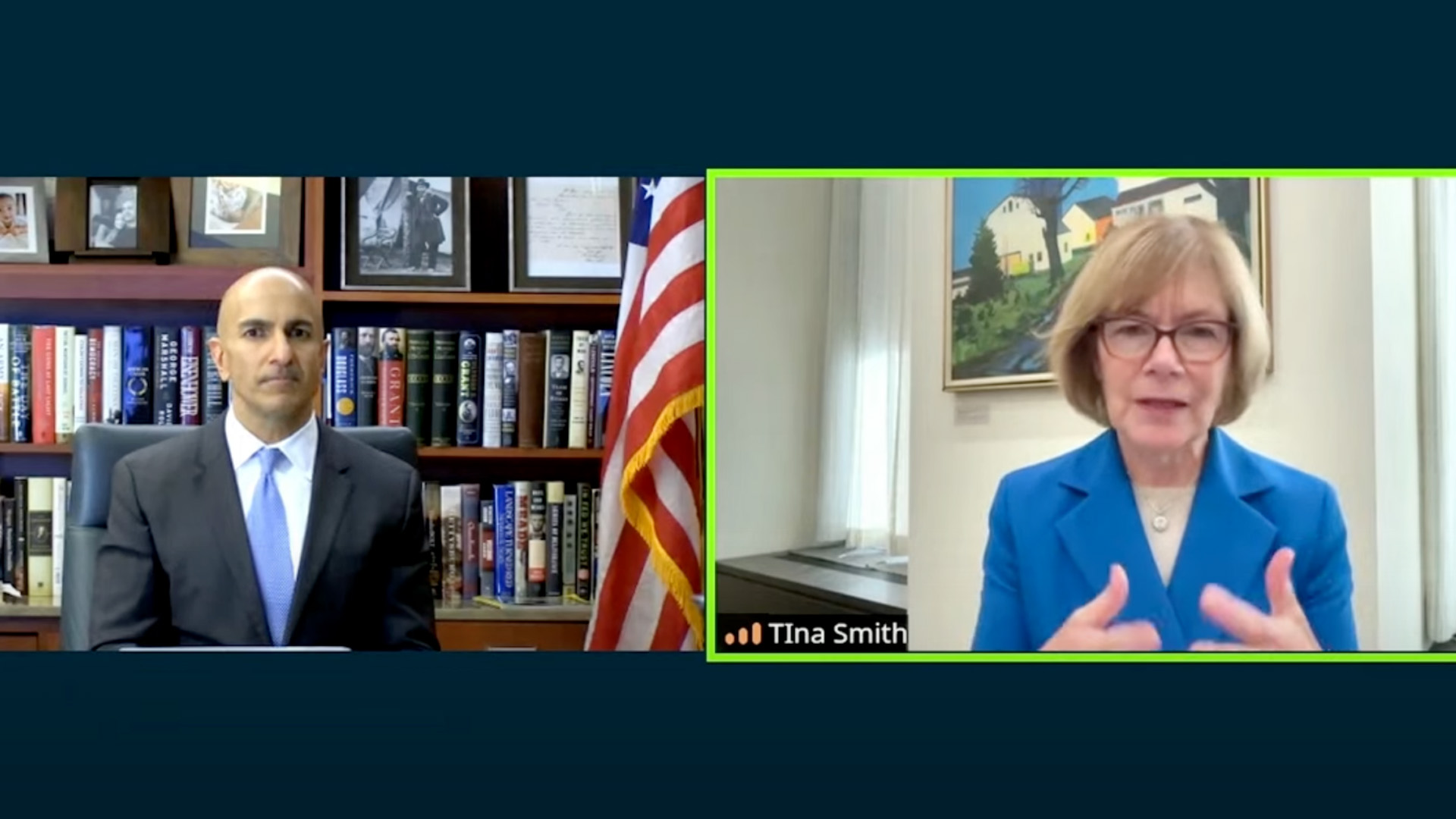
Neel Kashkari, president of the Federal Reserve Bank of Minneapolis, took part in a virtual town hall discussion with Rose Oswald Poels, president and CEO of the Wisconsin Bankers Association. The session is a routine example of Fed outreach to regional bankers and provides a venue for communicating central bank views that can influence regional banking-sector expectations and policy transmission.
Market structure: Kashkari’s outreach to bankers signals continued Fed scrutiny of regional-bank liquidity and interest-rate pass-through rather than an imminent policy pivot. Winners are large, diversified banks (JPM, BAC) and cash/money-market providers that can capture higher short rates; losers are small/regional banks (KRE constituents) with large uninsured deposits and long-duration securities that carry unrealized losses. Expect rotation from equity beta in regionals into short-duration credit and money-market supply over 1–3 months as deposit reallocation accelerates.
Risk assessment: Tail risks include a localized depositor run or a regulatory capital shock that forces fire sales (low probability, high impact); if uninsured deposit flight >5–10% over 30–90 days for a given bank, equity downside could exceed 40% for weaker regionals. Near-term (days–weeks) volatility will be driven by deposit flow prints and Fed minutes; medium-term (3–12 months) risks center on stress-test outcomes and disclosure of unrealized losses. Hidden dependency: repo/wholesale funding lines and LCR buffers which can turn small liquidity squeezes into solvency events.
Trade implications: Mechanically, favor long exposure to large-cap diversified banks (JPM, BAC) and short/hedge regional-banking beta (KRE or KBE) while shortening duration in fixed income (move from TLT to IEF/FLOT) and overweight money-market yields (BIL/SHV) to capture >3% yield. Use 2–4 week to 3-month put spreads on KRE for protection (allocate 0.5–1% of portfolio risk) and consider call spreads on BAC/JPM for leveraged upside if deposit metrics stabilize by next quarter.
Contrarian angles: The market often misreads Fed banker outreach as easing; instead this tends to presage tighter oversight that benefits scale players — consensus underprices the regulatory premium for large banks. Some regionals with loan growth >5% and uninsured deposits <30% are oversold; selective 6–12 month recovery plays may yield >30% if deposit flight abates. Unintended consequence: aggressive supervision could accelerate industry consolidation, boosting M&A candidates among stronger banks.
AI-powered research, real-time alerts, and portfolio analytics for institutional investors.
Request DemoOverall Sentiment
neutral
Sentiment Score
0.00
